What Are the Biggest Advantages of Interlocked Armored Cable
What Are the Main Advantages and Disadvantages of Interlocked Armored Cable?
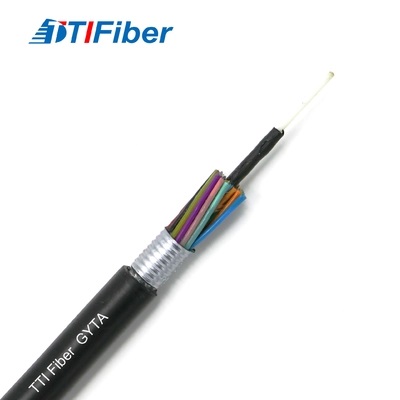
Interlocked armored cable is widely used in commercial buildings, industrial facilities, power distribution networks, and telecommunications infrastructure because it combines electrical performance with additional mechanical protection. Its defining feature is a metallic armor layer formed by helically wrapping a shaped metal strip around the cable core. The edges of the strip mechanically interlock, creating a flexible protective structure around the internal conductors or optical fibers.
Compared with ordinary unarmored cables, interlocked armored cables offer several practical advantages. They provide improved resistance to physical damage, simplify certain installation processes, and can reduce the need for separate mechanical protection systems. Depending on the cable construction and applicable electrical regulations, they may also be installed in approved open-run or cable-tray applications without requiring a separate conduit.
However, interlocked armored cable is not a universal solution. Its metallic armor does not automatically provide a waterproof barrier, and the interlocking structure has limitations when exposed to excessive longitudinal pulling forces. Its weight, bending requirements, termination accessories, and purchase price must also be considered.
For electrical contractors, engineers, distributors, and industrial procurement teams, understanding both sides of this cable construction is essential. The right decision should consider not only the initial cable price but also installation efficiency, environmental conditions, mechanical requirements, maintenance expenses, and long-term operational reliability.
What Makes Interlocked Armored Cable Different From Ordinary Cable?
The most important difference is the addition of a metallic protective layer around the cable core. Conventional electrical cables typically depend on conductor insulation and an outer nonmetallic jacket to protect against electrical faults and environmental exposure. While these layers provide essential protection, they may not offer sufficient resistance to mechanical damage in exposed or industrial environments.
Interlocked armored cable introduces another protective component. A continuous aluminum or galvanized steel strip is formed into an interlocking profile and wrapped around the cable core. This creates a mechanical barrier that helps protect the underlying insulation and conductors against abrasion, impact, and other external physical stresses.
The armor is also designed to retain a degree of flexibility. Unlike rigid steel conduit, the metallic protection is integrated directly into the cable, allowing the assembly to bend along suitable installation routes.
Why Do Industrial Buyers Consider Interlocked Armored Cable?
Industrial buyers often evaluate interlocked armored cable because it can simplify projects involving extensive cable routing. Manufacturing plants, warehouses, commercial facilities, and data centers frequently contain exposed cable pathways where physical protection is important.
Using an appropriately rated armored cable can reduce the number of separate installation components required. In suitable applications, contractors may avoid installing an additional conduit or innerduct system, reducing material handling and installation labor.
For large projects, these savings can become significant. However, the decision must be based on the applicable electrical code and the specific cable listing. Some installations still require conduit, additional support, environmental protection, or specialized fittings.
Why Should Buyers Evaluate Both Advantages and Disadvantages?
Choosing a cable based only on its mechanical protection can lead to problems later. For example, a cable may provide excellent resistance to physical damage but still be unsuitable for an environment involving standing water, aggressive chemicals, or substantial longitudinal tension.
Similarly, a lightweight aluminum-armored cable may be attractive for long cable runs, but a project involving more demanding mechanical conditions may require a different construction.
Evaluating the advantages and disadvantages together allows buyers to identify whether interlocked armored cable provides genuine value for their application. The objective should be to achieve the correct balance between safety, durability, installation efficiency, compliance, and total project cost.
What Are the Biggest Advantages of Interlocked Armored Cable?
The primary advantage of interlocked armored cable is its ability to combine electrical conductors and mechanical protection into one integrated product. This construction can make cable installations more efficient while helping protect sensitive internal components from physical damage.
Its benefits are particularly relevant in industrial and commercial projects where cables are routed through exposed areas, cable trays, equipment rooms, and other locations where ordinary cable jackets may not provide sufficient mechanical protection.
How Does Interlocked Armor Provide Better Mechanical Protection?
Mechanical protection is one of the most important reasons engineers specify interlocked armored cable. During installation and normal operation, cables may come into contact with sharp edges, building structures, tools, equipment, and other objects capable of damaging their insulation.
The metallic armor creates an additional protective barrier around the cable core. Its interlocking construction helps resist external abrasion, accidental contact, and certain forms of impact and crushing forces. This reduces the likelihood of direct mechanical damage reaching the insulated conductors.
This feature is valuable in manufacturing facilities, workshops, warehouses, industrial production lines, and commercial buildings where electrical cables may be exposed to maintenance activities or equipment movement.
It is important to understand that interlocked armor does not make a cable indestructible. Its actual crush, impact, and abrasion performance depends on armor material, thickness, profile, cable diameter, and manufacturer testing. Buyers should review the manufacturer's mechanical performance data rather than assuming that all armored cables provide identical protection.
How Does Interlocked Armored Cable Improve Installation Efficiency?
Traditional cable installations may involve several separate stages. Contractors first install conduit or another protective pathway, then route the cable through that system, followed by additional securing and termination work.
Interlocked armored cable combines the conductor assembly and metallic protection into a single product. Where the cable is approved for the intended wiring method, contractors may be able to install it directly along an approved pathway without building an additional protective enclosure.
This can reduce installation steps, material requirements, and labor costs. It may also make cable routing easier in retrofit projects where installing new conduit would require drilling, structural modifications, or substantial construction work.
For project managers, the advantage is not simply a faster installation. Fewer separate components can also make procurement, transportation, and material coordination easier.
Why Is the Flexibility of Interlocked Armor an Important Advantage?
Interlocked armor offers a useful combination of mechanical protection and flexibility. Because the metallic strip is formed into a spiral structure, the cable can bend along suitable routes rather than behaving like a rigid metal pipe.
This is especially helpful when cables need to pass around equipment, enter electrical cabinets, follow cable trays, or move through building spaces with limited installation access.
Flexibility can also be beneficial during maintenance and system upgrades. Contractors may find it easier to reroute or replace cable sections without completely redesigning the surrounding protective infrastructure.
However, flexibility does not mean unlimited bending. Every cable has a manufacturer-specified minimum bending radius. Exceeding that limit may deform the armor, damage internal insulation, or compromise the cable's structural integrity.
Can Interlocked Armored Cable Reduce Total Project Costs?
Although interlocked armored cable may have a higher purchase price than some ordinary unarmored cables, its total installed cost can be competitive in suitable applications.
For example, a project using conventional cable may require separate conduit, fittings, supports, connectors, and additional installation labor. An approved armored cable system may eliminate some of these requirements.
Cost savings can come from:
- Reduced demand for separate conduit or innerduct in approved installations.
- Fewer installation stages and less material handling.
- Lower labor requirements for certain cable-routing projects.
- Reduced exposure of internal conductors to mechanical damage.
- Potentially simpler future cable replacement or rerouting.
However, the economic benefit depends on the project. Cable diameter, armor material, connector costs, support requirements, labor rates, and local installation regulations all affect the final calculation.
What Are the Main Disadvantages of Interlocked Armored Cable?
Despite its advantages, interlocked armored cable has several technical and practical limitations. These limitations become particularly important in outdoor installations, wet environments, long-distance cable pulling, and projects involving significant mechanical tension.
Understanding these disadvantages before purchasing helps prevent specification errors and reduces the risk of premature cable failure.
Why Is Interlocked Armored Cable Not a Waterproof Solution?
One of the most important limitations is that interlocked metallic armor should not be treated as a waterproof or watertight barrier.
The armor consists of individual metal turns that mechanically lock together. Although the structure provides mechanical protection, the interlocking joints do not create a continuous sealed metallic enclosure. Moisture may enter through the spaces between the turns and potentially reach the cable's internal components if the overall construction does not provide adequate environmental protection.
This becomes especially important when cables are installed outdoors, underground, in wet industrial areas, or in locations exposed to condensation and standing water.
An appropriate outer jacket can improve moisture resistance and protect the armor against environmental exposure. However, buyers must verify the cable's actual wet-location, outdoor, or direct-burial rating. An outer jacket alone should not be assumed to make every interlocked armored cable suitable for these applications.
Why Is Interlocked Armor Unsuitable for High Longitudinal Loads?
Interlocked armor is designed primarily to provide mechanical protection around the cable core. It is not generally intended to function as a primary load-bearing component for high longitudinal tension.
During cable pulling, excessive force can cause the interlocking metal strip to separate, deform, or shift. In certain constructions, the inner cable core may also move relative to the armor if the pulling method does not properly grip both components.
This is a critical consideration for long-distance cable installations, vertical cable runs, and applications where cables are suspended or subjected to substantial pulling forces.
Contractors should follow the manufacturer's maximum pulling tension and approved pulling procedures. If the application requires significant tensile strength, a cable construction specifically engineered for that purpose, such as an appropriate steel wire armored design, may be more suitable.
Does Interlocked Armored Cable Have More Difficult Bending Requirements?
Although interlocked armor is flexible compared with rigid metallic conduit, the complete cable assembly can be stiffer and less flexible than an equivalent unarmored cable.
The metallic strip adds structural resistance when the cable is bent. This means installers may need more space to route the cable around corners, through confined spaces, or into electrical equipment.
Sharp bends can also damage the armor profile. If the interlocking structure becomes distorted or opens, its mechanical protection may be reduced.
For projects involving complicated routing, contractors should review the cable's minimum bending radius, cable diameter, pulling requirements, and available installation space before selecting the product.
Why Can Interlocked Armored Cable Be More Expensive to Purchase?
Interlocked armored cable requires additional metallic materials and specialized manufacturing processes compared with many unarmored cable constructions.
The cost of the armor material, metal-forming equipment, additional manufacturing operations, and quality control can increase the finished cable price.
Furthermore, buyers may need compatible connectors, glands, armor termination tools, and additional installation accessories. These components can increase the initial procurement budget.
However, a higher cable purchase price does not automatically mean a higher total installation cost. The correct comparison should include the cost of the cable, protective pathways, accessories, labor, maintenance, and potential replacement expenses over the expected service life.
How Do Aluminum and Steel Interlocked Armored Cables Compare?
The armor material has a direct influence on cable weight, mechanical performance, handling characteristics, corrosion behavior, and overall cost. Aluminum and galvanized steel are the two most common materials used for interlocked armor.
Neither material is universally superior. Aluminum is often selected when reducing cable weight and improving handling efficiency are priorities. Galvanized steel is frequently considered when greater mechanical robustness is required.
What Are the Advantages of Aluminum Interlocked Armor?
Aluminum interlocked armor is popular in commercial and industrial electrical installations because it provides mechanical protection without adding as much weight as steel armor.
Its lower weight can simplify transportation, cable handling, and installation, particularly when contractors need to install long cable runs or route large numbers of cables through support systems.
Aluminum also has a naturally forming oxide layer that helps resist atmospheric corrosion. This can be beneficial in many environments, although the actual corrosion performance still depends on the surrounding chemicals, moisture, dissimilar metals, and overall cable construction.
Another important characteristic is that aluminum is nonmagnetic. This may be advantageous in applications where magnetic properties need to be considered as part of the electrical design.
What Are the Advantages of Galvanized Steel Interlocked Armor?
Galvanized steel interlocked armor uses steel strips protected by a zinc coating. The steel provides a relatively robust metallic structure, while the zinc coating helps protect the underlying material against corrosion.
One of its main advantages is its mechanical strength. Depending on the armor design and cable construction, galvanized steel can offer greater resistance to certain mechanical stresses than aluminum armor.
This makes it worth considering in manufacturing facilities, industrial environments, and installations where physical damage is a major concern.
However, steel armor is generally heavier and ferromagnetic. Its suitability should be assessed carefully in electrical installations where cable weight, magnetic effects, corrosion exposure, and support loading are important.
Which Armor Material Is More Cost-Effective?
The answer depends on the project rather than the raw material price alone.
Aluminum armor may provide savings through lower cable weight, easier handling, and reduced transportation or installation effort. Steel armor may provide better value where its mechanical characteristics justify the additional weight.
For large procurement orders, buyers should request quotations for both constructions using equivalent electrical specifications. Comparing the same conductor size, insulation, jacket, voltage rating, and certification requirements makes the pricing exercise more meaningful.
What Is the Difference Between Aluminum and Steel Interlocked Armor?
| Comparison Factor | Aluminum Interlocked Armor | Galvanized Steel Interlocked Armor |
|---|---|---|
| Armor material | Aluminum strip | Zinc-coated steel strip |
| Weight | Generally lighter | Generally heavier |
| Mechanical characteristics | Suitable mechanical protection for many applications | Often offers greater mechanical robustness |
| Corrosion behavior | Good natural atmospheric corrosion resistance | Depends on galvanizing quality and exposure conditions |
| Magnetic properties | Nonmagnetic | Ferromagnetic |
| Installation handling | Generally easier to handle | Additional weight may increase handling effort |
| Typical applications | Commercial buildings, industrial distribution, cable trays | Industrial installations requiring additional mechanical robustness |
| Selection priority | Weight reduction and installation efficiency | Mechanical strength and application-specific protection |
For most projects, the best approach is to select the armor material based on actual mechanical and environmental requirements. Simply choosing steel because it is stronger or aluminum because it is lighter does not guarantee the best engineering or purchasing decision.
How Does Interlocked Armored Cable Compare With Other Cable Protection Methods?
Interlocked armored cable is not the only way to protect electrical conductors against mechanical damage. Other options include ordinary cable installed inside conduit, continuously corrugated welded armored cable, and steel wire armored cable.
Each solution has different characteristics. Understanding these differences helps contractors and engineers determine whether interlocked armor offers the best combination of performance, flexibility, and installation cost.
Is Interlocked Armored Cable Better Than Ordinary Cable in Conduit?
Interlocked armored cable and ordinary cable installed inside conduit can both provide effective electrical installation solutions, but their construction and installation processes are different.
With conventional cable-in-conduit installations, the protective pathway is installed separately from the electrical cable. This provides flexibility in choosing conduit materials, sizes, and routing configurations. It can also make certain cable replacement operations easier, depending on the installation design.
Interlocked armored cable integrates the metallic protection directly into the cable. In approved applications, this can reduce the need for separate conduit and simplify installation.
However, conduit systems may provide advantages in environments where additional environmental sealing, impact resistance, or specific code-required protection is necessary.
How Does Interlocked Armor Compare With Corrugated Welded Armor?
Corrugated welded armored cable uses a continuous metallic sheath that is formed into a corrugated shape and joined along a welded seam. Unlike interlocked armor, its construction provides a continuous metallic enclosure.
One major advantage of properly manufactured and rated corrugated welded armor is its ability to provide a stronger moisture and gas barrier. This makes it worth considering in applications where environmental sealing is especially important.
Interlocked armor, on the other hand, is generally valued for its flexibility and relatively straightforward armor termination. It can be easier to route in installations where cable movement and handling are important considerations.
How Does Interlocked Armored Cable Compare With Steel Wire Armored Cable?
Steel wire armored cable uses individual steel wires arranged around the cable core. This construction is commonly selected for applications where tensile strength and mechanical protection are important.
Interlocked armored cable uses a continuous metallic strip formed into a helical interlocking structure. Although it provides good mechanical protection, it should not be treated as equivalent to a cable specifically designed to withstand high longitudinal loads.
For installations involving substantial pulling forces, vertical suspension, or demanding mechanical tension, an appropriately engineered steel wire armored cable may be more suitable.
Which Cable Protection Method Offers the Best Overall Value?
| Protection Method | Main Advantage | Main Limitation | Typical Consideration |
|---|---|---|---|
| Interlocked Armored Cable | Flexible integrated mechanical protection | Not inherently watertight; limited suitability for high longitudinal loads | Commercial and industrial cable installations |
| Ordinary Cable in Conduit | Separate, configurable protective pathway | Additional materials and installation labor | Projects requiring specific raceway systems |
| Corrugated Welded Armor | Continuous metallic enclosure with suitable environmental sealing | Can be less flexible and more demanding to handle | Applications requiring enhanced environmental protection |
| Steel Wire Armor | Suitable constructions offer high tensile strength | Can be heavier and more difficult to handle | Installations involving significant mechanical tension |
The most cost-effective option is the one that satisfies the project's electrical, mechanical, environmental, and regulatory requirements without introducing unnecessary materials or installation complexity.
What Applications Are Most Suitable for Interlocked Armored Cable?
Interlocked armored cable is particularly useful in applications where electrical cables need additional mechanical protection but also require practical installation flexibility.
Its suitability depends on the complete cable design. Conductor material, insulation, outer jacket, voltage rating, certification, and armor material all influence where the cable can be installed safely.
Why Is Interlocked Armored Cable Suitable for Commercial Buildings?
Commercial buildings often contain extensive electrical distribution systems supporting lighting, HVAC equipment, elevators, office equipment, and other essential infrastructure.
In these environments, cables may run through electrical rooms, ceiling spaces, service corridors, cable trays, and equipment areas. Interlocked armored cable can provide additional protection where accidental contact or mechanical damage is a concern.
It may also reduce installation complexity in approved applications because the protective armor is already integrated into the cable assembly.
For commercial projects, buyers should pay particular attention to fire performance, smoke characteristics, plenum or riser requirements, and applicable building regulations.
How Is Interlocked Armored Cable Used in Manufacturing Plants?
Manufacturing facilities depend on reliable electrical connections for motors, pumps, automated production lines, control panels, and industrial machinery.
Cable routes in these facilities may pass close to moving equipment, maintenance platforms, metal structures, and other potential sources of mechanical damage. Interlocked armored cable provides an additional protective layer for suitable power and control circuits.
It is also useful in selected cable-tray and industrial distribution applications where installation efficiency is important.
However, industrial buyers should assess oil resistance, chemical exposure, temperature ratings, vibration, and moisture conditions. A suitable outer jacket and product certification are essential when these environmental factors are present.
Can Interlocked Armored Cable Be Used in Data Centers and Telecommunications?
Yes. Interlocked armored construction is also used in certain fiber optic and communications cable products.
In data centers, telecommunications facilities, and enterprise networks, armored fiber cables can help protect optical fibers against accidental crushing, abrasion, and physical interference during installation or operation.
This can be particularly valuable in exposed cable pathways, equipment rooms, and locations where cables may be handled frequently.
However, fiber optic interlocked armor should not be confused with electrical power cable. Optical cable products have different transmission characteristics, performance requirements, and testing standards. Buyers must verify fiber type, fiber count, jacket rating, bend radius, and installation requirements.
When Should Interlocked Armored Cable Not Be the First Choice?
Although interlocked armored cable is versatile, certain applications require a different construction.
It may not be the preferred choice when:
- The installation requires a continuous watertight or gas-tight metallic enclosure.
- The cable will experience high longitudinal tensile loads.
- The project requires a specialized high-strength armor construction.
- The installation environment exceeds the cable's temperature or chemical resistance ratings.
- The applicable electrical code requires a different wiring method.
- The cable must meet hazardous-location requirements that its specific listing does not satisfy.
In these situations, corrugated welded armored cable, steel wire armored cable, specialized hazardous-location cable, or an approved cable-in-conduit system may be a better engineering solution.
How Can You Reduce the Disadvantages During Installation and Operation?
Many of the practical disadvantages associated with interlocked armored cable can be managed through proper product selection, installation planning, and maintenance procedures.
For contractors and project engineers, the objective is to ensure that the cable operates within its intended mechanical and environmental limits throughout its service life.
How Can You Prevent Moisture-Related Problems?
The first step is to select a cable specifically rated for its installation environment. If the cable will be exposed to moisture, the outer jacket and complete cable assembly must provide the necessary environmental protection.
Installers should also use compatible connectors and termination accessories designed for the specific cable construction and location. Proper sealing at cable entries and equipment connections can help prevent moisture from entering vulnerable areas.
For underground or continuously wet installations, the cable's direct-burial or wet-location suitability must be confirmed through the manufacturer's documentation and applicable approvals.
How Can You Avoid Damage During Cable Pulling?
Cable pulling is one of the most important stages of installation because excessive mechanical force can damage the armor or cause separation between the armor and internal cable core.
Before pulling begins, contractors should review the manufacturer's installation instructions, maximum pulling tension, recommended gripping method, and minimum bending radius.
Where required by the manufacturer, the pulling arrangement should engage the inner cable core as well as the armor. This prevents the metallic armor from carrying more tension than its design allows.
For long cable runs, pulling calculations and appropriate equipment can help control friction, tension, and bending forces.
How Can You Ensure Proper Grounding and Bonding?
Metallic armor must be treated according to the grounding and bonding requirements of the specific cable construction and applicable electrical code.
Some listed metal-clad cable systems permit the armor to participate in the equipment grounding path when installed with approved fittings and connections. Other constructions require a separate equipment grounding conductor or a different bonding arrangement.
Installers should never assume that the presence of metallic armor automatically provides an adequate grounding path. The cable listing, conductor arrangement, connector compatibility, and electrical continuity requirements must all be verified.
How Can Regular Inspection Extend Cable Service Life?
Regular inspections can help identify problems before they develop into electrical failures or expensive system interruptions.
Maintenance personnel should check for visible armor deformation, damaged outer jackets, loose connectors, corrosion, improper cable support, and signs of excessive mechanical stress.
In industrial environments, inspection frequency should reflect operating conditions, maintenance policies, and the criticality of the electrical system.
Where necessary, qualified personnel should perform appropriate electrical testing and document inspection results. Early identification of installation damage or environmental deterioration can significantly improve the reliability of the complete cable system.
What Should Buyers Consider When Purchasing Interlocked Armored Cable?
For distributors, contractors, OEM manufacturers, and industrial procurement departments, purchasing interlocked armored cable requires a clear technical specification. Choosing a supplier based only on price can create problems if the cable does not match the project's electrical requirements or installation environment.
A well-prepared purchasing specification helps manufacturers provide accurate quotations, reduces misunderstandings, and makes it easier to compare products from different suppliers.
Which Technical Specifications Should Be Confirmed Before Ordering?
Before requesting quotations, buyers should prepare a technical specification covering the complete cable construction.
Important details include:
- Conductor material: copper or aluminum.
- Conductor size and number of conductors.
- Insulation material, such as PVC or XLPE.
- Armor material: aluminum or galvanized steel.
- Armor thickness and construction requirements.
- Rated voltage and operating temperature.
- Outer jacket material and environmental performance.
- Required grounding and bonding arrangement.
- Applicable UL, CSA, ICEA, or other project-specific standards.
- Required cable length, packaging, and delivery conditions.
Providing these details allows manufacturers to identify the correct product rather than quoting a cable based on an incomplete description.
Why Should Buyers Check Manufacturer Certifications and Test Reports?
Certification is an important part of cable procurement, particularly when products are intended for regulated electrical installations.
For North American Type MC applications, UL 1569 is an important reference standard. Other cable constructions may require different standards or additional approvals depending on voltage, application, and market.
Buyers should request documentation that matches the exact cable model and construction being purchased. Useful records may include certification information, technical datasheets, routine test reports, conductor resistance data, dimensional specifications, and material information.
It is also important to distinguish between a manufacturer's general quality management certification and product-specific electrical certification. A quality management certificate alone does not prove that a particular cable is approved for a specific installation.
How Should Buyers Evaluate Supplier Manufacturing Capabilities?
A qualified cable manufacturer should have the equipment and technical expertise needed to control the complete production process.
For interlocked armored cable, this includes conductor preparation, insulation extrusion, cable core assembly, metallic strip forming, armor application, and outer jacket production where required.
Buyers should also investigate the manufacturer's quality control procedures. Important questions include whether the supplier performs dimensional inspections, electrical testing, insulation checks, armor integrity inspections, and finished-product verification.
For large-volume procurement, it may also be useful to evaluate production capacity, raw material sourcing, manufacturing lead times, order traceability, and the supplier's ability to maintain consistent specifications across repeat orders.
How Can Buyers Compare Cable Price and Total Ownership Cost?
Price comparisons should always be made between products with equivalent technical specifications. A lower-priced cable may use a different armor thickness, conductor material, insulation compound, or jacket construction.
Buyers should compare the complete commercial offer, including:
- Price per meter or foot.
- Minimum order quantity.
- Production lead time.
- Packaging and transportation costs.
- Connector and termination accessory costs.
- Certification and testing documentation.
- Warranty and technical support.
- Expected installation and maintenance expenses.
For distributors, consistent product quality and dependable delivery can be just as important as the initial purchase price. For contractors, a cable that is easier to install and better suited to the environment may offer greater value over the life of the project.
Is Interlocked Armored Cable Worth Using for Your Project?
Interlocked armored cable can be an excellent choice when mechanical protection, installation flexibility, and reduced dependence on separate protective pathways are important. Its advantages are particularly relevant to commercial buildings, industrial facilities, power distribution systems, and selected telecommunications applications.
However, its limitations should not be overlooked. It is not inherently waterproof, its armor is not intended for unrestricted longitudinal loading, and its installation requires attention to bending radius, pulling tension, termination, and grounding requirements.
When Does Interlocked Armored Cable Offer the Greatest Value?
Interlocked armored cable is most attractive when the installation needs an integrated mechanical protection system without introducing unnecessary installation complexity.
It can provide particularly good value in exposed commercial and industrial cable routes, approved cable-tray installations, retrofit projects, and applications where ordinary cable would require additional mechanical protection.
In these situations, the combination of mechanical protection and installation flexibility may reduce the total project cost while improving the physical protection of the cable core.
When Should You Consider an Alternative Cable Construction?
An alternative cable construction should be considered when the project involves requirements that exceed the capabilities of standard interlocked armor.
For example, applications requiring a continuous metallic moisture barrier may benefit from appropriately rated corrugated welded armored cable. Installations involving high tensile loads may require a suitable steel wire armored construction.
Likewise, installations in hazardous locations must use cable assemblies and fittings specifically approved for the relevant classification. Selecting a cable simply because it has metallic armor is not sufficient to demonstrate compliance.
How Should Engineers Make the Final Cable Selection?
The final decision should be based on a complete technical and commercial assessment. Engineers should evaluate voltage rating, ampacity, conductor material, insulation, armor construction, environmental exposure, grounding requirements, installation method, and applicable standards.
Procurement teams should then compare qualified manufacturers using equivalent technical specifications, verified certifications, production capabilities, and total installed cost.
In other words, the best cable is not necessarily the strongest, lightest, or cheapest option. It is the product that satisfies the project's actual requirements while delivering reliable performance throughout its expected service life.
What Is the Final Verdict on the Advantages and Disadvantages of Interlocked Armored Cable?
Interlocked armored cable offers a practical balance between mechanical protection and installation flexibility. Its integrated metallic armor helps protect internal conductors, while its construction can simplify cable routing and reduce the need for separate protective systems in approved applications.
Its main disadvantages are equally important: limited resistance to moisture penetration without suitable additional protection, restrictions on longitudinal pulling loads, bending requirements, and potentially higher initial material costs.
For commercial and industrial buyers, the most effective approach is to evaluate the complete cable assembly and its intended operating environment before making a purchasing decision. When the cable construction is correctly matched to the application, interlocked armored cable can be a dependable and cost-effective solution for a wide range of electrical and communication infrastructure projects.
Related Article