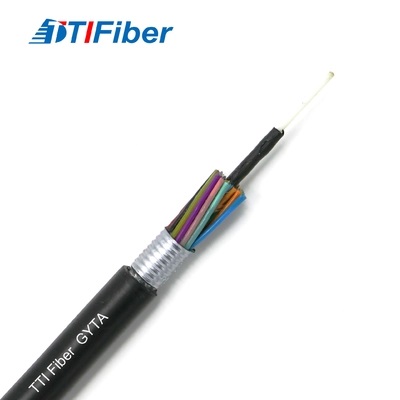
How Is Interlocked Armored Cable Constructed
What Is Interlocked Armored Cable?
Interlocked armored cable is an electrical cable designed with a protective metallic layer that wraps around the cable core in a spiral pattern. The metal strips are specially formed so that their edges mechanically interlock with one another, creating a flexible yet durable protective armor. This construction helps protect the internal conductors from physical damage while maintaining the flexibility needed for practical installation.
Unlike traditional electrical cables that rely solely on insulation and an outer jacket, interlocked armored cable incorporates an additional layer of mechanical protection. It is widely used in commercial buildings, manufacturing facilities, industrial plants, power distribution systems, and telecommunications infrastructure where cables may be exposed to physical impact, abrasion, or challenging installation conditions.
Depending on the application, interlocked armor can be manufactured using galvanized steel or aluminum. The cable may also include copper or aluminum conductors, different insulation materials, grounding components, and protective outer jackets. These variations allow engineers, contractors, and procurement professionals to select cable constructions that meet their electrical, mechanical, environmental, and regulatory requirements.
For businesses purchasing electrical cables, understanding interlocked armored cable is important because the armor material, cable construction, voltage rating, and installation environment directly affect performance, safety, service life, and overall project cost.
How Is Interlocked Armored Cable Constructed?
Interlocked armored cable is manufactured through a carefully controlled process that combines electrical insulation, conductor assembly, and mechanical protection. The defining characteristic is the interlocking metallic armor, which is formed from a continuous strip of metal and wrapped helically around the cable core.
How Are the Electrical Conductors Prepared?
The manufacturing process begins with copper or aluminum conductors. Copper is frequently selected for its excellent electrical conductivity, flexibility, and reliable connection characteristics. Aluminum may be chosen for applications where reducing conductor weight and material costs is a priority.
The conductors are stranded or solid, depending on the cable specification, conductor size, and installation requirements. Stranded conductors are commonly used in industrial cables because they provide greater flexibility and are easier to handle during installation.
How Is Insulation Applied to the Conductors?
Each conductor is covered with electrical insulation to prevent short circuits, leakage current, and unintended contact between conductors. Common insulation materials include thermoplastic and thermosetting compounds such as PVC and XLPE.
The insulation material must be suitable for the cable's voltage rating, operating temperature, and environmental conditions. For example, XLPE insulation is commonly used in power cables because of its favorable electrical properties and thermal performance.
How Is the Interlocked Metal Armor Formed?
After the insulated conductors are assembled into a cable core, a metallic strip is shaped into a profile resembling the letter "S." Specialized forming equipment wraps the strip around the cable in a continuous helical pattern.
Each turn mechanically locks into the preceding turn. This interlocking structure creates a protective metal covering that can bend with the cable while resisting many forms of external mechanical damage. Unlike a rigid metal conduit, the armor is integrated into the cable itself.
Why Is an Outer Jacket Added to Interlocked Armor?
An additional outer jacket is often applied over the metallic armor to improve environmental protection. Depending on the cable design, jacket materials may include PVC, CPE, or low-smoke, halogen-free compounds.
The outer jacket can help protect the armor from corrosion, moisture exposure, chemicals, abrasion, and sunlight. However, not every interlocked armored cable is suitable for wet environments or direct burial. Buyers should verify the complete cable listing and environmental ratings rather than assuming the armor itself provides a waterproof seal.
What Are the Main Types of Interlocked Armored Cable?
Interlocked armored cable is generally classified according to the material used to manufacture its metallic armor. The two most common options are aluminum interlocked armor and galvanized steel interlocked armor. Although both provide mechanical protection, their weight, electrical characteristics, corrosion behavior, and cost can differ significantly.
What Is Aluminum Interlocked Armored Cable?
Aluminum interlocked armored cable uses aluminum strips to form its protective metallic layer. Aluminum is lightweight and generally easier to handle than steel, making it attractive for projects involving long cable runs, overhead support systems, or installations where reducing cable weight is important.
It is frequently used in commercial buildings, industrial power distribution, electrical feeders, control systems, and cable tray installations. Aluminum armor is also nonmagnetic, which can be advantageous in certain electrical applications. However, the complete cable construction must still be evaluated for grounding, bonding, and electrical suitability.
What Is Galvanized Steel Interlocked Armored Cable?
Galvanized steel interlocked armored cable features steel strips coated with zinc to help resist corrosion. Steel generally provides greater stiffness and can offer strong mechanical protection against physical impact and crushing when properly engineered.
This construction is often considered for industrial environments, manufacturing facilities, and installations where mechanical protection is a major concern. Its higher weight compared with aluminum armor should be considered during transportation, cable support design, and installation planning.
Can Interlocked Armored Cable Use Different Conductor Materials?
Yes. Interlocked armored cable can be manufactured with either copper or aluminum conductors. Copper is often preferred when electrical conductivity, compact conductor sizing, and connection reliability are important. Aluminum conductors can provide a lighter and potentially more economical solution for suitable feeder and distribution applications.
The conductor material should be selected based on ampacity, voltage drop, terminal compatibility, installation conditions, and applicable electrical codes. It should not be determined by material price alone.
Which Armor Construction Is Better for Different Applications?
| Comparison Factor | Aluminum Interlocked Armor | Galvanized Steel Interlocked Armor |
|---|---|---|
| Material | Aluminum strip | Zinc-coated steel strip |
| Weight | Lightweight | Heavier |
| Mechanical protection | Good protection for many standard installations | Often preferred for greater mechanical robustness |
| Corrosion resistance | Generally favorable, depending on exposure | Depends on galvanizing quality and environment |
| Magnetic characteristics | Nonmagnetic | Ferromagnetic |
| Installation handling | Generally easier due to lower weight | Requires consideration of additional weight |
| Common applications | Commercial buildings, power distribution, cable trays | Industrial plants and mechanically demanding environments |
The best choice depends on the project requirements rather than a universal preference for one material. Engineers should compare the actual cable specifications, environmental conditions, mechanical protection requirements, and applicable standards before making a final selection.
What Are the Advantages of Interlocked Armored Cable?
Interlocked armored cable offers several advantages over conventional unarmored cable installations. Its integrated metallic protection, flexible construction, and ability to simplify cable routing make it a practical solution for many industrial and commercial projects.
How Does Interlocked Armor Improve Mechanical Protection?
The metallic armor provides an additional barrier against external physical damage. During installation and operation, cables may encounter accidental impacts, abrasion, pressure, or contact with sharp edges. Interlocked armor helps reduce the likelihood that these conditions will damage the insulated conductors.
This added protection is particularly valuable in industrial facilities, workshops, manufacturing plants, and commercial buildings where electrical cables are routed through areas with equipment, maintenance activities, or frequent personnel movement.
How Does Interlocked Armored Cable Reduce Installation Costs?
Because the armor is integrated into the cable, certain installations may not require a separate conduit or raceway for mechanical protection. This can reduce the number of installation materials, simplify cable routing, and lower labor requirements.
For large commercial or industrial projects, savings may come from fewer installation steps, reduced handling of separate protective systems, and more efficient cable pulling. However, conduit or raceway may still be required by local codes, project specifications, or environmental conditions.
Why Is Flexibility Important in Interlocked Armored Cable?
The interlocking metal strip is designed to accommodate bending without behaving like a rigid metal tube. This flexibility makes it easier to route cables around equipment, through building structures, and along cable support systems.
It is especially helpful in retrofit projects where existing pathways are difficult to modify. Installers can often work with the cable's flexibility to reduce the complexity of routing, provided they follow the manufacturer's minimum bending radius and installation requirements.
How Does Armored Cable Improve Long-Term Reliability?
By protecting the cable core from many forms of mechanical damage, interlocked armor can help reduce the risk of premature cable failure. This can be important in industrial environments where electrical interruptions affect production schedules, equipment operation, and maintenance budgets.
Nevertheless, armor does not eliminate every risk. Moisture ingress, chemical exposure, excessive pulling tension, incorrect termination, and unsuitable installation conditions can still compromise cable performance. Long-term reliability depends on selecting and installing the complete cable system correctly.
What Are the Limitations of Interlocked Armored Cable?
Although interlocked armored cable is widely used, it is not the ideal choice for every application. Understanding its limitations helps electrical engineers and procurement teams avoid costly specification errors and installation problems.
Is Interlocked Armored Cable Waterproof?
Not automatically. Interlocked metallic armor is designed primarily to provide mechanical protection, not to create a continuous watertight barrier. The interlocking structure may allow moisture to enter under certain conditions.
When cables are installed in wet locations, underground environments, or areas exposed to standing water, buyers should confirm whether the cable has an appropriate moisture-resistant outer jacket and is specifically listed for the intended installation.
Can Interlocked Armored Cable Withstand Heavy Longitudinal Loads?
Interlocked armor is not generally designed to serve as a primary load-bearing element for high longitudinal pulling or suspension loads. Its mechanical properties differ from those of wire-armored cable constructions engineered for tensile strength.
For vertical installations, long-distance pulling, or applications involving significant mechanical tension, engineers should check the cable manufacturer's maximum pulling tension and determine whether an alternative armor design is more appropriate.
Does Interlocked Armor Require Special Termination Accessories?
Yes. Proper installation generally requires compatible connectors, glands, fittings, or termination accessories designed for the particular armor type and cable diameter. These components help secure the cable, protect its end, and provide appropriate electrical bonding or grounding where required.
Using unsuitable accessories can compromise the integrity of the installation. Procurement teams should consider termination hardware as part of the overall cable specification rather than purchasing it separately without compatibility checks.
Can Interlocked Armored Cable Be Used in Hazardous Locations?
Some armored cable constructions are approved for specific hazardous locations, but standard interlocked armored cable should not automatically be considered suitable for explosive atmospheres. Hazardous-location installations require cables and fittings that comply with the applicable classification and certification requirements.
Engineers should verify the complete cable assembly, including armor construction, outer jacket, grounding arrangement, connectors, and listing. Depending on the environment, a specialized cable such as MC-HL or another approved hazardous-location construction may be necessary.
How Does Interlocked Armored Cable Compare With Other Armored Cable Types?
Interlocked armor is only one of several metallic cable protection methods. Other designs include continuously corrugated welded armor, steel wire armor, and steel tape armor. Each construction offers a different balance of flexibility, mechanical protection, environmental resistance, and installation requirements.
What Is the Difference Between Interlocked and Corrugated Armored Cable?
Interlocked armored cable is manufactured by spirally wrapping a shaped metal strip around the cable so that the edges mechanically lock together. Continuously corrugated welded armor, by contrast, is formed into a continuous metallic sheath with a longitudinal seam that is welded and then corrugated.
Corrugated welded armor is often selected when environmental sealing is an important requirement. Interlocked armor is commonly valued for flexibility and ease of handling. The appropriate choice depends on the cable's intended installation environment and product certification.
How Does Interlocked Armor Compare With Steel Wire Armor?
Steel wire armored cable uses individual steel wires arranged around the cable core. This construction is often selected when high tensile strength is required, such as in certain outdoor, underground, or long-distance installations.
Interlocked armor uses a metal strip rather than individual wires. It can provide a practical balance of mechanical protection and flexibility for many indoor and industrial applications, but it should not be assumed to provide the same tensile performance as a cable specifically engineered with wire armor.
How Does Interlocked Armor Compare With Steel Tape Armor?
Steel tape armor typically consists of steel tapes applied around the cable core to provide mechanical protection. Depending on its design, it may be used in fixed installations where radial protection is important.
Interlocked armor differs because its metal strip is mechanically formed and locked into a flexible helical structure. The distinction affects cable handling, bending behavior, mechanical performance, and installation suitability.
Which Armored Cable Type Should Buyers Choose?
| Cable Type | Primary Characteristics | Typical Application Considerations |
|---|---|---|
| Interlocked Armor | Flexible metallic strip with mechanically interlocking edges | Commercial buildings, industrial power, cable trays, and retrofit installations |
| Corrugated Welded Armor | Continuous welded and corrugated metallic sheath | Applications requiring stronger environmental sealing and mechanical protection |
| Steel Wire Armor | Individual steel wires arranged around the cable core | Installations where tensile strength and mechanical loading are important |
| Steel Tape Armor | Metallic tapes providing radial mechanical protection | Fixed installations with specific mechanical protection requirements |
There is no single armored cable construction that works best in every environment. Cable selection should be based on electrical design, mechanical requirements, installation conditions, and the applicable regulatory framework.
Where Is Interlocked Armored Cable Commonly Used?
Interlocked armored cable is used across a broad range of industries because it combines electrical functionality with integrated mechanical protection. Its applications include power distribution, control circuits, industrial equipment, commercial infrastructure, and selected communication systems.
Why Is Interlocked Armored Cable Used in Commercial Buildings?
Commercial buildings often contain electrical distribution systems that supply lighting, HVAC equipment, elevators, and other essential services. Interlocked armored cable can simplify routing in areas where additional mechanical protection is desirable.
It may be installed in approved cable trays, equipment rooms, service spaces, and other building pathways. The cable type must be selected according to building codes, voltage requirements, fire performance, and installation conditions.
How Is Interlocked Armored Cable Used in Industrial Facilities?
Industrial facilities rely on electrical systems to operate motors, pumps, production equipment, control panels, and automated machinery. Cables in these environments may be exposed to vibration, physical contact, maintenance activities, and demanding installation conditions.
Interlocked armored cable provides an additional level of mechanical protection for suitable applications. Industrial buyers should also evaluate temperature ratings, chemical resistance, oil resistance, and the cable's compatibility with the operating environment.
Can Interlocked Armored Cable Be Used for Power Distribution?
Yes. Interlocked armored cable is available in various conductor sizes, configurations, and voltage ratings for power distribution applications. It can be used in suitable feeder circuits, branch circuits, and other electrical distribution systems.
Before specifying the cable, engineers must calculate the required ampacity, voltage drop, short-circuit withstand capability, and grounding requirements. Cable sizing must also account for ambient temperature, grouping factors, and installation methods.
Is Interlocked Armored Cable Suitable for Fiber Optic Networks?
Interlocked armor is also available for certain fiber optic cable constructions. In these products, the armor surrounds the optical cable core to improve mechanical protection in high-traffic areas, industrial facilities, and selected indoor pathways.
Armored fiber optic cable may be used in backbone networks, telecommunications rooms, equipment connections, and retrofit installations. Buyers should verify optical performance, fiber count, indoor or outdoor suitability, and the appropriate riser or plenum rating before ordering.
How Should You Select the Right Interlocked Armored Cable?
Selecting interlocked armored cable requires more than identifying the correct conductor size. A reliable specification should account for electrical performance, mechanical protection, environmental exposure, regulatory compliance, and the total cost of installation and operation.
What Voltage Rating and Conductor Size Are Required?
The first step is determining the system voltage and expected electrical load. The cable must have an appropriate voltage rating and sufficient conductor capacity to safely carry the required current.
Conductor sizing should consider ampacity, voltage drop, circuit length, operating temperature, and installation conditions. For industrial projects, short-circuit calculations and protective device coordination may also be necessary.
Which Armor Material Is Appropriate for the Installation?
Aluminum armor may be suitable where weight reduction and ease of handling are priorities. Galvanized steel armor may be preferred when a different level of mechanical robustness is required.
However, the decision should consider the complete installation. Corrosive environments, magnetic effects, mechanical loading, cable support spacing, and termination requirements can influence the final specification.
What Environmental Conditions Should Be Evaluated?
Buyers should identify whether the cable will be installed indoors, outdoors, in wet locations, in direct sunlight, underground, or in environments exposed to oil and chemicals.
Each condition may require specific jacket materials, temperature ratings, environmental listings, and additional protective measures. A cable designed for dry indoor applications should not be substituted for a product approved for outdoor or direct-burial service without engineering review.
Which Certifications and Standards Should Be Verified?
In North American markets, Type MC cable is commonly associated with UL 1569. Other cable constructions and applications may involve additional UL, CSA, ICEA, or applicable national and regional standards.
Purchasers should request technical datasheets, applicable certification documentation, conductor specifications, dimensional information, and installation instructions. Compliance must be verified for the exact cable construction rather than inferred from the general product category.
How Can Buyers Evaluate Interlocked Armored Cable Manufacturers?
For distributors, electrical contractors, OEMs, and industrial procurement teams, choosing a cable manufacturer is just as important as choosing the correct cable construction. A qualified supplier should demonstrate consistent manufacturing quality, technical expertise, reliable delivery, and the ability to support project-specific requirements.
Does the Manufacturer Offer the Required Cable Specifications?
Buyers should confirm that the manufacturer can supply the required conductor material, conductor size, number of cores, insulation type, armor material, voltage rating, and outer jacket.
For customized projects, it is important to discuss available design options, minimum order quantities, production lead times, and the feasibility of special configurations before placing an order.
Can the Supplier Provide Reliable Quality Control Documentation?
A professional cable manufacturer should have established procedures for conductor inspection, insulation quality testing, armor forming, dimensional verification, and finished-product testing.
Depending on the product and project requirements, buyers may request routine test reports, material certificates, compliance documentation, and traceability information. These records help procurement teams evaluate consistency and reduce quality-related risks.
Does the Manufacturer Provide Technical Support?
Technical support is valuable when projects involve nonstandard installation conditions, customized cable constructions, or specific electrical and mechanical requirements.
A reliable supplier should be able to explain product limitations, recommend suitable constructions, clarify relevant certifications, and provide accurate documentation to support engineering and installation decisions.
How Should Buyers Compare Pricing and Lead Times?
Price comparisons should be based on equivalent specifications. Two cables with the same nominal conductor size may differ in insulation material, armor thickness, jacket performance, certification, and manufacturing quality.
Procurement teams should evaluate the complete commercial offer, including material specifications, order quantity, packaging, delivery schedule, warranty terms, and technical support. The lowest initial price is not always the lowest total project cost.
What Is the Difference Between Interlocked Armored Cable and Ordinary Electrical Cable?
The primary difference is the additional metallic armor integrated into the cable construction. Ordinary unarmored electrical cable generally relies on its conductor insulation and outer jacket for protection, while interlocked armored cable adds a formed metallic layer that provides supplementary mechanical protection.
This distinction can influence installation methods, material requirements, labor costs, and cable durability. However, armored cable is not automatically a substitute for every conduit system or protective installation method.
| Feature | Ordinary Unarmored Cable | Interlocked Armored Cable |
|---|---|---|
| Construction | Conductors, insulation, and protective jacket | Conductors, insulation, metallic armor, and optional outer jacket |
| Mechanical protection | Depends primarily on insulation and jacket | Additional protection from integrated metallic armor |
| Installation | May require additional mechanical protection | May simplify installation where approved |
| Flexibility | Varies by cable construction | Flexible compared with many rigid metallic protection systems |
| Cost considerations | Potentially lower cable purchase price | Potentially higher cable price but reduced installation costs in suitable projects |
| Typical applications | Protected pathways and standard electrical installations | Industrial, commercial, and other installations requiring additional mechanical protection |
The appropriate solution depends on project requirements, local electrical codes, and the total installed cost. Engineers should compare complete wiring methods rather than evaluating cable prices in isolation.
What Should You Know Before Installing Interlocked Armored Cable?
Proper installation is essential to ensuring that interlocked armored cable delivers its intended performance. Even a high-quality cable can be damaged if it is pulled incorrectly, bent beyond its permitted radius, or terminated using incompatible accessories.
How Should Cable Bending Radius Be Managed?
Every cable has a minimum bending radius specified by its manufacturer. Bending the cable too sharply can damage the conductor insulation, deform the armor, or compromise the cable's mechanical integrity.
Installers should follow the manufacturer's recommendations, particularly when routing cables through corners, equipment entrances, and confined spaces. The permissible bending radius may differ depending on cable diameter, construction, and whether the cable is being bent during installation or after it has been positioned.
How Should Pulling Tension Be Controlled?
Cable pulling tension must remain within the manufacturer's specified limits. Excessive tension may stretch conductors, damage insulation, deform the armor, or affect the cable's long-term performance.
For longer installations, contractors should evaluate the pulling route, friction, cable weight, bends, and pulling equipment. Proper planning can help prevent installation damage and reduce the risk of expensive replacement work.
Why Are Grounding and Bonding Important?
Metallic armor may serve as part of an approved grounding or bonding arrangement, but this depends on the cable construction, listing, and applicable electrical code. Not all armored cables have the same grounding characteristics.
Installers must verify the appropriate bonding method, grounding conductors, connectors, and termination hardware. Electrical continuity and fault-current requirements should be checked as part of the installation process.
How Can Cable Damage Be Prevented During Installation?
Installers should inspect cable reels, cable surfaces, armor condition, and end seals before installation. Proper handling and storage help prevent moisture ingress, crushing, abrasion, and unnecessary deformation.
After installation, the cable should be inspected and tested according to the project requirements and applicable standards. Maintaining installation records and documenting any damage or corrective work can also support long-term maintenance and reliability.
Is Interlocked Armored Cable the Right Choice for Your Project?
Interlocked armored cable is a practical electrical cable solution that combines insulated conductors with an integrated metallic protective layer. Its flexible interlocking construction provides additional mechanical protection while offering installation advantages in many commercial and industrial environments.
Its suitability depends on the armor material, conductor configuration, insulation system, voltage rating, environmental conditions, and required certifications. Aluminum and galvanized steel armor each offer distinct benefits, and neither should be selected without considering the complete application.
For electrical engineers, contractors, distributors, and procurement professionals, the key is to evaluate interlocked armored cable as a complete engineered product rather than simply as a cable with a metal covering. A well-matched cable specification, qualified manufacturer, and correct installation method can help improve electrical safety, operational reliability, and long-term project value.


Main Advantages and Disadvantages of Interlocked Armored Cable
Typical Structure of an SWA Fiber Optic Cable
Related Article