Typical Structure of an SWA Fiber Optic Cable
What Is the Typical Structure of an SWA Fiber Optic Cable?
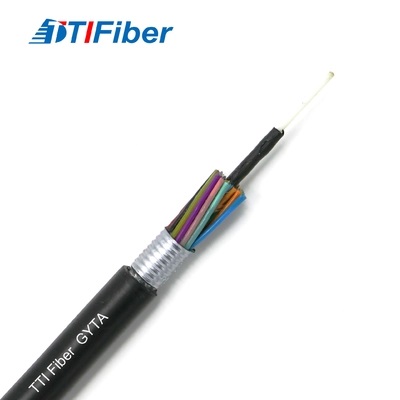
Steel Wire Armoured (SWA) fiber optic cable is engineered for survival—designed to endure burial under roads, exposure to rodents, crushing loads, and decades of environmental stress. But this resilience isn’t accidental. It emerges from a meticulously layered architecture, where each component serves a precise mechanical, optical, or protective function.
Unlike simpler indoor cables, SWA construction follows rigorous standards—often aligned with BS 7878, IEC 60794, and regional utility specifications—to ensure long-term reliability in the harshest conditions. So what exactly lies beneath that rugged black sheath? And how do these layers work together to shield fragile glass fibers from the outside world?
Let’s dissect the anatomy of a typical outdoor SWA fiber optic cable—not as a parts list, but as an integrated system of defense, stability, and performance.
What Lies at the Core: How Are the Optical Fibers Protected Internally?
At the heart of every SWA cable are the optical fibers themselves—typically ITU-T G.652.D single-mode or OM4/OM5 multimode fibers, each with a 125 µm glass cladding and a 250 µm UV-cured acrylate primary coating. This coating is the first line of defense, cushioning the glass against microbending caused by pressure or temperature shifts.
These coated fibers are not left loose. Instead, they’re grouped into loose buffer tubes made of PBT (polybutylene terephthalate), a stiff yet flexible engineering plastic resistant to moisture, chemicals, and long-term creep. Each tube typically holds 2 to 12 fibers and is either:
- Gel-filled: With a thixotropic petroleum-based compound that blocks water migration and lubricates fibers during thermal expansion.
- Dry-blocked: Using superabsorbent polymer (SAP) tapes or powders that swell instantly upon contact with moisture—preferred in modern “clean” installations to avoid gel cleanup.
The tubes are stranded helically around a central member, allowing them to move slightly under tension or temperature changes without straining the fibers—a design principle known as “loose tube” architecture, essential for outdoor plant reliability.
What Role Does the Central Strength Member Play?
Beneath the fiber tubes lies the central strength member (CSM)—a rigid rod that gives the cable its backbone. In SWA cables, this is almost always made of FRP (fiberglass-reinforced plastic), though some heavy-duty variants use galvanized steel wire.
The CSM serves three critical purposes:
- Prevents buckling during installation or under compressive loads.
- Maintains cable roundness, ensuring uniform armor application.
- Absorbs longitudinal stress, so pulling tension doesn’t transfer to the delicate fibers.
FRP is preferred over steel in most designs because it’s dielectric (non-conductive), eliminating induced currents from nearby power lines and simplifying grounding—though the outer steel armor still requires bonding.
Why Is a Moisture Barrier Essential—Even Beneath Steel Armor?
Surprisingly, steel armor alone cannot stop water. Moisture can seep through microscopic gaps, jacket nicks, or end-seal failures, then travel kilometers via capillary action along fiber coatings or buffer walls.
To block this, SWA cables include an aluminum-polyethylene laminated (APL) sheath wrapped tightly around the core. This barrier consists of:
- A thin aluminum foil layer (typically 0.1–0.2 mm) that is impermeable to water vapor.
- A bonded layer of low-density polyethylene (LDPE) that provides mechanical support and adhesion to the bedding layer.
The APL sheath must be continuous and pinhole-free—any breach compromises the entire moisture defense. During manufacturing, it’s often seam-welded and tested for integrity before armor application.
This layer is why high-quality SWA cables survive decades underground while cheaper imitations fail within years—armor resists shovels; APL resists time.
What Is the Purpose of the Bedding Layer—and Is It Just Filler?
Often overlooked, the bedding layer (also called the inner sheath) is a critical interface between the soft core and the hard armor. Extruded directly over the APL sheath, it’s typically made of PVC or PE and serves two key functions:
- Cushioning: It absorbs the pressure points created by the helically wound steel wires, preventing them from indenting or cutting into the APL foil during flexing or thermal cycling.
- Surface Uniformity: It creates a smooth, cylindrical surface for consistent armor lay—irregularities here would cause uneven wire tension and weak spots.
Without this layer, the sharp edges of steel wires could gradually fatigue the moisture barrier, leading to hidden water ingress. The bedding layer is thin (1–2 mm), but its role is structural, not cosmetic.
How Is the Steel Wire Armor Constructed—and What Makes It Effective?
The defining feature of SWA cable is its steel wire armor: a helical layer (or sometimes two layers laid in opposite directions) of galvanized round steel wires, typically ranging from 0.9 mm to 2.5 mm in diameter, depending on cable size and application.
Key characteristics:
- Material: High-carbon steel, hot-dip galvanized to ASTM A475 or BS EN 10264 standards, with zinc coating ≥300 g/m² for corrosion resistance.
- Lay Direction: Usually applied in a right-hand lay over a left-hand stranded core to balance torsional forces.
- Coverage: Wires are closely spaced to minimize gaps—though small interstices remain, which is why the underlying APL sheath is essential.
- Performance: Provides:
- Tensile strength up to 15,000 N (allowing long aerial spans when lashed).
- Crush resistance exceeding 3,000 N per 10 cm (per IEC 60794-1-E3).
- Rodent and impact resistance far superior to corrugated tape armor.
This armor transforms the cable into a self-protecting conduit—ideal for direct burial without conduit in high-risk zones.
What Is the Function of the Outer Sheath—and Why Is It Usually Black PVC?
The final layer is the outer sheath, most commonly black PVC in SWA cables, though LSZH or PE variants exist for specific environments.
This sheath performs multiple roles:
- UV Protection: Carbon black (2.5–3%) is compounded into the PVC to absorb ultraviolet radiation, preventing polymer degradation during above-ground exposure.
- Abrasion Resistance: Shields the steel wires from soil friction, rocks, and handling damage during installation.
- Chemical Resistance: Resists oils, acids, and alkalis encountered in industrial or urban soils.
- Fire Performance: Standard PVC meets IEC 60332-1 flame propagation requirements—though it emits smoke and HCl gas when burned (hence LSZH alternatives for indoor use).
The sheath is extruded tightly over the armor to seal interstices and prevent moisture wicking. Its thickness (typically 1.5–2.5 mm) is calibrated to balance flexibility and durability.
How Do All These Layers Work Together as a System?
The brilliance of SWA cable lies not in any single layer, but in their synergistic integration:
- The loose tubes isolate fibers from strain.
- The APL sheath blocks moisture at the molecular level.
- The bedding layer decouples soft core from hard armor.
- The steel wires absorb external mechanical threats.
- The outer sheath seals and shields the entire assembly.
If one layer fails—say, a nick in the sheath—the others continue to protect. This defense-in-depth philosophy is why SWA remains the gold standard for critical outdoor fiber deployments worldwide.
Is SWA Structure Over-Engineered—or Perfectly Balanced?
To the untrained eye, SWA cable may seem excessively complex. But every layer answers a real-world failure mode observed over decades of field experience: water ingress, rodent attack, crushing loads, thermal cycling, and corrosion.
This structure isn’t about adding bulk—it’s about engineering trust into every meter. Because in infrastructure that must last 30 years or more, there are no second chances. The light inside depends on the layers outside—and in SWA cable, those layers are built to honor that responsibility.


How Is Interlocked Armored Cable Constructed
SWA Differ from Other Armored Cable Types Like AWA or CST
Related Article