



GYXY Cable: An Essential Component in Communication Networks
author: TTI Fiber
2023-12-21
GYXY cable is a type of optical cable widely used in communication networks.
It has excellent performance and a wide range of applications.
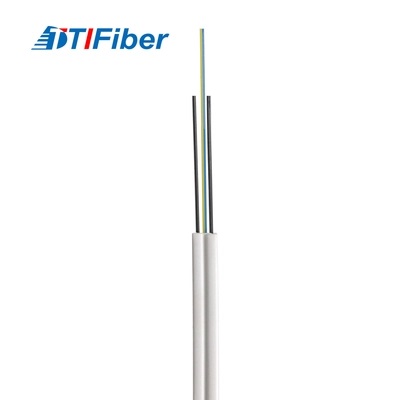
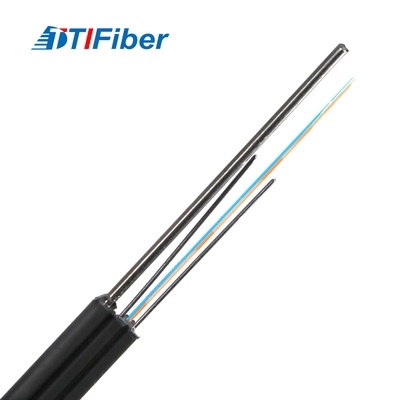
The structure of GYXY cable mainly consists of a loose tube, a central strength member, steel wires, and a sheath.
The loose tube is filled with special oil to protect the optical fibers. Two parallel steel wires ensure the tensile
strength of the cable. The PE sheath has good UV resistance performance. This structure makes the GYXY cable
have excellent mechanical and temperature characteristics, able to operate stably in various harsh environments.
It has excellent performance and a wide range of applications.
The structure of GYXY cable mainly consists of a loose tube, a central strength member, steel wires, and a sheath.
The loose tube is filled with special oil to protect the optical fibers. Two parallel steel wires ensure the tensile
strength of the cable. The PE sheath has good UV resistance performance. This structure makes the GYXY cable
have excellent mechanical and temperature characteristics, able to operate stably in various harsh environments.

The main features of GYXY cable include excellent transmission performance, hydrolysis resistance, tensile strength,
and temperature characteristics. It uses high-quality core and fiber coating materials to ensure stable and reliable
transmission performance. At the same time, the loose tube material itself has good hydrolysis resistance, which
can prevent moisture damage to the optical fibers. Two parallel steel wires ensure the tensile strength of the cable,
able to withstand large tensile forces. In addition, the PE sheath has good UV resistance performance, which can
prevent UV damage to the optical fibers.
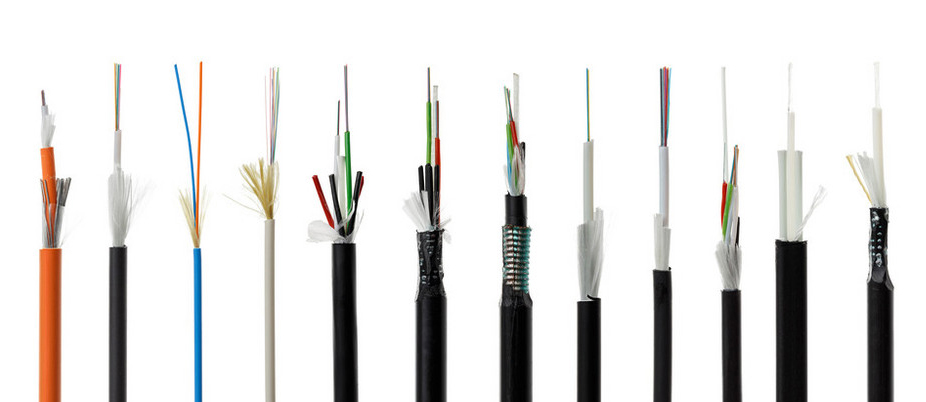
The application scope of GYXY cable is very wide, which can be used in communication networks, power networks,
transportation networks and other fields. In communication networks, GYXY cables are widely used in access
networks, metropolitan area networks, and backbone networks, providing faster, more stable and reliable network
connections for people's communication. In power networks, GYXY cables are used to transmit power signals and
control signals, ensuring the stable operation of power systems. In transportation networks, GYXY cables are used
to transmit various traffic signals and control signals, providing more efficient and intelligent support for traffic
management.
In conclusion, GYXY cable is a type of high-performance and widely used optical cable. Its appearance provides
powerful support for the development of communication networks, power networks, transportation networks
and other fields. With the continuous development of technology, GYXY cables will play a more important role
in future development.
Fiber Optic Cable Types : Multimode and Single Mode
GYXTW: Inside the Center Loose Tube Optical Fiber Cable
Related Article

Unarmored cables, by contrast, rely solely on buffer tubes, strength members (like aramid yarn), and the outer jacket for protection. They’re lighter, more flexible, and easier to terminate—but far more vulnerable to mechanical stress.
Differences Between Armored and Unarmored Fiber Optic Cable
When we stream 4K video, join a global video call, or access cloud AI models in real time, it’s easy to forget the quiet miracle beneath it all: a hair-thin strand of glass, stretching across oceans and cities, guiding pulses of light with near-perfect fidelity. But this “magic” isn’t magic at all. It’s the result of centuries of optics, decades of materials science, and relentless precision engineering—all converging to turn sand into speed.
Science Behind High-Speed Optical Fiber
Because the fiber isn’t just a tube of glass—it’s a precision optical waveguide designed to exploit a fundamental law of light: total internal reflection.
Why Does Not Light Just Leak Out the Sides of the Fiber
The answer isn’t that light is indestructible. It’s that modern optical fiber has been engineered to the very edge of what physics allows, minimizing every possible way a photon can be lost. But what, exactly, causes light to fade in the first place—and how have we tamed those forces?
Why Does Light Travels Through Fiber