Differences Between Armored and Unarmored Fiber Optic Cable
What Are the Differences Between Armored and Unarmored Fiber Optic Cable?
For fiber optic deployment, the choice of cable isn’t just about how much data it can carry—it’s about where it runs, what it endures, and how long it must last. Two fundamental categories dominate this decision: armored and unarmored fiber optic cables. At first glance, they may appear nearly identical—glass strands inside a protective jacket—but their internal construction tells a story of risk, environment, and engineering intent.
So what truly separates them? Is armor always better? And when does added protection become unnecessary weight—or even a liability? Let’s explore these questions with technical depth, real-world context, and a clear-eyed view of where each cable belongs.
What Exactly Is “Armor” in a Fiber Optic Cable?
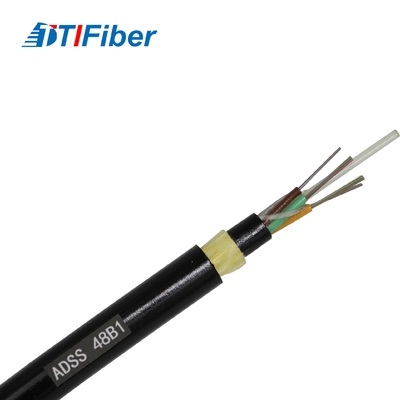
In fiber optics, “armor” doesn’t mean steel plating—it refers to a mechanical reinforcement layer integrated beneath the outer jacket to protect the delicate optical fibers from physical threats. This layer typically takes one of two forms:
- Interlocking metal tape armor: Made from corrugated aluminum or steel, this flexible, spiral-wound layer resists crushing, rodent bites, and accidental impacts. It’s lightweight yet robust—common in indoor/outdoor riser applications.
- Smooth aluminum or stainless steel tube: A seamless metallic sheath extruded over the buffer tubes, offering superior moisture and crush resistance. Often used in direct-burial or harsh industrial settings.
Crucially, this armor sits between the cable core and the outer polyethylene (PE) or PVC jacket, acting as a shield without interfering with optical performance. It adds diameter, weight, and cost—but also resilience where it matters most.
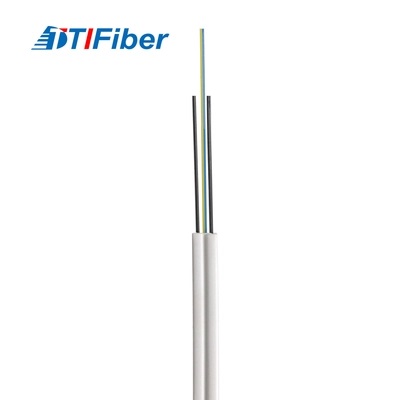
Unarmored cables, by contrast, rely solely on buffer tubes, strength members (like aramid yarn), and the outer jacket for protection. They’re lighter, more flexible, and easier to terminate—but far more vulnerable to mechanical stress.
Where Are Armored Cables Typically Used—and Why?
Armored fiber shines in environments where physical aggression is expected or unavoidable:
- Direct burial: When cable is trenched into soil without conduit, it faces rocks, shovels, root pressure, and burrowing animals. Armor prevents fiber breakage during backfill and over decades of subsidence.
- Industrial facilities: Factories, power plants, and refineries expose cables to forklifts, tool drops, and sharp edges. Metal armor absorbs impacts that would otherwise crack the glass.
- Rodent-prone areas: Rural, agricultural, or tropical zones often see cables gnawed by rodents. Metal armor acts as a deterrent—unlike plastic jackets, which offer little resistance.
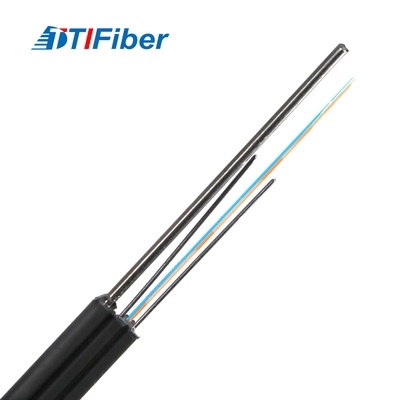
- Aerial self-supporting runs: Some armored cables include a messenger wire integrated into the armor, allowing them to span poles without lashing to a separate strand.
- Military or secure sites: Where tamper resistance is critical, armor adds a layer of intrusion detection and physical deterrence.
In these scenarios, the modest increase in cost and handling complexity is vastly outweighed by reduced failure rates and lower lifetime maintenance.
Where Do Unarmored Cables Excel—and When Are They Sufficient?
Unarmored cables dominate controlled, protected pathways where mechanical threats are minimal:
- Indoor horizontal runs: Inside walls, ceilings, or under raised floors, cables are enclosed in conduits, trays, or raceways. Here, flexibility and low smoke/toxicity (e.g., OFNP/Plenum-rated jackets) matter more than crush resistance.
- Data centers: Patch cords, backbone cables between racks, and interconnects within sealed pathways rarely face external hazards. Lightweight unarmored cables simplify routing and reduce strain on patch panels.
- Conduit-pulled outdoor links: When installed inside HDPE or PVC conduit, the conduit itself provides crush and rodent protection—making internal armor redundant.
- Temporary or tactical deployments: For events, disaster recovery, or field operations, unarmored cables are faster to deploy, coil, and terminate.
In these contexts, adding armor would only increase bend radius, weight, and termination time—without meaningful benefit. Simplicity becomes a virtue.
How Does Armor Affect Installation and Termination?
This is where practical realities bite. Armored cables demand specialized handling:
- Bend radius: Armored cables typically require a larger minimum bend radius (e.g., 20× cable diameter vs. 10× for unarmored). Sharp bends can kink the metal layer, damaging fibers inside.
- Stripping and preparation: Terminating an armored cable requires:
- Cutting through the metal layer with a rotary tool or armored cable stripper.
- Bonding or grounding the armor (in some codes) to prevent electrical hazards.
- Installing special connectors or splice closures rated for armored entry.
- Grounding requirements: In outdoor or lightning-prone areas, metallic armor must be grounded at both ends (or per local code) to dissipate induced currents—adding complexity unarmored cables avoid entirely.
- Weight and stiffness: Armored cables can weigh 2–3× more than equivalent unarmored types, making long pulls more labor-intensive and requiring stronger support hardware.
Unarmored cables, by contrast, can often be stripped with basic tools, terminated with standard connectors (LC, SC), and routed through tight spaces with ease. Their agility makes them ideal for high-density, frequently reconfigured environments.
Does Armor Improve Long-Term Reliability—Or Just Survivability?
It depends on your definition of “reliability.”
- Survivability: Armor dramatically improves resistance to catastrophic failures—cuts, crushes, rodent attacks. Field data shows armored direct-buried cables have >50% fewer fault reports over 10 years compared to unarmored equivalents in the same soil conditions.
- Long-term signal integrity: Armor itself doesn’t affect attenuation—but by preventing microbends from external pressure, it helps maintain consistent optical performance over decades.
- Moisture resistance: Metallic armor (especially corrugated aluminum with flooding compound) blocks water migration far better than unarmored designs, critical in flooded ducts or high-humidity regions.
However, armor introduces new failure modes if improperly installed: ungrounded armor can act as an antenna for lightning-induced surges; kinked armor can create persistent stress points. So reliability gains assume proper installation discipline.
Are There Different Types of Armored Cable—and Do They Matter?
Yes. Not all armor is created equal:
| Type | Material | Best For | Limitations |
|---|---|---|---|
| Corrugated Aluminum Interlock | Aluminum alloy | Indoor/outdoor risers, rodent zones | Not for direct submersion; moderate crush resistance |
| Smooth Aluminum Tube | Extruded Al | Direct burial, wet locations | Less flexible; harder to strip |
| Stainless Steel Interlock | 304/316 SS | Marine, chemical, high-corrosion | Expensive; heavier |
| Dielectric (Non-Metallic) Armor | Aramid/Kevlar braid + FRP | Lightning-sensitive areas, MRI rooms | No EMI shielding; less crush-resistant |
Choosing the wrong type can undermine the purpose. For example, using aluminum-armored cable in a saltwater coastal trench invites corrosion—where stainless steel or dielectric armor would be wiser.
Is Armored Cable Always More Expensive—and Is It Worth It?
Generally, yes—armored cable costs 20–50% more than unarmored equivalents, plus higher labor and hardware expenses. But “worth it” depends on total cost of ownership:
- In a data center, where cables live 5–7 years and are rarely disturbed, unarmored is almost always optimal.
- In a rural utility network, where repair means days of excavation and traffic disruption, armored cable pays for itself in avoided outages.
- In industrial automation, where downtime costs $10,000/hour, the premium for armor is trivial compared to risk.
The key question isn’t “Can I afford armor?” but “Can I afford not to have it?”
Is Protection About Fear—or Foresight?
Choosing between armored and unarmored fiber isn’t about pessimism versus optimism. It’s about matching defense to threat.
Unarmored cable trusts the environment will be kind. Armored cable assumes the world will be rough—and prepares accordingly.
In well-designed networks, both have their place. The mark of a skilled engineer isn’t favoring one over the other, but knowing exactly where the boundary lies—and respecting it with every pull, splice, and specification.
Because in fiber optics, as in life, the right protection isn’t the strongest—it’s the smartest.


Science Behind High-Speed Optical Fiber
Related Article