Exploring Fiber Optic Termination Types and Their Differences
For fiber optic communication, termination stands as a pivotal process, determining the efficacy of connections within networks. Fiber optic termination methods are multifaceted, offering a range of solutions to cater to diverse applications and environments. Understanding the nuances of these termination types is paramount for ensuring seamless connectivity and optimal performance. Here TTI Fiber embark on a thorough examination of fiber optic termination types, delving into their intricacies and delineating their disparities.
1. Connector Termination of Fiber Termination Types
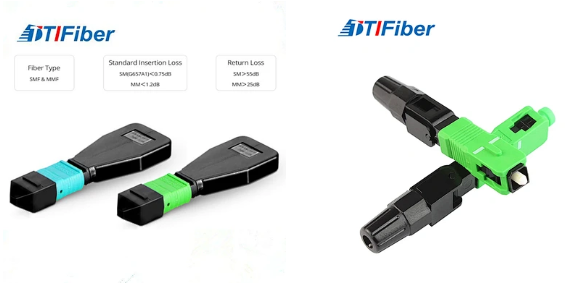
Fiber optic connector termination stands as a foundational aspect of network deployment, facilitating the seamless interconnection of optical fibers with precision and reliability. Within the realm of connector termination, a plethora of options exists, each boasting unique characteristics and applications. Let's delve deeper into this crucial aspect of fiber optic technology:
Types and Characteristics:
SC (Subscriber Connector): SC connectors are celebrated for their robust design and user-friendly push-pull mechanism.
Their versatility extends to both single-mode and multimode fibers, making them a popular choice across various networking environments.
With their square-shaped footprint and reliable performance, SC connectors are well-suited for applications demanding stable, high-bandwidth connectivity.
LC (Lucent Connector): LC connectors are renowned for their compact size and high-density configuration.
Featuring a latch mechanism and a smaller form factor than SC connectors, LC connectors excel in space-constrained installations, such as data centers and telecommunications facilities.
Their popularity stems from their ability to optimize rack space utilization while delivering reliable performance, making them indispensable in modern networking infrastructures.
ST (Straight Tip): ST connectors are characterized by their sturdy construction and bayonet-style coupling mechanism.
Commonly employed in industrial and commercial settings, ST connectors offer robust, secure connections suitable for demanding environments.
Their threaded design ensures steadfast connections, making them a preferred choice for applications where reliability is paramount, such as industrial automation and military communications.
FC (Ferrule Connector): FC connectors are synonymous with precision and durability, featuring a threaded coupling mechanism for meticulous alignment.
Widely utilized in high-precision applications, including medical instrumentation and military communications, FC connectors offer exceptional performance and reliability.
Their robust construction and superior alignment capabilities make them ideal for environments where signal integrity and stability are critical factors.
Distinctions and Variances:
Connector types exhibit variances in size, shape, and coupling mechanisms, influencing factors such as density, ease of installation, and environmental robustness.
While SC and LC connectors prioritize space efficiency and versatility, ST and FC connectors emphasize robustness and precision alignment.
Considerations such as insertion loss, return loss, and compatibility with specific fiber types play a significant role in the selection of connector termination methods, ensuring optimal performance and reliability in diverse networking environments.
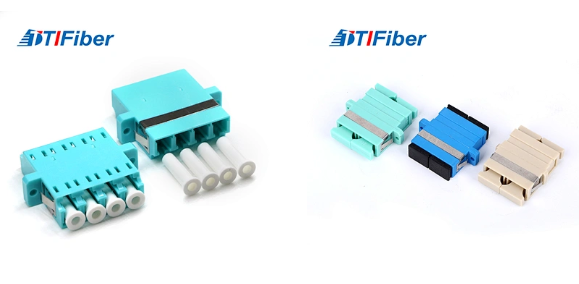
2. Splice Termination: Bridging Fibers with Precision and Purpose
For fiber optic connectivity, splice termination stands as a pivotal technique, facilitating the seamless integration of optical fibers with precision and purpose. As networks expand and evolve, the need for efficient and reliable splicing methods becomes increasingly pronounced. In this section, we delve deeper into splice termination, exploring its methodologies, applications, and the nuanced differences between various splice termination techniques.
Varieties and Methodologies:
Fusion Splicing: Fusion splicing represents the epitome of permanence in fiber optic termination. This method involves precisely aligning and permanently joining two optical fibers by melting their ends together using an electric arc. The resulting splice boasts minimal insertion loss and exceptional mechanical strength, ensuring enduring connectivity in critical applications.
Mechanical Splicing: In contrast to fusion splicing's permanence, mechanical splicing offers a more expedient and flexible approach to fiber termination. This technique utilizes alignment fixtures and gel or adhesive to temporarily unite optical fibers. While less costly than fusion splicing, mechanical splicing may introduce slightly higher insertion loss and lacks the enduring robustness of fusion splicing.
Disparities and Comparisons:
Performance and Reliability: Fusion splicing sets a high benchmark for performance and reliability, boasting superior metrics in terms of insertion loss and mechanical resilience. Its permanent bond ensures steadfast connections suitable for mission-critical applications where performance is paramount.
Cost and Flexibility: Mechanical splicing, while sacrificing some performance metrics compared to fusion splicing, offers advantages in cost-effectiveness and flexibility. Its temporary nature allows for easier reconfiguration and adjustments, making it a preferred choice for applications where agility and cost-efficiency are prioritized.
Applications and Considerations:
Critical Infrastructure: Fusion splicing finds resonance in critical infrastructure deployments, such as telecommunications networks, where uncompromising performance and reliability are non-negotiable. Its enduring bond ensures seamless connectivity in high-stakes environments
Field Installations: Mechanical splicing, with its ease of installation and lower equipment requirements, is well-suited for field deployments and temporary connections. Its temporary nature allows for swift adjustments and reconfiguration in dynamic networking environments.
Splice termination serves as a cornerstone in the architecture of fiber optic networks, enabling the seamless integration of optical fibers with precision and purpose. By understanding the nuances between fusion and mechanical splicing, network engineers and technicians can make informed decisions regarding the most suitable termination technique for their specific applications. Whether prioritizing performance, cost-effectiveness, or flexibility, splice termination techniques offer versatile solutions to meet the diverse needs of modern fiber optic networks.
3. Device Termination
Forms and Modalities
Pigtail Termination: Pigtail termination revolves around affixing a short length of fiber optic cable (pigtail) to a device, facilitating seamless integration with external components. This method streamlines splicing endeavors, augmenting efficiency and ease of installation. Pigtail terminations are commonly utilized in scenarios where a direct fusion splice is necessary, such as connecting to distribution panels or fusion splicing to another fiber.
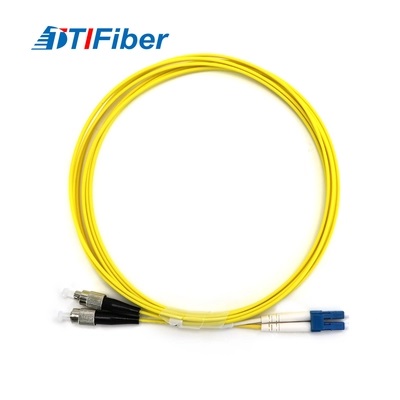
Patch Cord Termination: Patch cord termination entails equipping both ends of a fiber optic cable with connectors, enabling direct connections between devices or components. This approach epitomizes versatility and adaptability, accommodating dynamic networking requirements. Patch cords are often employed in scenarios where frequent changes or adjustments to connections are anticipated, such as in data centers or network testing environments.
Pigtail termination is quintessential for splicing applications, fostering swift and hassle-free integration with diverse devices and systems. The pigtail, with its exposed fibers, allows for direct fusion splicing, ensuring optimal signal transmission without the need for additional connectors.
Patch cord termination offers unparalleled flexibility and ease of reconfiguration, albeit potentially introducing additional insertion loss. While patch cords provide convenience in altering connections, careful consideration must be given to factors such as cable length and connector types to mitigate signal degradation and maintain network integrity. Additionally, the use of patch cords may necessitate proper cable management to prevent tangling and ensure efficient organization within the networking infrastructure.
By comprehending the nuances of pigtail and patch cord terminations, network engineers and installers can make informed decisions regarding the most suitable termination method for their specific application requirements. Whether prioritizing seamless integration, signal fidelity, or adaptability, selecting the appropriate termination approach is essential for optimizing the performance and reliability of fiber optic networks.


MPO/UPC-MPO/UPC MM 12F OM3 3.0mm LSZH Fiber Optic Cable
TTI lectures : What is MPO Fiber Optic Products?
Related Article