Types of Optical Fiber Splitters You Should Know About
If you’re diving into the world of fiber optic networking—whether for your home, office, or small business—you’ve probably come across the term optical splitter fiber. It sounds technical, but understanding what it is and how it works is essential for getting the most out of your fiber optic internet.
This guide is crafted for everyday users who want in-depth knowledge without the jargon. We’ll explore what optical fiber splitters are, why they’re vital, how to pick the right one, and how to get it installed and maintained properly. Plus, we’ll highlight trusted brands like TTI Fiber , so you can shop with confidence.
What Is an Optical Splitter Fiber and Why Do You Need One?
At its core, an optical splitter fiber is a device that divides a single fiber optic signal into multiple outputs. Imagine you have a single fiber cable bringing blazing-fast internet to your home or office, but you want to connect multiple devices or rooms. That’s where a splitter comes in—it “splits” the optical signal without converting it to electrical signals.
Why Use an Optical Fiber Splitter?
- Share your high-speed fiber connection among multiple devices or rooms.
- Expand your network without running extra fiber cables.
- Cost-effective solution to connect multiple endpoints.
- Essential component for FTTH (Fiber To The Home) and PON (Passive Optical Network) systems.
Without a splitter, you’d need to lay down multiple fiber lines from your internet provider, which is expensive and impractical. A splitter lets you take one fiber line and share it seamlessly.
Types of Optical Fiber Splitters You Should Know About
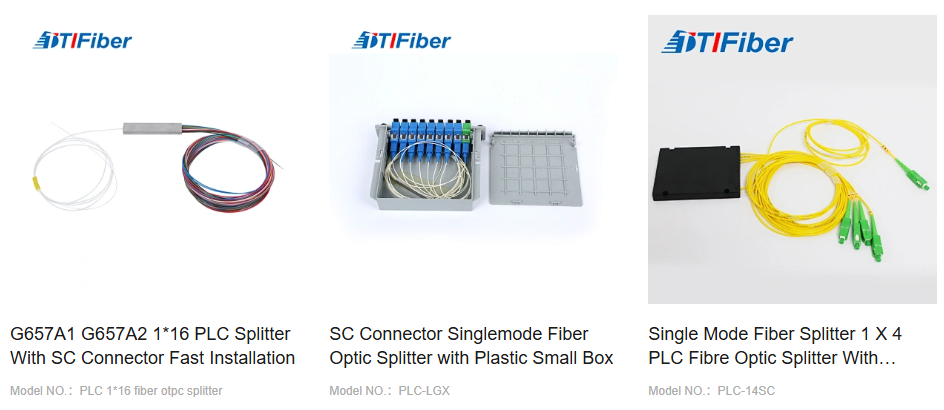
Not all splitters are created equal. Here are the main types you’ll encounter:
1. 1x2, 1x4, 1x8, and Beyond
The “1xN” notation indicates one input fiber and N output fibers. A 1x2 splitter divides the signal into two outputs, while a 1x8 splitter divides it into eight. The more splits, the weaker the signal at each output (we’ll talk about this later).
2. PLC (Planar Lightwave Circuit) Splitters
- Provide uniform splitting and high reliability.
- Compact and ideal for high-split count applications (like 1x16, 1x32).
- Widely used in telecom and enterprise networks.
3. FBT (Fused Biconical Taper) Splitters
- Usually used for smaller splits (1x2 or 1x4).
- Cheaper but less precise than PLC splitters.
- More suitable for cost-sensitive, low-split applications.
4. Indoor vs Outdoor Splitters
- Outdoor splitters are rugged, weatherproof, and often housed in protective enclosures.
- Indoor splitters are more compact and designed for clean, controlled environments.
For home and small office setups, a 1x2 or 1x4 PLC splitter from a quality brand like TTI Fiber is often the best balance of performance and price.
How Does an Optical Splitter Fiber Work?
It may seem complicated, but the principle is simple.
The optical splitter uses internal waveguide technology or tapered fiber fusion to split the light beam traveling through the input fiber into multiple beams. Each output carries a portion of the original light’s power.
Importantly, this process is passive—it doesn’t require power. The splitter simply divides the light. This means it’s highly reliable with no moving parts or electronics to fail.
However, since the signal is split, each output gets less power than the input. The key is to balance the number of splits with the required signal strength.

Top Benefits of Using Optical Fiber Splitters in Your Network
How to Choose the Right Optical Splitter Fiber for Your Home or Business
Picking the right splitter can be overwhelming, but focusing on key factors helps:
1. Split Ratio (Number of Outputs)
- For small setups, 1x2 or 1x4 is common.
- Larger networks or multi-family buildings may require 1x8 or more.
2. Insertion Loss
- This is the signal loss due to splitting.
- Lower insertion loss means better signal quality.
- Quality splitters from brands like TTI Fiber typically have low insertion loss (around 3 dB for 1x2).
3. Splitter Type: PLC vs FBT
- For more than 4 splits, go with PLC for consistent performance.
- For smaller, budget setups, FBT can work.
4. Indoor vs Outdoor Use
- Match the splitter to your installation environment. Outdoor splitters come with sealed cases to resist moisture and dust.
5. Connector Type
- Ensure compatibility with your existing fiber connectors (e.g., SC, LC, FC).

How to Set Up Your Optical Fiber Splitter
You don’t need to be an expert, but following some basics will help:
- Keep connectors clean. Dirt and dust can cause signal loss. Use fiber optic cleaning kits.
- Avoid bending the fiber cables sharply. Fiber is fragile and excessive bending damages signal quality.
- Use protective enclosures for outdoor splitters.
- Label all fibers clearly to avoid confusion during troubleshooting.
- Test signal strength before and after installation to confirm everything is working properly.
For complex setups, consider professional installation, especially if fiber splicing is involved.
Common Problems with Optical Fiber Splitters and How to Fix Them
Even reliable devices like splitters can experience issues:
Problem: Excessive Signal Loss
- Check connectors for dirt or damage. Clean or replace if necessary.
- Verify the split ratio matches your design. Too many splits weaken signals.
Problem: Connector Mismatch
- Confirm connectors match your fiber cables (SC, LC, etc.).
- Use appropriate adapters if needed.
Problem: Physical Damage
- Protect outdoor splitters from moisture and physical impacts.
- Inspect cables regularly for bends or breaks.
If issues persist, replacing the splitter with a higher-quality model (such as those from TTI Fiber ) is often the best solution.
How to Maintain Your Optical Splitter Fiber for Long-Term Performance
Maintaining your splitter is straightforward:
- Regularly clean connectors using specialized fiber optic cleaning tools.
- Avoid exposing outdoor splitters to extreme weather beyond their rating.
- Monitor network performance to spot degradation early.
- Secure cables to prevent accidental pulls or bends.
- Schedule periodic inspections especially in dusty or humid environments.
FAQs About Optical Splitter Fiber — What Buyers Want to Know
Q: Can I split a fiber signal multiple times?
A: Yes, but each split reduces signal strength. Careful planning is required.
Q: Will splitters reduce my internet speed?
A: The signal power is divided, but as long as the splitter matches your system design, your internet speed should remain consistent.
Q: Are all splitters compatible with any fiber system?
A: No, ensure compatibility in terms of wavelength, connector types, and split ratios.
Q: Can I install an optical splitter myself?
A: Simple plug-and-play splitters are DIY-friendly; complex setups may need a technician.
Top Optical Splitter Fiber Products to Buy in 2025
When shopping for optical splitters, quality and reliability are key. Brands like TTI Fiber offer a wide range of splitters designed for both home and business use. Here are some recommended models:
- TTI Fiber 1x4 PLC Splitter — Compact, low insertion loss, perfect for home networks.
- TTI Fiber 1x8 Outdoor Splitter — Weatherproof design for external installations.
- TTI Fiber 1x2 FBT Splitter — Budget-friendly for simple setups.
You can explore their product catalog and detailed specs at TTI Fiber Official Website.
Top 10 Hot Sale Optical Splitter Fiber Brands in 2025
How Optical Fiber Splitters Compare to Other Network Solutions
Sometimes, people consider alternatives like Ethernet switches or wireless extenders. Here’s why splitters still matter:
- Fiber splitters are passive—no power needed.
- They maintain high signal quality over fiber networks, unlike wireless signals which can be unstable.
- Splitters work at the optical layer, enabling true fiber-to-the-device connectivity.
For pure fiber optic networks, splitters remain the most efficient and cost-effective choice.
Where to Buy Quality Optical Splitter Fiber Online — Trusted Brands and Retailers
When it comes to buying optical splitters, don’t compromise on quality. Reliable brands like TTI Fiber ensure:
- Industry-grade components
- Rigorous quality testing
- Warranty and support
- Competitive prices
You can purchase their products directly from their website or authorized distributors. Always check for certifications and reviews to avoid counterfeit or low-quality splitters.
Optical splitter fibers are a vital piece of the fiber optic puzzle, enabling you to maximize your network investment by sharing a single fiber connection efficiently. Whether you’re upgrading your home internet or deploying a fiber network for your business, understanding splitters empowers you to
Top 10 Hot Sale Optical Splitter Fiber Brands in 2025
MPO Connectors Types Comparsion
Related Article