



The Differences Between Cables, Optical Cables, and Optical Fibers
author: TTI Fiber
2024-10-21
Cables, Optical Cables, and Optical Fibers Differences
The different structures of conductors lead to differences between cables, optical cables, and optical fibers. Metal conductors in cables serve to conduct electricity, while optical cables use optical fibers to transmit light signals, and optical fibers are thin, flexible media that transmit light beams, forming the core part of optical cables. Let's take a closer look at these differences.
What Are the Differences Between Cables, Optical Cables, and Optical Fibers?
1. Cables
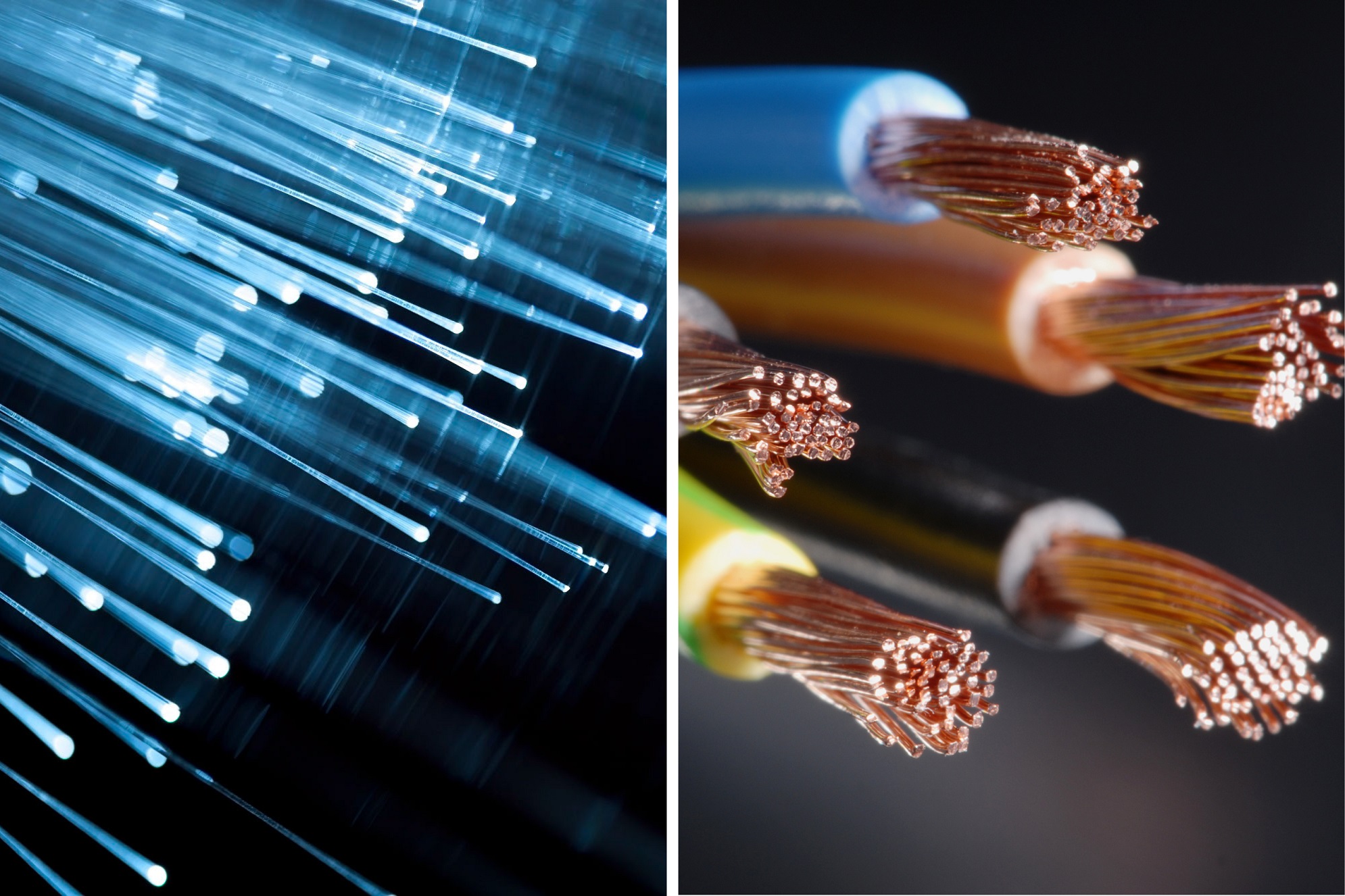
Cables consist of one or more insulated conductors and an insulating protective layer, used to transmit power or information from one place to another. Similar to ropes, each set of wires is insulated from each other and is often twisted around a center, with the entire outer surface covered by a highly insulated coating. These cables are characterized by internal conductivity and external insulation. There are different types of cables such as power cables, control cables, compensation cables, shielded cables, high-temperature cables, computer cables, signal cables, coaxial cables, fire-resistant cables, marine cables, mining cables, aluminum cables, and more. They are made up of single or multiple strands of conductors and insulation, used to connect circuits, appliances, etc.
2. Optical Cables
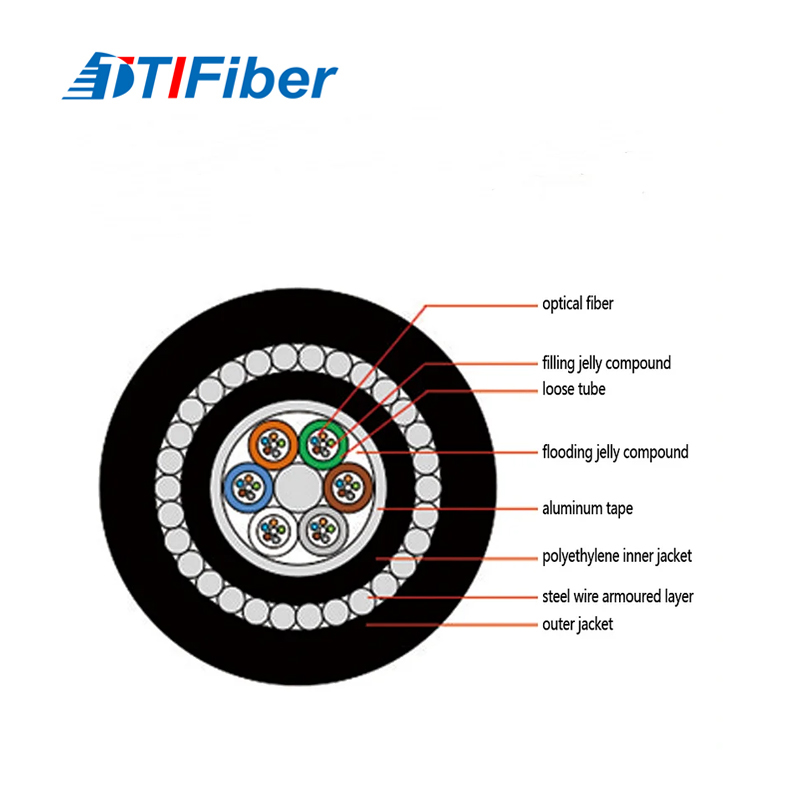
Optical cables are composed of optical fibers (thin as hair strands), a plastic protective sleeve, and a plastic sheath. Unlike cables, optical cables do not contain metals such as gold, silver, copper, or aluminum, so they generally have no recycling value. Optical cables consist of a certain number of optical fibers arranged in a specific way to form a cable core, with some covered by a sheath and others by an outer protective layer, enabling the transmission of light signals. In short, optical cables are formed by optical fibers (which serve as the medium for light transmission) through a certain process.
3. Optical Fibers
Optical fibers are made of pure quartz, drawn into glass tubes thinner than hair, and contain several layers of medium. Since they are brittle and fragile, they require a protective layer. Optical cables are primarily composed of optical fibers, plastic protective sleeves, and plastic sheaths. The external protective structure prevents damage to the fibers from the surrounding environment.
4. Differences Between Cables and Optical Cables
•Cable: When a telephone converts sound signals into electrical signals, the signals are transmitted through cables to a switchboard, and then directly to another telephone to be heard. The transmission line in this process is the cable. Inside the cable, there are primarily copper wires. The diameter of the core varies (e.g., 0.32mm, 0.4mm, 0.5mm), with larger diameters providing stronger communication capabilities. Core wire pairs range from 5, 10, 20, 50, to 100, 200 pairs, representing the number of maximum users that a cable can support. Cables have large size, heavy weight, poor communication capacity, and are suitable only for short-distance communication.
•Optical Cable: In optical cables, after converting sound signals to electrical signals and passing through a switchboard, these signals are converted to light signals via optoelectronic devices and transmitted over optical cables, and eventually converted back to electrical signals for reception. The transmission line between the optoelectronic devices is the optical cable. The core wires in optical cables also come in various pair counts (e.g., 4, 6, 8, 12 pairs). Optical cables have advantages such as small size, lightweight, low cost, large communication capacity, and strong communication capabilities, but they are currently only used for long-distance, point-to-point communication.
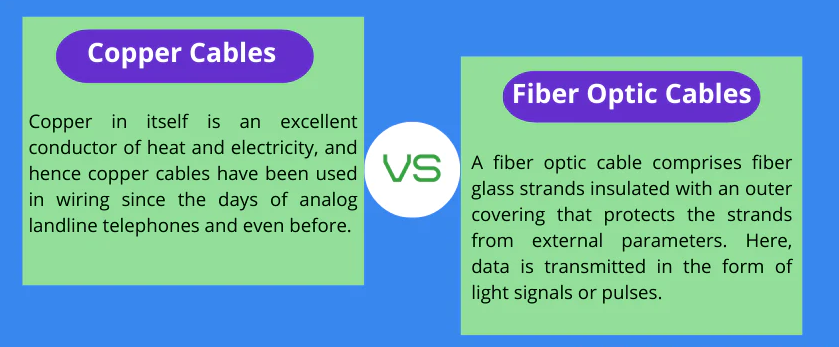
•Inside a cable, the conductor is copper; inside an optical cable, the conductor is glass fiber.
•Cable: Metal (mainly copper and aluminum) as the conductor. Optical Cable: Glass fiber as the conductor.
•Transmission Signals: Cables transmit electrical signals, while optical cables transmit light signals.
•Applications: Cables are primarily used for electrical power transmission and low-end data transmission (e.g., telephone lines), while optical cables are primarily used for data transmission and do not carry electrical power.
5. Differences Between Optical Cables and Optical Fibers
•Definition: Optical fibers are made of pure quartz and are drawn into glass tubes thinner than hair. They are fragile and require a protective layer. Optical cables consist of optical fibers, plastic protective sleeves, and plastic sheaths, with external protective structures to prevent damage.
•Structure: Optical fibers are classified into two types—graded-index and step-index fibers. The refractive index of graded-index fibers gradually changes, while step-index fibers have a sharp change in refractive index. Optical cables are made of hair-thin glass fibers, plastic protective sleeves, and plastic sheaths.
Lifespan of Cables, Optical Cables, and Optical Fibers
•Cables: 15–30 years
•Optical Cables: 25–40 years
•Optical Fibers: Up to 25+ years, depending on protection
1. Cables Lifespan
Cables, depending on their construction and the environment in which they are used, generally have a lifespan ranging from 15 to 30 years. Factors that can influence a cable's longevity include exposure to extreme temperatures, moisture, UV radiation, mechanical stress, and electrical overload. Regular inspection and maintenance can help extend their life. In high-temperature or corrosive environments, specialized cables with enhanced protective layers may be required to reach or exceed their expected lifespan.
2. Lifespan of Optical Cables
Optical cables have a typical lifespan of 25 to 40 years. They are much more durable than conventional electrical cables due to their resistance to environmental factors like electromagnetic interference (EMI) and corrosion. However, the lifespan of optical cables can be shortened if they are exposed to mechanical stress (e.g., bending or pulling), extreme temperatures, or if their protective sheaths degrade over time. Proper installation and care are crucial to ensuring the full lifespan of optical cables.
3. Optical Fibers Lifespan
The optical fibers within optical cables are designed to last up to 25 years or more, but their lifespan is closely tied to the protection provided by the cable's outer sheath. As long as the fiber remains intact and free from microbends, macrobends, and excessive stress, it can continue to transmit light signals with minimal degradation. However, mishandling during installation or environmental wear over time can reduce the efficiency and performance of optical fibers. Since they are more fragile, regular checks for protective sheath integrity are essential.
About TTI Fiber
Founded in 2013, TTI Fiber Communication Tech. Co., Ltd., is a professional manufacturer specialized in Fiber optic products for 13 years. covers an area of 12,000 square meters and has obtained ISO9001, ISO14001, REACH, RoHS, CE and CPR certificates and so on. Welcome to contact us for more details.
Related Products:

GYFY Fiber Cables Quality Control and Testing
Difference Between OM1 OM2 OM3 OM4
Related Article
The steel used in SWA cables is not high-carbon tool steel, nor is it brittle cast iron. It is specifically low-carbon (mild) steel wire, typically containing less than 0.25% carbon.
What Kind of Steel Is Used in the SWA Layer

So what exactly does “correct” installation entail? Where do standards draw the line between best practice and code compliance? And why is grounding not just an electrical formality—but a foundational requirement for safety, reliability, and longevity?
What Do Electrical Codes Specifically Require for SWA Grounding
In a market where “SWA” can be loosely applied to substandard products, how do you ensure the cable you’re purchasing will truly perform as expected over its 25+ year design life? Verification isn’t optional—it’s essential. And it must happen before the cable leaves the factory, not after it fails in the field.
How Do You Verify the Quality of SWA Fiber Optic Cable
