What Kind of Steel Is Used in the SWA Layer
What Kind of Steel Is Used in the SWA Layer—and How Is It Protected from Corrosion?
Steel Wire Armoured (SWA) fiber optic cable is the muscle of the telecommunications world. It is deployed where the environment is unforgiving: buried beneath rocky soil, routed through rodent-infested trenches, or strung across industrial sites where heavy machinery poses a constant threat. The steel wires provide the tensile strength and crush resistance that keep the delicate glass fibers inside safe from catastrophic failure.
But steel has a well-known, ancient enemy: corrosion. If the armor rusts, it loses its structural integrity, expands, and can ultimately breach the cable’s inner sanctum, leading to optical failure.
So, what specific type of steel is chosen for this critical role? And how do cable manufacturers engineer a defense system that ensures this armor survives decades underground or outdoors without turning to rust?
Let’s delve into the metallurgy, the layered defense strategies, and the rigorous standards that keep SWA cables performing long after installation.
What Specific Type of Steel Is Used for SWA Fiber Optic Cables?
The steel used in SWA cables is not high-carbon tool steel, nor is it brittle cast iron. It is specifically low-carbon (mild) steel wire, typically containing less than 0.25% carbon.
This specific composition is chosen for a critical mechanical reason: ductility. During manufacturing, the steel wire must be helically wound around the cable core at high speeds. It must bend, twist, and conform to the cable’s diameter without snapping, kinking, or losing its tensile strength. Low-carbon steel offers the perfect balance of high tensile strength (typically 600–1000 MPa, depending on the wire diameter) and the flexibility required for the armoring process.
The dimensions of these wires are strictly governed by international standards, such as BS EN 10264 (Steel wire and wire products for fencing) or IEC 60794 (Optical fibre cables), which dictate the precise diameter tolerances (usually ranging from 0.9 mm to 2.5 mm) to ensure uniform crush resistance.
Why Is Low-Carbon Steel Chosen Over High-Strength or Stainless Alternatives?
It is a natural question: if strength is the goal, why not use higher-carbon steel or stainless steel? The answer lies in the physics of manufacturing and the economics of deployment.
- High-Carbon Steel: While stronger, it is significantly more brittle. The severe bending required during the helical armoring process would cause micro-cracks or outright fractures in high-carbon wire, creating weak points that would fail under tension in the field.
- Stainless Steel: Although highly corrosion-resistant, stainless steel is prohibitively expensive, significantly stiffer, and much harder to terminate. It is reserved only for highly specialized applications, such as subsea cables or extreme chemical environments, where the cost is justified.
Low-carbon steel remains the gold standard because it provides ample mechanical protection for 99% of terrestrial applications, provided it is properly protected from the elements.
How Does Hot-Dip Galvanization Protect the Steel from Corrosion?
The primary and most critical defense against corrosion is hot-dip galvanization. This is not a superficial paint job or a thin electroplated layer; it is a robust metallurgical process.
In this process, the cleaned low-carbon steel wires are submerged in a molten zinc bath at approximately 450°C (842°F). This creates a metallurgical bond between the zinc and the steel, forming a series of zinc-iron alloy layers (Gamma, Delta, and Zeta phases) topped by a pure zinc outer layer (Eta phase).
This protection works in two ways:
- Barrier Protection: The zinc coating acts as a dense, impermeable physical shield, preventing moisture and oxygen from reaching the underlying steel.
- Sacrificial (Cathodic) Protection: Zinc is more electrochemically active than steel. If the coating is scratched or nicked during installation, the zinc will willingly corrode (sacrifice itself) to protect the exposed steel, preventing rust from forming at the breach.
Standards like ASTM A641 or BS EN 10244-2 mandate minimum zinc coating masses, typically requiring Class A (≥250 g/m²) or Class B (≥300 g/m²) for direct-burial applications. Anything less is a compromise that will fail prematurely in moist soils.
What Role Do the Inner Bedding and Outer Sheath Play in Corrosion Prevention?
Galvanization is powerful, but it is not infallible. Therefore, SWA cable design relies on a layered defense strategy. The steel wires are never left exposed to the environment or the cable core.
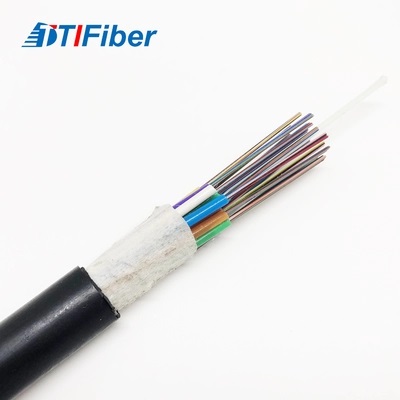
- The Inner Bedding Layer: Beneath the steel wires lies an extruded layer of PVC or PE (polyethylene). This "bedding" serves a dual purpose: it provides a smooth, cushioned surface for the armor wires to rest on (preventing them from cutting into the fragile inner buffer tubes), and it acts as a moisture barrier, isolating the steel from any internal humidity or cable gels.
- The Outer Sheath: Over the steel wires, a final, thick jacket of black UV-stabilized PE (for outdoor use) or PVC/LSZH (for indoor/industrial use) is extruded. This sheath protects the galvanized wires from abrasion during pulling, shields them from ultraviolet radiation, and provides the first line of defense against soil chemicals, water, and physical impact.
Together, these layers ensure the galvanized steel operates in a stable, dry environment, vastly extending its functional lifespan.
Are There Advanced Coating or Material Alternatives for Extreme Environments?
Yes. For environments where standard hot-dip galvanization is insufficient, manufacturers deploy advanced metallurgical solutions:
- Galfan Coating (Zinc-Aluminum Alloy): Consisting of roughly 95% zinc and 5% mischmetal (a rare-earth alloy), Galfan offers 2 to 3 times the corrosion resistance of standard galvanization. It provides superior "cut-edge" protection, making it ideal for highly acidic or saline soils.
- Double-Jacketed SWA: In extreme conditions (e.g., coastal marshes or chemical plants), cables may feature an inner PE sheath, the SWA layer, a moisture-blocking tape, and a final outer PE sheath. This completely encapsulates the armor, preventing any external moisture from ever touching the zinc.
- Stainless Steel Wire Armor (SSWA): As mentioned, used only in niche, highly corrosive environments (like offshore platforms or sewage treatment plants) where the high cost and stiffness of stainless steel are acceptable trade-offs for absolute corrosion immunity.
What Happens If the Corrosion Protection Fails in the Field?
When corrosion protection fails, the consequences are rarely immediate, but they are inevitably catastrophic. The failure sequence typically unfolds as follows:
- Volume Expansion: As steel rusts, iron oxide occupies up to six times the volume of the original metal. This expansion creates immense internal pressure.
- Sheath Rupture: The expanding rust cracks the outer PE/PVC sheath, allowing more water and oxygen to flood in, accelerating the decay.
- Loss of Tensile Strength: The steel wires become brittle and lose their load-bearing capacity. A simple ground shift or heavy vehicle passing overhead can now snap the cable.
- Hydrogen Darkening: This is the silent killer of fiber optics. The electrochemical corrosion process generates hydrogen gas. This hydrogen diffuses through the cable, penetrates the glass fiber, and creates microscopic absorption peaks (particularly around 1240 nm and 1383 nm), causing severe, irreversible signal attenuation.
A corroded SWA cable doesn’t just lose its armor; it actively destroys the optical signal it was built to protect.
How Can Engineers Verify the Quality of SWA Corrosion Protection Before Purchase?
Trust, but verify. Specifying "galvanized SWA" on a purchase order is not enough. To ensure longevity, engineers must demand concrete evidence of material quality:
- Zinc Coating Mass Test: Require test reports (per ASTM A90 or ISO 10684) proving the zinc coating meets or exceeds 250–300 g/m². This is often verified by stripping the zinc chemically and weighing the wire before and after.
- Salt Spray Testing: Demand evidence of ASTM B117 neutral salt spray testing. High-quality SWA should show no red rust on the steel substrate after 500 to 1,000 hours of continuous exposure.
- Wrap Test: Per ASTM A90, the galvanized wire should be tightly wrapped around a mandrel of its own diameter six times without the zinc coating flaking or cracking. This proves the metallurgical bond is sound and will survive the bending of installation.
- Visual Inspection: Upon delivery, cut a sample. The wires should be bright, uniform, and tightly wound. Dull, patchy, or powdery white surfaces indicate poor galvanization or the onset of "white rust" (zinc oxide) due to improper storage.
Is Corrosion Protection Just a Specification—or a Covenant of Longevity?
The steel wire in an SWA cable is a paradox: it is the strongest component in the assembly, yet it is the most vulnerable to the slow, relentless chemistry of the natural world.
Protecting it is not an afterthought. It is a carefully orchestrated symphony of low-carbon metallurgy, hot-dip galvanization, and multi-layered polymer shielding. When specified and verified correctly, this defense system ensures that the cable buried today will continue to carry the light of tomorrow’s networks, undisturbed by the earth around it.
In fiber optics, true resilience isn’t just about resisting the initial impact. It’s about outlasting the decades of silence that follow. And that is a promise forged in zinc, steel, and rigorous engineering.


What Do Electrical Codes Specifically Require for SWA Grounding
Related Article