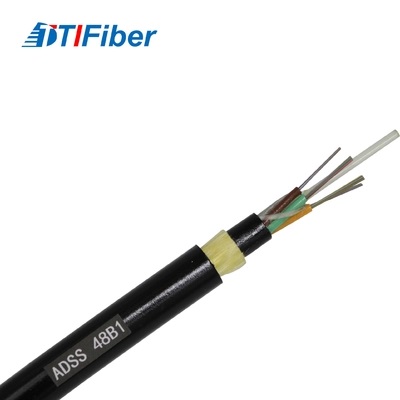
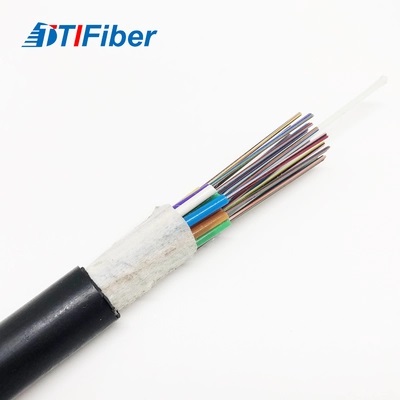
Can Double-Jacketed SWA Designs Provide Ultimate Environmental Isolation
Are There Advanced Coating or Material Alternatives for Extreme Environments of SWA Fiber Optic Cables?
When we talk about Steel Wire Armoured (SWA) fiber optic cables, we often picture them as the indestructible tanks of the telecommunications world. And for the most part, they are. Standard hot-dip galvanized low-carbon steel does a phenomenal job of protecting delicate glass fibers from crushing loads, rodent attacks, and the general rigors of installation.
But let’s be honest: nature and industry can be brutally unforgiving. There are environments where standard galvanized steel simply isn't enough. Coastal salt marshes, highly acidic agricultural soils, chemical processing plants, and subsea deployments present corrosive threats that can eat through standard zinc coatings in a fraction of the expected lifespan.
So, what happens when the standard solution falls short? Engineers and material scientists have developed advanced coatings and alternative materials specifically designed to survive these extreme conditions. Let’s take a deep, human-centered dive into these advanced solutions, exploring not just what they are, but how they work, where they belong, and why they matter.
What Makes an Environment "Extreme" for Fiber Optic Cables?
Before we can choose the right armor, we have to understand the enemy. An "extreme" environment isn't just about harsh weather; it’s about chemical and physical aggression that accelerates material degradation.
Coastal regions are prime examples, where airborne salt spray and saline groundwater create a highly conductive electrolyte that accelerates galvanic corrosion. Agricultural lands often feature soils with high fertilizer runoff, leading to acidic conditions (pH < 6.0) that aggressively attack zinc. Meanwhile, industrial zones might expose cables to hydrocarbons, solvents, or stray electrical currents that induce electrolytic corrosion. In these scenarios, a standard galvanized SWA cable isn't just at risk of cosmetic rust; it faces the very real threat of structural failure and the subsequent "hydrogen darkening" of the optical fibers inside.
Why Is Standard Hot-Dip Galvanization Sometimes Not Enough?
Standard hot-dip galvanization is a brilliant, cost-effective solution for 90% of terrestrial deployments. It works by coating the steel in pure zinc, which acts as a sacrificial anode. However, pure zinc has its limits.
In highly acidic environments, zinc dissolves rapidly, stripping away the protective layer before it can form a stable patina. In high-chloride environments (like seawater or coastal soil), chloride ions penetrate the zinc layer, causing localized pitting corrosion. Once a pit forms, it acts as a microscopic trap for moisture, accelerating the rusting of the underlying steel. When the steel rusts, it expands up to ten times its original volume, cracking the outer cable sheath and inviting catastrophic failure. When the stakes are this high, we need to upgrade our metallurgical defenses.
What Is Galfan Coating, and How Does It Revolutionize Corrosion Resistance?
Enter Galfan, a name that has become synonymous with next-generation corrosion protection in the cable industry. Galfan is not just a thicker layer of zinc; it is a fundamentally different metallurgical alloy that redefines how we protect steel wire.
The Metallurgical Magic of Zinc-Aluminum-Mischmetal Alloys
Galfan is a proprietary coating composed of approximately 95% zinc and 5% mischmetal (a rare-earth alloy primarily consisting of cerium and lanthanum, with a touch of aluminum). This specific ratio is the result of decades of materials science research. When applied to steel wire, the aluminum and rare-earth elements react to form a dense, tightly adherent intermetallic layer at the boundary between the coating and the steel substrate. Unlike pure zinc, which can be somewhat porous, this Galfan layer is exceptionally dense, creating a superior physical barrier against moisture and oxygen. Furthermore, the aluminum promotes the rapid formation of a stable, self-healing aluminum oxide layer when the coating is micro-scratched.
How Galfan Outperforms Traditional Zinc in Salt Spray Testing
The true test of any coating is accelerated corrosion testing, and Galfan consistently humiliates standard galvanization here. In standard ASTM B117 neutral salt spray testing, traditional Class A galvanized wire typically begins to show red rust on the steel substrate after 500 to 800 hours. Galfan-coated wire, however, routinely survives 1,000 to 1,500 hours—and sometimes up to 2,000 hours—before showing any signs of red rust. This isn't just a marginal improvement; it represents a two- to threefold increase in theoretical service life in corrosive environments.
Real-World Applications: Where Galfan SWA Truly Shines
Because of its superior performance, Galfan SWA is the go-to choice for environments that are just a step below requiring stainless steel. You will frequently find it deployed in coastal telecommunications backbones, offshore wind farm inter-array cables, agricultural regions with heavy chemical use, and roadside deployments where de-icing salts are heavily applied in winter. It offers a "sweet spot" of dramatically enhanced protection without the prohibitive cost of stainless steel.
Can Double-Jacketed SWA Designs Provide Ultimate Environmental Isolation?
Sometimes, the best way to protect the armor is to ensure it never touches the outside world at all. This is the philosophy behind the double-jacketed SWA cable, a design that prioritizes absolute environmental isolation.
The Anatomy of a Double-Jacketed SWA Cable
A standard SWA cable has one outer sheath protecting the armor. A double-jacketed design adds a crucial layer of redundancy. The construction typically follows this sequence from the inside out: an inner layer of moisture-resistant polyethylene (PE), the steel wire armor, a moisture-blocking tape or floodable compound, and finally, a thick, rugged outer PE sheath. This design completely encapsulates the steel wires. Even if the outer sheath is nicked by a rock during burial, the armor remains isolated from the soil by the inner sheath and blocking layers.
How Moisture-Blocking Tapes Act as the Unsung Heroes
Between the armor and the outer sheath, manufacturers often wrap the cable in superabsorbent polymer (SAP) tapes. These are the unsung heroes of cable longevity. If water manages to breach the outer jacket, it immediately encounters these tapes. Upon contact with moisture, the SAP swells to many times its original volume within seconds, forming a rigid, impermeable gel plug. This halts the longitudinal migration of water down the cable, ensuring that a single jacket breach doesn't compromise kilometers of the network.
The Trade-Offs: Weight, Stiffness, and Installation Realities
No engineering solution is without compromise. Adding a second jacket and moisture-blocking layers increases the cable’s overall diameter, weight, and stiffness. This means the minimum bending radius is larger, and the pulling tension required during installation is higher. Field crews must be equipped with heavier-duty pulling grips and must pay closer attention to conduit fill ratios and bend radii. It is a trade-off: you accept slightly more difficult installation in exchange for decades of worry-free operation.
When Should You Consider Stainless Steel Wire Armor (SSWA)?
There are environments so hostile that even Galfan and double-jacketing are deemed insufficient. When a cable is submerged in seawater, buried in highly acidic chemical waste, or deployed in an offshore oil and gas facility, it is time to consider Stainless Steel Wire Armor (SSWA).
Grade 304 vs. Grade 316: Choosing the Right Stainless Steel
Not all stainless steel is created equal. Grade 304 stainless steel offers good general corrosion resistance and is sometimes used in mildly aggressive industrial environments. However, for truly extreme conditions—especially those involving chlorides (like saltwater)—Grade 316 is the mandatory standard. Grade 316 contains 2-3% molybdenum, an element that drastically increases the steel’s resistance to pitting and crevice corrosion in chloride-rich environments.
The Economic Reality of Stainless Steel in Fiber Networks
The primary barrier to SSWA is cost. Stainless steel wire is typically three to five times more expensive than galvanized steel wire. Furthermore, the manufacturing process is more demanding due to the material's hardness. Therefore, SSWA is rarely used for standard terrestrial runs. It is reserved for high-value, high-risk applications where the cost of a single cable failure (in terms of repair, environmental cleanup, or lost revenue) dwarfs the initial material premium.
Handling and Termination Challenges of SSWA
Field technicians will tell you that SSWA is no walk in the park. Stainless steel is significantly harder and tougher than low-carbon steel. Cutting the armor requires specialized, heavy-duty shears or abrasive cutting wheels. Stripping the wires and installing grounding lugs requires more physical effort and specialized tools designed to grip the harder metal without slipping. Proper training is essential to ensure the armor is terminated safely and effectively without damaging the inner optical core.

Is Aluminum Wire Armor (AWA) a Viable Alternative to Steel in Harsh Zones?
While the prompt focuses on steel alternatives, it is impossible to discuss extreme environment armoring without mentioning Aluminum Wire Armor (AWA). Aluminum naturally forms a tough, self-healing oxide layer when exposed to air, making it highly resistant to atmospheric and many chemical corrosive elements without the need for galvanization.
AWA is significantly lighter than steel, reducing the overall weight of the cable and making it easier to handle in aerial deployments or long vertical riser runs. Crucially, it is non-magnetic. This makes AWA the absolute preferred choice for deployments near high-voltage power lines, in MRI facilities, or in explosive atmospheres (ATEX zones) where the risk of a steel wire sparking during a fault or impact is unacceptable. The trade-off is that aluminum has a lower tensile strength than steel, meaning it offers less protection against severe crushing forces or heavy rodent attacks.
How Do Polymer-Based Armor Alternatives Compare to Metal?
In some "extreme" scenarios, the threat isn't corrosion, but rather Electromagnetic Interference (EMI) or the need for absolute dielectric isolation. In these cases, manufacturers turn to non-metallic armor alternatives.
Instead of metal wires, these cables use tightly wound layers of Fiberglass-Reinforced Plastic (FRP) rods or high-tensile aramid yarn (like Kevlar®). While they don't offer the same level of crush resistance as steel wire, they are completely immune to corrosion, lightning strikes, and galvanic interference. For fiber networks running parallel to electrified railways or through areas with severe lightning activity, these polymer-based "armors" provide a different kind of extreme-environment protection: electrical invincibility.
What Role Do Advanced Outer Sheath Compounds Play in Extreme Survival?
The armor is only as good as the jacket protecting it. In extreme environments, standard Polyethylene (PE) or PVC isn't enough. Manufacturers formulate advanced outer sheath compounds to tackle specific threats.
For rodent-infested areas, sheaths are compounded with bittering agents like denatonium benzoate or even natural capsaicin (chili pepper extract), which deters gnawing without harming the animal. For environments with high UV exposure and ozone, specialized Medium-Density Polyethylene (MDPE) is loaded with high levels of carbon black and specific UV stabilizers to prevent the plastic from becoming brittle and cracking over a 25-year lifespan. In chemical plants, specialized polyurethane (PUR) jackets might be used for their superior resistance to oils, solvents, and abrasion.
How Do You Verify the Authenticity of Advanced Coating Claims?
In a market where "premium" is a heavily abused marketing term, how do you ensure you are actually getting Galfan or Grade 316 SSWA, and not just a cleverly labeled standard product? You must demand empirical evidence.
Do not accept generic datasheets. Request lot-specific Material Test Reports (MTRs). For Galfan, ask for X-ray fluorescence (XRF) spectroscopy results confirming the 95/5 zinc-aluminum-mischmetal ratio. For SSWA, demand the mill certificate proving the molybdenum content aligns with Grade 316 specifications. Furthermore, insist on third-party salt spray test reports (ASTM B117) conducted by independent laboratories like TÜV, Intertek, or UL. If a supplier hesitates to provide this data, consider it a major red flag.
What Are the Long-Term Economic Benefits of Upgrading to Advanced SWA Materials?
It is easy to look at the upfront price tag of Galfan or SSWA and balk. However, smart engineering is about Total Cost of Ownership (TCO), not just initial procurement cost.
Consider the cost of a cable failure in a remote, extreme environment. The expense isn't just the new cable. It includes the mobilization of a specialized repair crew, heavy excavation equipment, traffic control, potential environmental fines, and the massive financial impact of network downtime. Spending 30% to 50% more on advanced armor during the initial build can easily prevent a six-figure emergency repair down the line. Upgrading the material is not an expense; it is a highly effective form of infrastructure insurance.
Is Investing in Advanced Armor a Luxury or a Necessity?
When we design networks, we are making promises to the future. We are promising that a hospital will stay connected during a storm, that a financial transaction will clear without delay, and that a remote community will have reliable access to the digital world.
In benign environments, standard galvanized SWA is more than capable of keeping that promise. But in extreme environments, relying on standard materials is not frugality; it is negligence. Advanced coatings like Galfan, robust designs like double-jacketing, and premium materials like Grade 316 stainless steel are not luxurious over-engineering. They are absolute necessities.
They represent our commitment to building infrastructure that doesn't just survive the harsh realities of our world, but quietly and reliably masters them, ensuring the light within never falters.


How to Verify the Quality of SWA Corrosion Protection Before Purchase
What Specific Type of Steel Is Used for SWA Fiber Optic Cables
Related Article