What Are the Core Optical Fibers Made Of?
Understanding what's inside an AWA cable isn't just academic curiosity—it's essential knowledge for engineers, specifiers, and anyone responsible for building networks that must survive decades of punishment. So let's peel back the layers, examine the raw materials, and understand why each component matters.

What Is the Internal Architecture of an AWA Fiber Optic Cable?
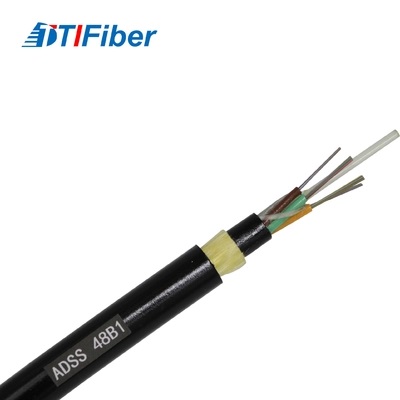
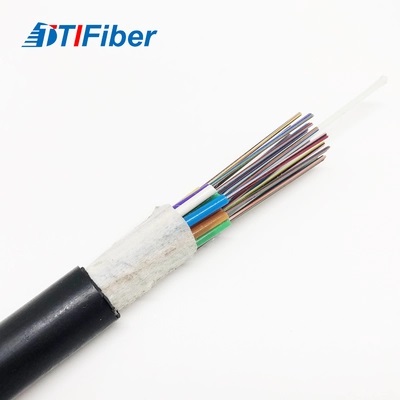
At its heart, AWA cable is a multi-layered fortress built around the world's most delicate information carrier: optical fiber. Unlike simple patch cords or indoor cables, AWA construction must balance seemingly contradictory requirements—it must be rugged enough to resist crushing forces and rodent attacks, yet flexible enough to be pulled through conduits and bent around corners. It must block moisture completely while remaining lightweight enough for aerial installation.
The architecture achieves this through a precise stacking of functional layers: optical fibers at the center, surrounded by protective buffer tubes, reinforced by strength members, shielded by aluminum wire armor, and sealed within a weather-resistant outer sheath. Each layer has a specific job, and each material is chosen with surgical precision.
What Are the Core Optical Fibers Made Of?
Everything begins with the fiber itself—the reason the cable exists. These aren't just strands of glass; they're engineered waveguides of extraordinary purity.
The Glass Composition
The core and cladding are made from ultra-pure silica (SiO₂), doped with minute amounts of germanium (GeO₂) in the core to increase its refractive index slightly, and sometimes fluorine in the cladding to decrease it. This tiny difference in refractive index—often less than 1%—is what keeps light trapped inside the core through total internal reflection.
For single-mode fibers (ITU-T G.652.D), the core diameter is just 8-10 micrometers, while the cladding is 125 micrometers. To put this in perspective, you could fit roughly 10-12 fibers side-by-side across the width of a human hair.
The Primary Coating
Bare glass is incredibly strong in theory but fragile in practice—microscopic surface flaws can cause catastrophic failure. So immediately after the fiber is drawn from the molten silica preform, it's coated with a dual-layer UV-cured acrylate polymer.
- Inner layer: Soft, low-modulus material (typically <1 MPa) that cushions the glass and absorbs mechanical stress.
- Outer layer: Harder, high-modulus material (>1000 MPa) that provides abrasion resistance and handles the mechanical loads.
Together, these layers bring the fiber diameter to 245-250 micrometers. The coating must be perfectly concentric, chemically stable across temperatures from -60°C to +85°C, and resistant to hydrogen permeation.
How Do Buffer Tubes Protect the Delicate Fibers?
The coated fibers are far too fragile to be left exposed to the cable's mechanical environment. They need a protective home—and that's the job of the buffer tubes.
Material Selection: PBT vs. PP
Buffer tubes are typically made from Polybutylene Terephthalate (PBT), a semi-crystalline thermoplastic polyester. PBT is chosen for its exceptional properties:
- Low moisture absorption (<0.3% at saturation), preventing dimensional changes in humid environments
- High tensile strength (50-60 MPa) and excellent creep resistance
- Chemical resistance to hydrocarbons, solvents, and acids
- Thermal stability across the operating range (-40°C to +70°C)
In some cost-sensitive designs, polypropylene (PP) is used, but it has higher moisture absorption and lower thermal resistance, making it less suitable for harsh environments.
Loose Tube vs. Tight Buffer Design
AWA cables almost universally use loose tube construction. In this design, multiple fibers (typically 2-12 per tube) are placed inside a PBT tube with an inner diameter of about 1.5-2.0 mm—significantly larger than the combined fiber diameter.
This "loose" fit is intentional and critical. It allows the fibers to:
- Float freely within the tube, isolated from external tensile loads
- Move independently during temperature cycling, preventing stress buildup
- Relax into a helical path when the cable is stretched, absorbing strain without elongating the glass
Water-Blocking: Gel vs. Dry Systems
The space around the fibers inside the buffer tube must be filled to prevent water migration. Traditionally, this was done with thixotropic gel—a viscous compound that flows under shear stress (during installation) but remains static otherwise.
However, modern AWA cables increasingly use dry water-blocking systems: superabsorbent polymer (SAP) tapes or powders that swell dramatically (20-50x their original volume) upon contact with moisture. These dry systems offer significant advantages:
- Cleaner handling—no messy gel cleanup during splicing
- Faster installation—technicians can access fibers immediately
- Better temperature performance—gel can become too viscous in extreme cold or too fluid in extreme heat

What Materials Form the Strength Members?
While the buffer tubes protect fibers from crushing and moisture, they don't provide the tensile strength needed to pull the cable through ducts or support it in aerial spans. That's the job of the strength members.
Central Strength Member: FRP or Steel?
Most AWA cables feature a central strength member running through the core's axis. This is typically made from one of two materials:
Fiberglass-Reinforced Plastic (FRP): A rod composed of continuous glass fibers embedded in an epoxy or polyester resin matrix. FRP offers:
- High tensile strength (600-1000 MPa)
- Non-conductive (dielectric) properties—critical for installations near high voltage
- Corrosion immunity
- Lightweight construction
Steel Wire: In some designs requiring extreme tensile capacity, a galvanized steel wire is used. This provides higher strength (>1500 MPa) but adds weight and requires grounding.
Peripheral Strength: Aramid Yarn
Some AWA designs supplement the central member with aramid yarn (such as Kevlar®) wrapped around the buffer tubes. Aramid fibers have extraordinary tensile strength (~3000 MPa) and are incredibly lightweight, but they're expensive and absorb moisture, so their use in AWA cable is selective.
What Makes the Aluminum Wire Armor So Special?
Now we arrive at the defining feature of AWA cable: the aluminum wire armor. This isn't just a protective layer—it's a carefully engineered system that balances strength, flexibility, and corrosion resistance.
Which Aluminum Alloy Is Used for the Armor Wires?
Not just any aluminum will do. The wires are typically made from AA8000 series aluminum alloys, specifically developed for wire applications. The most common grades are:
- AA8017: Contains iron (0.7-1.0%) and silicon (0.1-0.3%) to improve strength and creep resistance
- AA8176: Similar composition with tighter controls for consistent mechanical properties
These alloys are chosen because pure aluminum is too soft for armor applications. The iron and silicon additions form intermetallic compounds that strengthen the material without sacrificing too much ductility.
The wires are cold-drawn through progressively smaller dies to achieve the target diameter (typically 0.9-2.5 mm for fiber optic cables). This work-hardening process increases tensile strength to 150-250 MPa while maintaining enough elongation (>10%) to survive the bending and twisting of installation.
How Are the Armor Wires Manufactured and Tested?
Quality control is critical. Reputable manufacturers test every batch of armor wire for:
- Tensile strength: Using standardized test methods (ASTM B557 or EN 10218)
- Elongation: Ensuring the wire can stretch >10% before breaking
- Diameter tolerance: Typically ±0.02 mm to ensure uniform armor coverage
- Surface quality: Free from cracks, scratches, or inclusions that could become failure points
- Corrosion resistance: Salt spray testing (ASTM B117) to verify performance in harsh environments
What Determines the Armor Wire Diameter and Lay Length?
Two key parameters define the armor's performance:
Wire Diameter: Thicker wires (2.0-2.5 mm) provide higher crush resistance and tensile strength but make the cable stiffer and heavier. Thinner wires (0.9-1.2 mm) offer better flexibility but less protection. The choice depends on the application—direct burial in rocky soil demands thicker wires than indoor industrial routing.
Lay Length: This is the distance along the cable axis for one complete helical turn of the armor wires. A shorter lay length (tighter spiral) provides better flexibility and crush resistance but uses more material. A longer lay length is more economical but can allow the wires to "birdcage" (splay outward) under tension.
Typical lay lengths range from 100-200 mm, carefully optimized to balance performance, cost, and installability.
What Role Does the Moisture Barrier Play?
Even with aluminum armor, water is the enemy. Moisture can migrate longitudinally through the cable, corrode the armor from within, and—most critically—generate hydrogen that diffuses into the glass fibers, causing signal attenuation.
Aluminum-Polyethylene Laminate (APL)
Most AWA cables include an APL sheath beneath the armor. This is a thin layer (typically 0.15-0.20 mm) consisting of aluminum foil laminated between two layers of polyethylene. The aluminum provides an impermeable barrier to water vapor, while the PE layers bond to the cable core and armor.
The APL must be continuous and pinhole-free. Even microscopic defects can become pathways for moisture. Manufacturers test this with high-voltage spark testing (typically 10-15 kV) to detect any breaches.
Water-Swellable Tapes
In addition to (or instead of) APL, modern AWA cables often incorporate water-swellable tapes wrapped around the core. These tapes contain superabsorbent polymers that expand rapidly—up to 50 times their original volume—when they contact water, creating a physical block that prevents further migration.
The beauty of these dry systems is that they're proactive: they don't just slow water down; they actively seal off the intrusion point.
What Materials Are Used in the Outer Sheath?
The outer sheath is the cable's first line of defense—and its public face. It must resist UV radiation, abrasion, chemicals, and temperature extremes while maintaining flexibility.
Polyethylene (PE) for Outdoor Use
For outdoor and direct-burial applications, high-density polyethylene (HDPE) or medium-density polyethylene (MDPE) is the standard. Key properties include:
- UV resistance: Achieved by adding 2.0-2.5% carbon black, which absorbs UV radiation and prevents polymer degradation
- Environmental stress crack resistance (ESCR): Critical for long-term burial in soils with varying pH and chemical content
- Low-temperature flexibility: Must remain pliable down to -40°C without cracking
The PE compound is carefully formulated with antioxidants, UV stabilizers, and processing aids. It's extruded over the armor at high temperature (180-220°C) and cooled in a water bath to achieve the final diameter and mechanical properties.
LSZH for Indoor and Confined Spaces
When AWA cable is used indoors, in tunnels, or in other confined spaces, Low Smoke Zero Halogen (LSZH) compounds are mandatory. These materials are based on polyolefins (like polyethylene or polypropylene) loaded with metal hydroxides (aluminum hydroxide or magnesium hydroxide).
When exposed to fire, LSZH materials:
- Release minimal smoke (light transmission >60% per IEC 61034)
- Emit no halogen acids (<5 mg/g HCl equivalent per IEC 60754)
- Self-extinguish when the ignition source is removed
The tradeoff is that LSZH is stiffer and more expensive than standard PE, but in safety-critical applications, there's no alternative.
PVC for Industrial Applications
In some industrial environments, polyvinyl chloride (PVC) is used for its excellent oil and chemical resistance. However, PVC releases toxic fumes when burned and is increasingly being replaced by LSZH in new installations.
How Do All These Layers Work Together?
The magic of AWA cable isn't in any single layer—it's in how they work together as an integrated system.
Consider what happens when the cable is installed in a rocky trench:
- The outer PE sheath absorbs abrasion from rocks and soil, protecting the armor beneath.
- The aluminum wire armor distributes crushing forces across its helical structure, preventing point loads from reaching the core.
- The APL moisture barrier blocks water vapor, even if the outer sheath is nicked.
- The buffer tubes allow fibers to move freely, absorbing tensile loads without stretching the glass.
- The central FRP strength member bears the pulling tension, ensuring the fibers never experience more than their rated strain (typically 0.2% during installation).
Each layer compensates for the weaknesses of the others. The armor is strong but conductive—so it's paired with dielectric FRP. The PE sheath is tough but permeable—so it's backed by APL. The fibers are fragile but information-rich—so they're cushioned by soft coatings and floating buffer tubes.
This is systems engineering at its finest.
What Quality Standards Govern AWA Cable Materials?
You can't build a reliable cable without rigorous standards. AWA fiber optic cables must comply with a complex web of international specifications:
Fiber and Optical Performance
- ITU-T G.652.D: Defines characteristics of single-mode fiber (attenuation, dispersion, cutoff wavelength)
- IEC 60793-2-50: Specifies optical fiber product standards
- TIA/EIA-492: North American fiber specifications
Cable Construction and Performance
- IEC 60794-1: Generic specification for optical fiber cables
- IEC 60794-2: Outdoor cable specifications
- EN 50173: European cabling standards
- Telcordia GR-20: North American reliability standard (includes 25-year lifetime modeling)
Material-Specific Standards
- ASTM B557: Tensile testing of aluminum alloy wires
- ASTM D1238: Melt flow rate of thermoplastics
- ASTM D4568: UV resistance of PE compounds
- IEC 60754: Halogen acid gas content (for LSZH)
- IEC 61034: Smoke density measurement
Compliance isn't optional—it's verified through third-party testing and certification. Reputable manufacturers maintain detailed test reports for every production lot.
How Do Material Choices Affect Long-Term Performance?
The materials chosen for AWA cable don't just determine initial performance—they dictate how the cable will age over 20, 30, or even 40 years.
Thermal Aging
All polymers degrade slowly over time through oxidation. The PE sheath and PBT buffer tubes contain antioxidants (typically hindered phenols and phosphites) that scavenge free radicals and slow this process. However, these additives are consumed over time. High-quality compounds use long-term thermal stabilizers that extend service life to 25+ years at 70°C.
Hydrogen Darkening
This is a silent killer. When aluminum corrodes—even microscopically—it can generate hydrogen gas. This hydrogen diffuses through the cable, penetrates the glass fiber, and creates absorption peaks at 1240 nm and 1383 nm, permanently increasing signal loss.
Preventing this requires:
- High-quality aluminum alloys with controlled impurities
- Effective moisture barriers (APL + water-swellable tapes)
- Hermetic fiber coatings that resist hydrogen permeation
Mechanical Fatigue
The armor wires experience cyclic loading during temperature changes and ground movement. Over decades, this can cause fatigue cracking, especially if the wires have surface defects or if the lay length is too long. Proper manufacturing and material selection are critical.
UV Degradation
Outdoor PE sheaths without adequate carbon black or UV stabilizers will chalk and crack within 5-10 years of sun exposure. This isn't just cosmetic—it allows water ingress and accelerates armor corrosion. Always verify UV resistance certifications for outdoor cables.
What Should You Verify When Specifying AWA Cable Materials?
Don't just accept "AWA cable" on a datasheet. Demand specifics:
- Fiber manufacturer and type: Insist on Tier-1 suppliers (Corning, OFS, Yangtze) with G.652.D certification
- Aluminum alloy grade: Should be AA8017 or AA8176, with tensile strength and elongation data
- Armor wire diameter and lay length: Must match your application's crush and flexibility requirements
- Sheath material formulation: UV-stabilized PE with carbon black content ≥2.5% for outdoor use
- Water-blocking system: Gel-free dry systems preferred for modern installations
- Test certifications: IEC, Telcordia, or EN compliance with lot-specific test reports
Remember: the cable is only as strong as its weakest material. Verify every layer.
Is Understanding Architecture Just Academic—or Essential?
You could install AWA cable without knowing what's inside. But you couldn't specify it wisely, troubleshoot it effectively, or trust it blindly.
The internal architecture of AWA fiber optic cable is a testament to materials science, systems engineering, and decades of field experience. Each layer, each material, each dimension is the result of hard-won lessons about what fails and what endures.
When you understand this architecture, you don't just see a black tube. You see a fortress of glass, polymer, and metal—designed to carry light through darkness, to survive decades of neglect and abuse, to connect our world reliably and invisibly.
And that understanding? That's not academic. That's power.


How to Ensure the Highest Quality in AWA Cable Manufacturing
What Is Aluminum Wire Armoured Cable
Related Article