How to Ensure the Highest Quality in AWA Cable Manufacturing
How Does TTI Fiber Ensure the Highest Quality in AWA Cable Manufacturing?
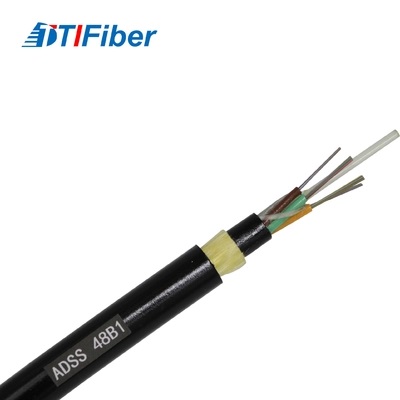
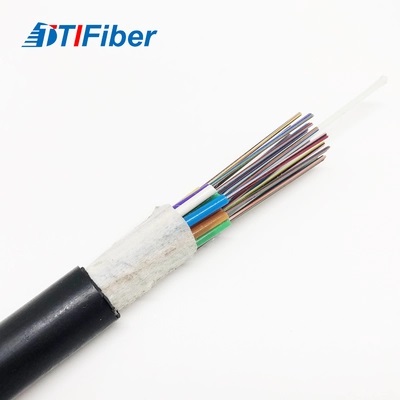
When we talk about Aluminum Wire Armoured (AWA) fiber optic cables, we are talking about the unsung heroes of modern infrastructure. These cables brave corrosive coastal soils, withstand the gnawing of rodents, and endure the crushing weight of shifting earth—all to ensure that the delicate glass fibers inside continue to carry the world’s data without interruption.
But building a cable that can survive such hostility is not a matter of simply wrapping metal around glass. It requires a symphony of material science, precision engineering, and relentless quality control. This is where TTI Fiber steps in.
How does a manufacturer transform raw materials into a bulletproof optical lifeline? Let’s pull back the curtain on the meticulous processes, rigorous testing, and human-centric philosophy that TTI Fiber employs to ensure every AWA cable meets the highest global standards.
What Makes TTI Fiber a Trusted Name in Armored Cable Manufacturing?
Trust in industrial manufacturing isn’t built on marketing slogans; it is earned through consistency, transparency, and a deep understanding of the end-user’s pain points. TTI Fiber has built its reputation by recognizing a fundamental truth: a cable is only as good as its weakest layer.
Rather than treating cable manufacturing as a mere assembly line process, TTI Fiber approaches it as a discipline of risk mitigation. Every decision—from the metallurgical composition of the armor to the extrusion temperature of the outer jacket—is made with one question in mind: Will this perform flawlessly twenty years from now? This proactive, engineering-first mindset is what separates a commodity product from a critical infrastructure asset.
How Does TTI Fiber Source and Vet Raw Materials for AWA Cables?
The foundation of any high-quality cable lies in its raw materials. You cannot build a resilient final product from compromised inputs. TTI Fiber enforces a strict, multi-tiered vetting process for every component that enters its supply chain.
The Strict Criteria for Aluminum Alloy Selection
Not all aluminum is created equal. For AWA cables, TTI Fiber specifically sources high-strength aluminum alloys, typically from the AA8000 series (such as AA8030 or AA8176). Why? Because these alloys offer a rare and critical balance: high tensile strength to resist crushing and pulling forces, coupled with exceptional ductility. During the armoring process, the wire must be helically wound at high speeds without snapping, kinking, or losing its structural integrity. TTI Fiber requires mill certificates for every batch of aluminum wire, verifying that the tensile strength, elongation percentage, and surface finish meet exacting specifications before the wire is ever spooled onto the armoring machine.
Vetting Tier-1 Optical Fiber Suppliers
The armor protects the core, but the core is the entire reason the cable exists. TTI Fiber partners exclusively with Tier-1 global optical fiber manufacturers (such as Corning, OFS, or Yangtze Optical) to source the glass strands. They demand strict adherence to ITU-T standards, ensuring G.652.D single-mode or OM4/OM5 multimode fibers with guaranteed attenuation limits (e.g., ≤0.20 dB/km at 1550 nm). Furthermore, TTI Fiber verifies that the fibers feature robust, dual-layer acrylate coatings to resist microbending, ensuring that the physical pressure of the surrounding armor never translates into optical signal loss.
What Advanced Manufacturing Processes Does TTI Fiber Employ for Armor Application?
Applying the armor is where art meets engineering. If the aluminum wires are wound too tightly, the cable becomes stiff and prone to "birdcaging" (where the wires buckle outward) when bent. If wound too loosely, the armor shifts under stress, leaving gaps that expose the inner core to crushing forces.
TTI Fiber utilizes state-of-the-art, computer-controlled planetary armoring machines. These machines precisely regulate the tension, lay length (the distance it takes for one wire to complete a full helix), and overlap of the aluminum wires. This ensures a uniform, tightly interlocked shield that moves with the cable rather than against it. The result is a cable that can be routed around tight corners in industrial plants or pulled through long underground conduits without compromising the integrity of the metallic shield or the glass within.
How Does TTI Fiber Guarantee Optical Performance and Signal Integrity?
A cable might look perfect on the outside, but if the light cannot travel cleanly through the inside, it has failed its primary mission. TTI Fiber refuses to leave optical performance to chance.
Every single length of AWA cable undergoes 100% optical testing before it leaves the factory floor. Using advanced Optical Time-Domain Reflectometers (OTDR) and light source/power meter setups, technicians measure Insertion Loss (IL) and Return Loss (RL) across multiple wavelengths (1310 nm, 1550 nm, and 1625 nm). This isn’t a spot-check; it is a comprehensive validation. If a single fiber in a 144-count cable shows an anomaly—even a fraction of a decibel above the threshold—the entire batch is flagged for investigation. This zero-tolerance policy ensures that network engineers can plug in the cable and trust the link budget implicitly.
What Rigorous Environmental and Mechanical Testing Does TTI Fiber Conduct?
Laboratory testing is where TTI Fiber proves that its cables can survive the real world. Rather than waiting for field failures, the company subjects its AWA cables to accelerated aging and stress tests that simulate decades of harsh conditions in a matter of weeks.
Simulating Decades of Stress in a Matter of Days
TTI Fiber’s testing protocols are brutal by design, mirroring international standards like IEC 60794 and Telcordia GR-20.
- Thermal Cycling: Cables are placed in environmental chambers and cycled repeatedly between extreme lows (e.g., -40°C) and highs (e.g., +70°C). This proves that the different materials (aluminum, PBT tubes, PE jacket) expand and contract at compatible rates without delaminating or inducing microbending loss in the fibers.
- Crush and Impact Testing: Hydraulic presses apply immense, localized pressure (often exceeding 3,000 Newtons per 10 cm) to the cable, followed by heavy impact drops. This verifies that the aluminum armor successfully absorbs the shock, preventing the internal buffer tubes from collapsing.
- Water Penetration Tests: A section of the cable is submerged vertically in water for 24 to 72 hours. TTI Fiber’s use of high-quality water-swellable tapes (SAP) ensures that moisture migration is halted within a few centimeters, proving the cable will not suffer from longitudinal water tracking if the outer jacket is breached in the field.
How Does TTI Fiber Ensure Precision in Cable Jacketing and Moisture Protection?
The outer jacket is the cable’s first line of defense, and TTI Fiber treats its extrusion with the same precision as a pharmaceutical manufacturing process. For outdoor AWA cables, they use high-density polyethylene (HDPE) compounded with a precise, uniform distribution of carbon black (typically ≥2.5%). This is not optional; it is the chemical shield that prevents ultraviolet radiation from breaking down the polymer chains and causing the jacket to become brittle and crack over time.
Furthermore, TTI Fiber ensures a flawless bond between the layers. Before the aluminum armor is applied, a moisture-blocking aluminum-polyethylene laminate (APL) or a bed of water-swellable yarns is meticulously applied. This creates a hermetic seal around the core, ensuring that even if a backhoe nicks the outer jacket, water is physically blocked from reaching the aluminum wires or the optical fibers.
What Role Does Quality Control and Traceability Play in TTI Fiber’s Production?
In modern infrastructure, accountability is just as important as the product itself. If a network operator needs to know the exact specifications of a cable buried underground five years ago, they cannot rely on memory.
TTI Fiber implements a rigorous, end-to-end traceability system governed by ISO 9001 quality management principles. Every spool of AWA cable is assigned a unique lot number. This number links back to a comprehensive digital dossier containing the mill certificates of the aluminum wire, the attenuation reports of the optical fiber, the extrusion parameters of the jacket, and the final OTDR test results. This level of transparency empowers clients with absolute confidence and simplifies troubleshooting, audits, and warranty claims.
How Does TTI Fiber Support Customization Without Compromising Standards?
No two network deployments are identical. A cable running through a chemical plant in a coastal city faces different threats than one buried in a rocky, arid mountain pass. TTI Fiber understands that a rigid, one-size-fits-all approach is a disservice to the client.
However, customization never means cutting corners. When a client requests a specific fiber count, a unique jacket color for easy identification, or an upgraded LSZH (Low Smoke Zero Halogen) compound for indoor safety, TTI Fiber’s engineering team adapts the design while holding the baseline quality metrics firm. The aluminum armor tension is recalibrated for the new diameter; the jacket extrusion is re-profiled for the new compound; and the final product undergoes the same relentless testing as their standard offerings. Customization is achieved through engineering adaptation, not standard degradation.
is a critical component of their service model, ensuring that the final product is perfectly tailored to the client's unique environmental and operational demands.
What Certifications and Global Standards Does TTI Fiber Adhere To?
Quality is not a subjective feeling; it is an objective measurement verified by independent bodies. TTI Fiber does not just claim to meet industry standards; they design their products to exceed them and back those claims with formal certifications.
Their AWA cables are engineered to comply with a stringent matrix of global standards, including:
- IEC 60794 Series: For mechanical, environmental, and optical performance of optical fibre cables.
- Telcordia GR-20: The North American gold standard for Outside Plant (OSP) fiber optic cable reliability, including long-term aging and hydrogen exposure testing.
- RoHS and REACH: Ensuring that all materials, including the aluminum alloys and jacketing compounds, are free from hazardous substances like lead, cadmium, and harmful phthalates.
By adhering to these rigorous frameworks, TTI Fiber ensures its cables are accepted and trusted by telecom operators, utility companies, and government contractors worldwide.
Why Does TTI Fiber’s Commitment to Quality Matter for Your Network’s Future?
At the end of the day, a fiber optic cable is an investment in the future. It is buried in the ground, strung on poles, or hidden in walls, intended to operate silently and reliably for 25 to to 30 years. The cost of a cable failure is never just the price of the replacement hardware; it is the cost of network downtime, emergency truck rolls, lost data, and damaged reputations.
TTI Fiber’s unwavering commitment to quality in AWA cable manufacturing is ultimately a commitment to your peace of mind. By obsessing over the metallurgy of the aluminum, the purity of the glass, and the rigor of the testing, they ensure that when the environment does its worst, your network simply keeps working.
In a world that demands ever-faster, ever-more-reliable connectivity, choosing a manufacturer that treats quality not as a checkpoint, but as a core philosophy, is the smartest decision a network engineer can make.


What Specific Type of Steel Is Used for SWA Fiber Optic Cables
What Are the Core Optical Fibers Made Of?
Related Article