What Specific Type of Steel Is Used for SWA Fiber Optic Cables
Let's embark on a journey through metallurgy, manufacturing, and the science that keeps your fiber networks running reliably for generations.
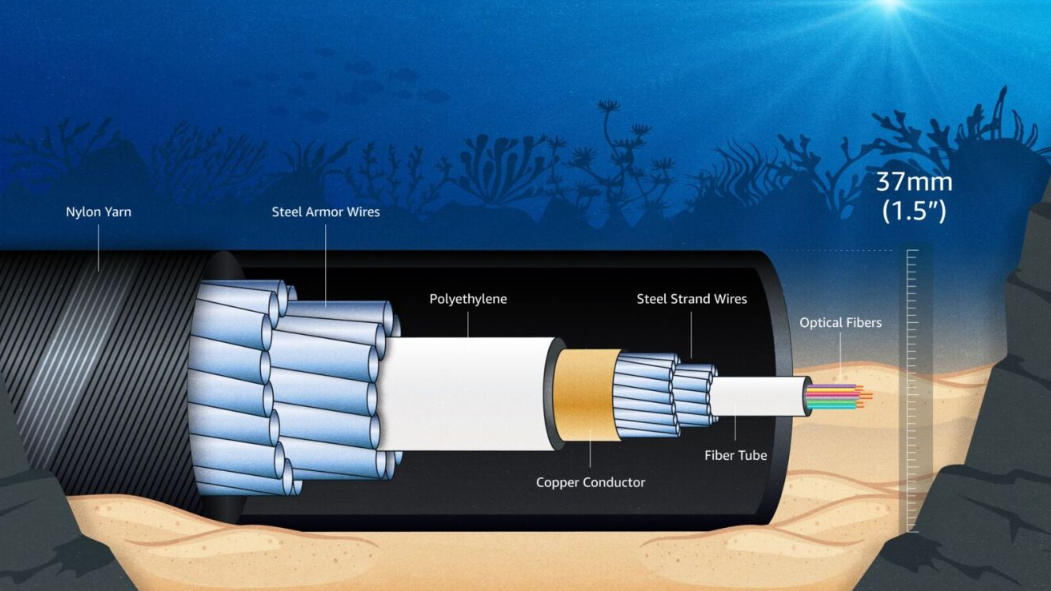
What Specific Type of Steel Is Used for SWA Fiber Optic Cables?
The steel used in SWA fiber optic cables is low-carbon (mild) steel wire, typically containing less than 0.25% carbon content. This might sound surprisingly ordinary for such a critical component, but that's precisely the point. Low-carbon steel offers the perfect balance of strength and flexibility that makes it ideal for cable armoring.
The Metallurgical Sweet Spot: Why Low-Carbon Steel Dominates
Low-carbon steel isn't chosen by accident—it's the result of decades of engineering refinement. The carbon content, usually between 0.10% and 0.25%, gives the wire enough tensile strength (typically ranging from 600 to 1,000 MPa) to protect the cable while maintaining the ductility needed for the helical winding process.
When manufacturers like TTI Fiber produce SWA cables, they specify steel wires that meet strict international standards such as BS EN 10264 or ASTM A641. These standards ensure that every spool of wire has consistent mechanical properties, which is crucial for maintaining cable quality across thousands of kilometers of production.
Wire Diameter Specifications and Their Impact on Performance
The diameter of SWA wires typically ranges from 0.9 mm to 2.5 mm, depending on the cable's intended application and required mechanical protection. Thinner wires (0.9-1.2 mm) are used for lighter-duty applications where flexibility is paramount, while thicker wires (1.6-2.5 mm) provide maximum crush resistance for direct burial in rocky terrain or industrial environments.
The choice of diameter isn't arbitrary—it's calculated based on the cable's overall design, the expected mechanical loads, and the installation method. A cable destined for aerial installation might use different wire gauges than one designed for submarine deployment.
Manufacturing Tolerances: The Devil Is in the Details
Precision matters enormously in SWA production. The steel wires must maintain diameter tolerances within ±0.05 mm to ensure uniform coverage and consistent mechanical performance. Any variation beyond this can create weak points where the armor might fail under stress.
Leading manufacturers like TTI Fiber understand that these tolerances aren't just numbers on a spec sheet—they represent the difference between a cable that survives a backhoe strike and one that doesn't. This is why quality control during wire production is as critical as the cable assembly itself.
Why Is Low-Carbon Steel Chosen Over High-Strength or Stainless Alternatives?
You might be thinking: "If strength is the goal, why not use high-carbon steel or stainless steel?" It's a logical question, but the answer reveals the complex interplay between material properties, manufacturing processes, and real-world performance.
The Brittleness Problem with High-Carbon Steel
High-carbon steel (containing 0.60% to 1.0% carbon) is indeed stronger than low-carbon steel. However, it's also significantly more brittle. During the armoring process, steel wires must be bent, twisted, and wound helically around the cable core at high speeds. High-carbon steel simply can't handle this deformation without developing micro-cracks or fracturing entirely.
Imagine trying to bend a paperclip back and forth repeatedly. Eventually, it snaps. That's work hardening and fatigue in action. High-carbon steel exhibits this behavior much more readily than low-carbon steel, making it unsuitable for the severe bending required in cable manufacturing.
The Economic Reality of Stainless Steel
Stainless steel offers excellent corrosion resistance and good mechanical properties, but it comes with three major drawbacks for SWA applications:
-
Cost: Stainless steel is 3-5 times more expensive than galvanized low-carbon steel, making it economically unviable for most terrestrial cable deployments.
-
Stiffness: Stainless steel has a higher modulus of elasticity, making it harder to wind tightly around cable cores. This increases manufacturing complexity and can lead to inconsistent armor coverage.
-
Termination Difficulty: Field technicians must cut and ground the armor during installation. Stainless steel is significantly harder to work with, requiring specialized tools and more time.
For these reasons, stainless steel wire armor (SSWA) is reserved only for extreme environments—submarine cables, offshore platforms, or highly corrosive industrial settings—where the premium cost is justified by the application's demands.
The Ductility Advantage: Why It Matters in the Field
Low-carbon steel's ductility isn't just important during manufacturing—it's crucial during installation and throughout the cable's service life. When a cable is pulled through conduit or buried in shifting soil, the armor must absorb mechanical stress without fracturing. Low-carbon steel's ability to deform plastically (bend without breaking) provides this essential safety margin.
This is why industry leaders like TTI Fiber specify low-carbon steel for the vast majority of their SWA cable products. It's the material that delivers reliable performance across the widest range of applications while maintaining cost-effectiveness.
How Does Hot-Dip Galvanization Protect the Steel from Corrosion?
Steel, no matter how well-chosen, has one fatal flaw: it rusts. Exposed to moisture and oxygen, even the strongest steel will corrode, lose its structural integrity, and ultimately fail. This is where hot-dip galvanization becomes the unsung hero of SWA cable longevity.
The Galvanization Process: More Than Just a Coating
Hot-dip galvanization isn't a simple paint job or electroplating process. It's a sophisticated metallurgical transformation that creates a bond between zinc and steel at the atomic level. Here's how it works:
-
Surface Preparation: The steel wires are first cleaned through acid pickling to remove mill scale, rust, and contaminants. This ensures the zinc can bond directly to the steel surface.
-
Fluxing: The cleaned wires are dipped in a flux solution (usually zinc ammonium chloride) to prevent oxidation before galvanizing.
-
Immersion: The wires are submerged in a molten zinc bath at approximately 450°C (842°F). At this temperature, a metallurgical reaction occurs, creating a series of zinc-iron alloy layers.
-
Cooling and Inspection: The galvanized wires are cooled and inspected for coating thickness and uniformity.
The Multi-Layer Defense: Zinc-Iron Alloy Formation
What makes hot-dip galvanization so effective is that it doesn't just coat the steel—it transforms the surface. The process creates four distinct metallurgical layers:
- Gamma (Γ) Layer: The innermost layer, containing 75% zinc and 25% iron. This hard, brittle layer provides the foundation for the coating.
- Delta (δ) Layer: Contains 90% zinc and 10% iron. Harder than pure zinc but more ductile than the gamma layer.
- Zeta (ζ) Layer: Contains 94% zinc and 6% iron. This layer provides the transition to the outer coating.
- Eta (η) Layer: Pure zinc (99.99%). This outer layer provides the sacrificial protection and gives galvanized steel its characteristic spangled appearance.
These layers bond metallurgically with the steel substrate, creating a coating that's integral to the wire itself—not just a surface treatment that can flake or peel.
Dual Protection Mechanisms: Barrier and Sacrificial Action
Galvanization protects steel through two complementary mechanisms:
Barrier Protection: The zinc coating acts as a physical barrier, preventing moisture, oxygen, and corrosive ions from reaching the underlying steel. Zinc is naturally corrosion-resistant, forming a protective patina (zinc carbonate) when exposed to the atmosphere.
Sacrificial (Cathodic) Protection: This is where galvanization truly shines. Zinc is more electrochemically active than steel, meaning it has a higher tendency to corrode. When the coating is scratched or damaged, the zinc willingly sacrifices itself—corroding preferentially to protect the exposed steel. This cathodic protection continues until the zinc is completely consumed.
Standards like ASTM A641 and BS EN 10244-2 specify minimum zinc coating masses for different applications. For direct-burial SWA cables, Class A (≥250 g/m²) or Class B (≥300 g/m²) coatings are typically required. Anything less risks premature failure in moist or aggressive soils.
What Role Do the Inner Bedding and Outer Sheath Play in Corrosion Prevention?
While galvanization is the primary defense against corrosion, it doesn't work alone. SWA cable design employs a layered defense strategy that creates multiple barriers between the steel wires and the hostile external environment.
The Inner Bedding Layer: Cushion and Moisture Barrier
Beneath the steel wire armor lies the bedding layer—an extruded coating of PVC (polyvinyl chloride) or PE (polyethylene) that serves two critical functions:
-
Mechanical Cushioning: The bedding provides a smooth, compliant surface for the steel wires to rest against. Without this layer, the hard steel wires could cut into the delicate buffer tubes containing the optical fibers during installation or under load.
-
Moisture Isolation: The bedding acts as a secondary moisture barrier, preventing any water that penetrates the outer sheath from reaching the steel wires. It also isolates the armor from internal cable components, preventing galvanic corrosion between dissimilar metals.
The bedding layer is typically 0.5-1.0 mm thick and must adhere well to the underlying cable structure while allowing the armor wires to grip securely.
The Outer Sheath: First Line of Defense
Over the steel wires, a final outer sheath is extruded. This is the cable's visible exterior and its primary environmental shield. The material choice depends on the application:
-
Black Polyethylene (PE): Used for outdoor and direct-burial cables. PE is UV-stabilized with carbon black (typically 2.5% concentration) to resist degradation from sunlight. It's flexible, abrasion-resistant, and provides excellent moisture barrier properties.
-
PVC (Polyvinyl Chloride): Common for indoor/industrial applications. PVC offers good flame retardancy and chemical resistance but is less UV-stable than PE.
-
LSZH (Low Smoke Zero Halogen): Used in tunnels, buildings, and other confined spaces where fire safety is critical. LSZH compounds produce minimal smoke and no toxic halogen gases when burned.
The outer sheath thickness typically ranges from 1.5-3.0 mm, depending on the cable diameter and mechanical protection requirements. It must be tough enough to resist abrasion during installation, flexible enough to bend without cracking, and durable enough to survive decades of environmental exposure.
The Synergy of Layers: How They Work Together
The true strength of SWA cable design lies in the synergy between layers. The outer sheath takes the brunt of environmental exposure, the bedding isolates the armor from internal components, and the galvanized coating provides the final barrier against corrosion. If one layer is compromised, the others continue to provide protection.
This redundancy is why properly manufactured SWA cables can achieve service lives of 25-40 years even in harsh environments. Companies like TTI Fiber engineer their cables with this layered approach, ensuring that every component works in harmony to protect the precious optical fibers within.
Are There Advanced Coating or Material Alternatives for Extreme Environments?
While hot-dip galvanized low-carbon steel handles the vast majority of SWA applications, some environments are simply too aggressive for standard protection. Coastal salt marshes, chemical processing plants, acidic soils, and offshore installations demand enhanced corrosion resistance. For these scenarios, manufacturers have developed several advanced alternatives.
Galfan Coating: The Zinc-Aluminum Revolution
Galfan is a proprietary coating consisting of approximately 95% zinc and 5% mischmetal (a rare-earth alloy primarily composed of cerium and lanthanum). This seemingly small addition of aluminum and rare earth elements dramatically enhances corrosion resistance.
The advantages of Galfan over traditional galvanization include:
-
2-3x Better Corrosion Resistance: In salt spray tests (ASTM B117), Galfan-coated wires typically last 1,000-1,500 hours before showing red rust, compared to 500-800 hours for standard galvanized wire.
-
Superior Cut-Edge Protection: When wires are cut or damaged, Galfan's aluminum content forms a more protective oxide layer, slowing corrosion at exposed edges.
-
Better Formability: Galfan coatings are more ductile than pure zinc, reducing the risk of coating damage during the armoring process.
Galfan is increasingly popular for SWA cables deployed in coastal regions, industrial zones, and areas with acidic soils (pH < 6.0).
Double-Jacketed SWA: Complete Armor Encapsulation
For the most extreme environments, some manufacturers produce double-jacketed SWA cables. These feature:
- Inner PE sheath
- Steel wire armor
- Moisture-blocking tape or extruded layer
- Outer PE sheath
This design completely encapsulates the armor, preventing any external moisture from ever contacting the steel wires. It's the ultimate protection for cables buried in contaminated soils, submerged in water, or exposed to chemical spills.
Stainless Steel Wire Armor (SSWA): The Premium Option
As mentioned earlier, stainless steel (typically grades 304 or 316) is used for SWA in the most corrosive environments. Grade 316 stainless, which contains molybdenum, offers exceptional resistance to chlorides and is the standard for marine and offshore applications.
The trade-offs are significant:
- Cost: 3-5x more expensive than galvanized steel
- Weight: Slightly heavier
- Stiffness: Harder to install and terminate
But in environments where failure is not an option—subsea cables, offshore oil platforms, chemical plants—SSWA is worth every penny.
Aluminum Wire Armor (AWA): The Non-Magnetic Alternative
While not steel, aluminum wire armor deserves mention as an alternative for specific applications. AWA offers:
- Corrosion Resistance: Aluminum naturally forms a protective oxide layer, eliminating the need for galvanization.
- Non-Magnetic: Essential for cables running near sensitive equipment or in explosive atmospheres.
- Lighter Weight: Aluminum is about one-third the density of steel.
However, AWA has lower tensile strength than steel and is more susceptible to galvanic corrosion when in contact with dissimilar metals. It's best suited for coastal areas, explosive environments, and applications where weight reduction is critical.
What Happens If the Corrosion Protection Fails in the Field?
Corrosion failure in SWA cables is not a sudden event—it's a slow, insidious process that can take years to manifest. But when it does, the consequences are severe and often irreversible. Understanding this failure mode is crucial for appreciating why material quality matters so much.
Stage 1: The Invisible Onset
Corrosion begins at microscopic defects in the zinc coating—scratches from installation, thin spots from manufacturing, or areas where the coating was damaged during handling. At these points, moisture and oxygen reach the steel substrate, initiating the oxidation process.
Initially, this is invisible. The zinc continues to provide sacrificial protection, corroding preferentially. But as the zinc is consumed, the protection weakens.
Stage 2: Volume Expansion and Sheath Rupture
When steel rusts, it forms iron oxide (Fe₂O₃), which occupies 6-10 times the volume of the original metal. This expansion creates tremendous internal pressure within the cable structure.
Over time, this pressure causes:
- Cracking of the outer sheath
- Delamination of the bedding layer
- Deformation of the cable cross-section
Once the outer sheath cracks, more water and oxygen flood in, accelerating the corrosion process exponentially. What was once a localized problem becomes systemic.
Stage 3: Loss of Tensile Strength
As corrosion progresses, the steel wires lose their cross-sectional area and, consequently, their tensile strength. A wire that once could withstand 1,000 MPa of stress might fail at 300 MPa.
This creates a critical vulnerability:
- Installation Damage: The cable may fail during future pulling operations.
- Ground Movement: Soil settlement, frost heave, or seismic activity can snap weakened cables.
- External Loads: Heavy vehicles, construction equipment, or even normal soil pressure can crush compromised cables.
Stage 4: Hydrogen Darkening—The Silent Killer of Optical Performance
Perhaps the most insidious consequence of SWA corrosion is hydrogen darkening. The electrochemical corrosion process generates hydrogen gas as a byproduct. This hydrogen doesn't just dissipate—it diffuses through the cable structure, penetrating the glass fibers themselves.
Once inside the silica matrix, hydrogen creates microscopic absorption centers that attenuate optical signals, particularly at wavelengths of:
- 1240 nm (OH⁻ absorption peak)
- 1383 nm (the notorious "water peak")
- 1600+ nm (affecting long-haul transmission)
This attenuation is permanent and irreversible. Unlike a broken fiber that can be spliced, hydrogen darkening affects the entire cable length and cannot be repaired. The only solution is complete cable replacement.
The Economic Impact of Corrosion Failure
The true cost of corrosion isn't just the cable itself—it's the collateral damage:
- Excavation Costs: Digging up buried cable can cost $50-200 per meter in urban areas.
- Service Disruption: Downtime for critical networks can cost thousands of dollars per minute.
- Reputation Damage: Repeated failures erode customer trust and can cost contracts.
- Environmental Remediation: Contaminated soils or water sources may require cleanup.
This is why industry leaders like TTI Fiber invest heavily in corrosion-resistant materials and rigorous quality control. The upfront cost is negligible compared to the lifetime cost of failure.
How Can Engineers Verify the Quality of SWA Corrosion Protection Before Purchase?
Specifying "galvanized SWA cable" on a purchase order is like ordering "a car"—it's technically correct but woefully inadequate. To ensure you're getting a cable that will perform for decades, you need to demand specific, verifiable quality metrics.
Zinc Coating Mass Testing: The Gold Standard
The most critical parameter is zinc coating mass, measured in grams per square meter (g/m²). This isn't something you can estimate visually—you need laboratory testing.
ASTM A90 and ISO 10684 define the standard test method:
- A sample of galvanized wire is weighed.
- The zinc coating is chemically stripped using an acid solution.
- The wire is weighed again.
- The difference in weight, divided by the surface area, gives the coating mass.
For direct-burial SWA cables, you should require:
- Minimum 250 g/m² (Class A per BS EN 10244-2)
- Preferred 300 g/m² (Class B) for aggressive environments
Demand certified test reports from your supplier showing compliance with these values. Reputable manufacturers like TTI Fiber provide lot-specific certificates of analysis with every shipment.
Salt Spray Testing: Simulating Decades of Exposure
ASTM B117 neutral salt spray testing is the industry standard for evaluating corrosion resistance. In this test, galvanized wires are placed in a chamber and exposed to a fine mist of 5% sodium chloride solution at 35°C (95°F) for extended periods.
Performance benchmarks:
- 500 hours: Minimum acceptable for standard applications
- 1,000 hours: Preferred for coastal or industrial environments
- 1,500+ hours: Required for extreme conditions (Galfan or SSWA)
The test is complete when "red rust" (iron oxide) appears on the steel substrate. White rust (zinc oxide) is acceptable—it's part of the normal corrosion process.
Ask suppliers for salt spray test reports from independent laboratories. Third-party validation from organizations like UL, TÜV, or Intertek carries more weight than in-house testing.
The Wrap Test: Proving Coating Adhesion
A galvanized coating is only as good as its bond to the steel. The wrap test (ASTM A90) evaluates this adhesion:
- A sample of galvanized wire is tightly wrapped around a mandrel of its own diameter.
- The wire is wrapped six complete turns.
- The coating is inspected for flaking, cracking, or peeling.
A quality galvanized coating should remain intact, with only minor surface cracking acceptable. If the zinc flakes off or exposes the steel, the coating has failed.
This test is crucial because the armoring process subjects wires to severe bending. A coating that can't survive the wrap test won't survive manufacturing, let alone 30 years in the ground.
Visual and Dimensional Inspection: The First Line of Defense
Before accepting any SWA cable, perform a thorough visual inspection:
Wire Appearance:
- Should be bright, uniform silver-gray
- No dull, patchy, or powdery areas (signs of white rust or poor galvanization)
- No visible rust spots or red discoloration
- Consistent spangle pattern (the crystalline appearance of solidified zinc)
Coating Uniformity:
- No bare spots or thin areas
- No drips, runs, or excessive buildup
- Smooth transition at wire ends
Dimensional Accuracy:
- Wire diameter within ±0.05 mm of specification
- Consistent diameter along the entire length
- Proper lay length and tension in the armor
Use a micrometer to measure wire diameter at multiple points. Significant variation indicates poor manufacturing control.
Documentation Requirements: Paperwork That Protects You
Never accept SWA cable without comprehensive documentation:
- Material Certificates: Mill certificates for the steel wire showing chemical composition and mechanical properties.
- Galvanization Certificates: Coating mass test results per ASTM A90.
- Mechanical Test Reports: Tensile strength, elongation, and wrap test results.
- Salt Spray Test Reports: Independent laboratory verification of corrosion resistance.
- Cable Test Reports: OTDR traces, insertion loss, and return loss measurements.
- Traceability: Lot numbers linking the finished cable to raw material batches.
Reputable manufacturers like TTI Fiber provide this documentation as a matter of course. If a supplier hesitates or provides generic "typical" values instead of lot-specific data, consider it a red flag.
What Standards and Specifications Govern SWA Steel Wire Quality?
SWA fiber optic cables don't exist in a regulatory vacuum. They're governed by a complex web of international, national, and industry-specific standards that define everything from steel composition to coating thickness to mechanical performance.
International Standards: The Global Framework
IEC 60794 Series (International Electrotechnical Commission):
- IEC 60794-1-2: Defines mechanical test methods for optical fiber cables, including tensile, crush, and impact testing.
- IEC 60794-1-21: Specifies environmental test methods, including temperature cycling and water penetration.
- IEC 60794-1-22: Covers mechanical performance requirements for outdoor cables.
ISO 10684 (International Organization for Standardization):
- Specifies requirements for hot-dip galvanized coatings on fasteners and wire, including coating mass and adhesion testing.
BS EN 10244-2 (British/European Standard):
- Defines zinc coating requirements for steel wire, including Classes A, B, and C based on coating mass.
North American Standards: ASTM and Beyond
ASTM A641/A641M:
- Standard specification for zinc-coated (galvanized) carbon steel wire.
- Defines coating classes (Class 1, 2, 3) based on zinc mass.
- Specifies mechanical properties including tensile strength and elongation.
ASTM A90/A90M:
- Test method for weight (mass) of zinc coating on galvanized steel wire.
- The definitive standard for verifying coating thickness.
ASTM B117:
- Standard practice for operating salt spray (fog) apparatus.
- The benchmark for accelerated corrosion testing.
Telcordia GR-20:
- Generic requirements for optical fiber cable.
- Includes specific requirements for armored cables, including mechanical strength and environmental resistance.
- Mandates 25-year service life modeling.
Regional and Application-Specific Standards
BS 7878 (British Standard):
- Specification for optical fiber cables for use in telecommunications.
- Includes detailed requirements for SWA construction and performance.
ICEA (Insulated Cable Engineers Association):
- Provides standards for cable construction in North America.
- Often referenced alongside Telcordia GR-20.
NEMA (National Electrical Manufacturers Association):
- Standards for cable testing and performance verification.
Compliance vs. Certification: Understanding the Difference
It's important to distinguish between compliance and certification:
- Compliance: The manufacturer claims the product meets a standard. This is self-declared and may or may not be verified.
- Certification: An independent third party (UL, TÜV, Intertek) has tested and verified compliance. This carries far more weight.
When specifying SWA cable, always request third-party certification where available. It's the difference between trusting a supplier's word and having objective proof.
How Do Installation Practices Affect the Longevity of SWA Corrosion Protection?
Even the best-manufactured SWA cable can fail prematurely if installed incorrectly. The armor's corrosion protection is only as good as the care taken during installation. Here's what can go wrong—and how to prevent it.
Bending Radius Violations: The Silent Coating Killer
Every SWA cable has a minimum bending radius—typically 20× the cable diameter during installation and 15× for long-term service. Exceeding this limit doesn't just risk fiber breakage; it can crack or delaminate the galvanized coating.
When steel wires are bent beyond their elastic limit:
- The zinc coating develops micro-cracks
- These cracks expose the underlying steel to corrosion
- The sacrificial protection is overwhelmed at multiple points
Best Practice: Use roller guides and sweeping bends during installation. Never kink or sharply bend SWA cable, even temporarily.
Jacket Damage During Pulling: Creating Corrosion Pathways
The outer sheath is the first line of defense against corrosion. But during cable pulling, it's vulnerable to:
- Abrasion against conduit edges
- Impact with rocks or debris in trenches
- Cutting on sharp corners or protrusions
Any breach in the outer sheath creates a direct pathway for moisture to reach the armor. Even with galvanization, this accelerates corrosion dramatically.
Best Practice:
- Use cable lubricants rated for PE/PVC jackets
- Install conduit bushings and edge protectors
- Inspect the cable continuously during pulling
- Stop immediately if jacket damage is observed
Improper Termination: Leaving Armor Exposed
When terminating SWA cable, the armor must be properly grounded and sealed. Common mistakes include:
- Inadequate Gland Selection: Using a gland that doesn't properly clamp the armor wires leaves them exposed to moisture.
- Poor Grounding: Failing to bond the armor to the grounding system creates corrosion cells.
- Insufficient Sealing: Not applying proper moisture seals at termination points allows water to wick into the cable.
Best Practice: Use double-compression glands rated for SWA, ensure proper grounding per NEC Article 770 or IEC 62305, and apply IP68-rated seals at all entry points.
Environmental Exposure During Installation: The Overlooked Risk
SWA cable is designed for long-term environmental exposure, but that doesn't mean it's invulnerable during installation. Leaving cable reels exposed to rain, salt spray, or chemical contamination for weeks or months before installation can initiate corrosion before the cable is even in service.
Best Practice:
- Store cable reels under cover or on raised platforms
- Keep end caps sealed until installation
- Inspect cable for damage before pulling
- Install promptly after delivery
Grounding Mistakes: Creating Galvanic Cells
Improper grounding can actually accelerate corrosion through galvanic action. If the SWA armor is bonded to a dissimilar metal (like copper grounding conductors) without proper isolation, it creates a galvanic cell where the steel becomes the anode and corrodes preferentially.
Best Practice:
- Use tinned copper or zinc-plated grounding conductors
- Apply anti-oxidant compound at bonding points
- Ensure low-impedance connections (<0.1 Ω)
- Inspect grounding connections annually
What Are the Economic Trade-Offs Between Standard and Enhanced SWA Protection?
Choosing the right level of corrosion protection for SWA cable isn't just a technical decision—it's an economic one. The question isn't "what's the best?" but "what's the best value for this specific application?"
Upfront Cost Comparison
Let's look at typical material costs (per kilometer, approximate):
| Cable Type | Armor Material | Relative Cost |
|---|---|---|
| Standard SWA | Hot-dip galvanized steel (250 g/m²) | 1.0× (baseline) |
| Enhanced SWA | Hot-dip galvanized steel (300 g/m²) | 1.1-1.2× |
| Galfan SWA | Zinc-aluminum coating | 1.3-1.5× |
| Double-jacketed SWA | Galvanized steel + dual PE sheaths | 1.4-1.6× |
| SSWA | Stainless steel 316 | 3.0-5.0× |
| AWA | Aluminum wire | 1.5-2.0× |
At first glance, standard galvanized SWA looks like the obvious choice. But this is a false economy if you consider total cost of ownership.
Total Cost of Ownership: The Real Picture
The true cost of a cable includes:
- Material cost (purchase price)
- Installation cost (labor, equipment, time)
- Maintenance cost (inspections, repairs)
- Failure cost (downtime, replacement, remediation)
- End-of-life cost (disposal, replacement)
For a cable buried in benign soil with low moisture and neutral pH, standard SWA might last 30+ years with minimal maintenance. In this case, the upfront savings are real.
But for a cable in coastal soil with high salinity, the math changes dramatically:
Scenario: 10 km Coastal Deployment
| Option | Material Cost | Expected Life | Replacement Cost | 30-Year TCO |
|---|---|---|---|---|
| Standard SWA (250 g/m²) | $50,000 | 12 years | $150,000 (2 replacements) | $350,000 |
| Galfan SWA | $70,000 | 25 years | $75,000 (1 replacement) | $195,000 |
| SSWA | $200,000 | 40+ years | $0 | $200,000 |
In this scenario, Galfan or SSWA actually saves money over the cable's life, despite higher upfront costs.
Risk Assessment: Quantifying the Unquantifiable
Beyond pure economics, there's risk to consider:
- Service Criticality: A cable serving a data center or hospital has higher downtime costs than one serving residential users.
- Accessibility: A cable under a major highway is far more expensive to replace than one in an open field.
- Environmental Liability: Corrosion failure in a protected wetland could trigger regulatory fines and remediation costs.
For high-risk applications, the premium for enhanced protection is insurance, not expense.
The Role of Warranties and Guarantees
Reputable manufacturers like TTI Fiber often back their products with warranties—typically 20-25 years for standard SWA and up to 30 years for enhanced protection.
But read the fine print:
- Does the warranty cover corrosion failure?
- What environmental conditions are excluded?
- What installation practices are required to maintain coverage?
- Is the warranty prorated or full replacement?
A strong warranty can justify a higher upfront cost by transferring risk from the buyer to the manufacturer.
Is the Steel in SWA Cable Just a Commodity—or a Critical Engineering Component?
It's tempting to think of the steel wire in SWA cable as a simple, commoditized material—just another industrial input. But as we've explored, nothing could be further from the truth.
The steel used in SWA cable is the product of careful metallurgical engineering, precise manufacturing, and rigorous quality control. Its low-carbon composition, hot-dip galvanized coating, and integration into a multi-layered defense system represent decades of accumulated knowledge about how materials behave in the real world.
Every kilometer of SWA cable buried beneath our streets, strung between our towers, or laid across the ocean floor carries with it a promise: that the light within will flow uninterrupted for decades, protected by steel that refuses to yield to the forces of nature.
That promise is kept not by chance, but by choice—the choice to specify the right materials, to verify quality with evidence rather than trust, and to install with care rather than haste.
Companies like TTI Fiber (www.ttifibercable.com) understand this. They know that every reel of cable they produce will be judged not by its price tag, but by its performance when the earth shifts, when the rain falls, when the years pile up.
In the end, the steel in SWA cable isn't just a commodity. It's a covenant—a commitment to reliability, to longevity, to the invisible infrastructure that powers our connected world.
And that's worth getting right.


Can Double-Jacketed SWA Designs Provide Ultimate Environmental Isolation
How to Ensure the Highest Quality in AWA Cable Manufacturing
Related Article