What Do Electrical Codes Specifically Require for SWA Grounding
What Are the Installation and Grounding Requirements for SWA Cable?
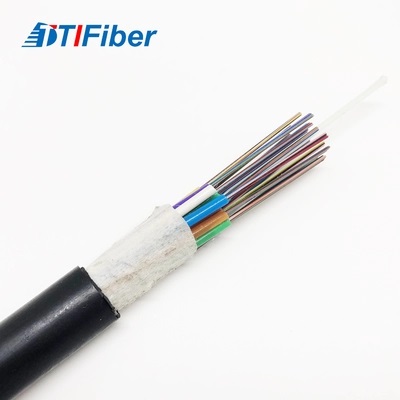
Steel Wire Armoured (SWA) fiber optic cable is engineered for resilience—designed to survive direct burial in rocky terrain, resist rodent attacks, and endure decades of mechanical stress. But its greatest strength—its conductive galvanized steel armor—also introduces critical safety and performance obligations that cannot be ignored. Unlike dielectric (non-metallic) cables, SWA must be installed and grounded correctly, or it risks becoming a hazard rather than a safeguard.
So what exactly does “correct” installation entail? Where do standards draw the line between best practice and code compliance? And why is grounding not just an electrical formality—but a foundational requirement for safety, reliability, and longevity?
Let’s examine the full scope of SWA cable handling, from unspooling to termination, with technical precision and practical insight.
Why Must SWA Cable Be Grounded—Isn’t It Just Carrying Light?
Although fiber optic cables transmit data via light—not electricity—the steel wire armor is electrically conductive. This creates three serious risks if left ungrounded:
- Lightning Induction: A nearby strike can induce thousands of volts on the armor, creating dangerous step potentials or arcing at ungrounded terminations.
- Capacitive Coupling: When SWA runs parallel to high-voltage power lines (even in shared corridors), alternating magnetic fields induce voltage on the armor—potentially exceeding 50 V, enough to cause shock or equipment damage.
- Static Buildup: Friction during wind-induced movement or soil shifting can generate static charges that discharge unpredictably.
Grounding the armor safely dissipates these voltages to earth, protecting personnel, equipment, and the cable itself. As emphasized in IEC 62305 (lightning protection) and NEC Article 770, metallic cable sheaths must be bonded to the grounding system—not as an option, but as a code-mandated safety measure.
What Do Electrical Codes Specifically Require for SWA Grounding?
Global standards converge on one principle: bond the armor at both ends. Key requirements include:
National Electrical Code (NEC) – United States
- Article 770.100(B)(2): “The metallic armor of optical fiber cables shall be bonded to the grounding electrode system.”
- Article 250.96: Requires bonding jumpers to be sized per fault current and kept as short and straight as possible.
- Exception: Single-point grounding is permitted only if the cable is entirely within a single building and not exposed to lightning—but this rarely applies to outdoor SWA.
IEC 60364 / BS 7671 (UK/EU)
- Section 543.4.2: Metallic sheaths must be connected to the protective earthing conductor at both ends of the run.
- BS 7878 (Fiber Optic Cabling Standard): Explicitly requires SWA armor to be earthed using approved clamps and conductors.
IEEE 142 (Green Book)
- Recommends low-impedance grounding paths (<0.1 Ω) to handle surge currents without voltage rise.
In practice, single-point grounding is insufficient for outdoor SWA. Dual-end bonding ensures that induced currents have a complete path to earth, minimizing voltage gradients along the cable route.
How Do You Properly Terminate and Ground SWA Armor at Enclosures?
Termination isn’t just about sealing—it’s about creating a continuous, low-resistance bond from armor to grounding system. Follow these steps:
1. Prepare the Armor End
- Use a rotary stripper or hacksaw to cleanly cut the outer PVC sheath (typically 150–200 mm back).
- Unwind and trim the steel wires neatly—do not fray or kink them.
- Remove the bedding layer and APL sheath to expose the inner cable core.
2. Install an Approved SWA Gland
- Use a double-compression cable gland rated for SWA (e.g., CMP, Roxtec, or Eaton types).
- The gland must:
- Clamp mechanically onto the steel wires.
- Seal against moisture ingress (IP68 rating).
- Provide a bonding lug for the grounding conductor.
3. Bond to Grounding Conductor
- Connect a green/yellow insulated copper conductor (min. 6 AWG / 16 mm² per NEC) from the gland lug to the nearest grounding busbar or electrode.
- Use listed lugs and torque-rated connections—never wrap wire around a screw.
- For outdoor enclosures, ensure the grounding path connects to the site’s main earth electrode system.
Critical Note: Never rely on conduit threads or enclosure screws for grounding continuity. The bond must be direct, dedicated, and low-impedance.
What Are the Bending and Tensile Limits During Installation?
SWA’s rigidity demands respect for mechanical limits:
-
Minimum Bending Radius:
- During Installation: 20 × overall cable diameter.
- After Installation: 15 × diameter (per IEC 60794-1-2).
- Example: For a 15 mm diameter SWA cable, maintain >300 mm radius while pulling.
-
Maximum Tensile Load:
- Typically 6,000–15,000 N, depending on fiber count and armor size.
- Use swivel pulling eyes attached to the central strength member—never pull on the armor or fibers.
- Monitor tension in real time with a dynamometer; exceeding limits can deform buffer tubes or break fibers.
-
Avoid Sharp Edges: Use roller guides at trench corners or duct entries to prevent jacket abrasion and wire kinking.
Violating these limits causes microbending loss, fiber breaks, or armor fatigue—failures that may not appear until months later.
Can SWA Cable Be Installed in Conduit—Or Is Direct Burial Preferred?
SWA is primarily designed for direct burial, but it can be pulled through conduit when necessary (e.g., road crossings). However:
- Conduit increases friction—use lubricant rated for PVC sheaths.
- Bend radius constraints are stricter in conduit—limit sweeps to 90° total per 30 m.
- Never mix SWA with power cables in the same conduit unless separated by a grounded barrier (per NEC 770.53).
For most applications, direct burial at 600–900 mm depth with warning tape above is preferred—it leverages SWA’s self-protecting design without adding unnecessary cost or complexity.
What Special Considerations Apply in Hazardous or Corrosive Environments?
Explosive Atmospheres (ATEX/IECEx Zones)
- Standard SWA is not intrinsically safe. Use AWA (Aluminum Wire Armoured) instead—non-sparking and non-magnetic.
- If SWA must be used, it requires certified flameproof glands and isolation barriers.
Coastal or Chemically Aggressive Soils
- Galvanized steel can corrode over time in saline or acidic conditions.
- Specify double-sheathed SWA (PVC + PE) or stainless-steel wire armor for extreme environments.
- Ensure grounding conductors are tinned copper to resist corrosion.
High-Voltage Substations
- Bond SWA to the substation’s equipotential grid, not a standalone rod.
- Use surge protection devices (SPDs) at termination points to clamp induced transients.
What Common Installation Mistakes Should Be Avoided?
Even experienced crews make these errors:
- Skipping Grounding at One End: Creates an antenna-like structure that resonates with induced currents.
- Using Improvised Clamps: Hose clamps or wire ties don’t provide electrical continuity.
- Cutting Armor Wires Too Short: Prevents proper gland engagement—leading to moisture ingress.
- Ignoring Bend Radius: Causes permanent deformation and signal loss.
- Pulling Without Swivels: Transfers torsion to the fiber core—risking breakage.
Each mistake compromises safety or performance—often invisibly, until failure occurs.
Is Grounding Just Compliance—or a Covenant of Care?
Grounding SWA cable isn’t about checking a box on an inspector’s list. It’s about honoring a fundamental covenant: that infrastructure built to last must also be built to protect.
The steel wires shield the glass inside—but only proper grounding shields the people who install, maintain, and rely on it. In a world where a single spark can ignite disaster, or a hidden voltage can silence a network, grounding is not engineering overhead. It’s the quiet act of responsibility that turns rugged hardware into trustworthy infrastructure.
Because in the end, the strongest cable isn’t the one that survives the elements—it’s the one that never puts anyone at risk.


How Do You Verify the Quality of SWA Fiber Optic Cable
Related Article