



Choosing the Right MPO Fiber Optic Cable Connectors for Your Network
author: TTI Fiber
2025-01-06
When building or upgrading a fiber optic network, choosing the right components is key to ensuring high performance, reliability, and scalability. One of the most important parts of this equation is the MPO (Multi-fiber Push-On) connector. MPO connectors are popular for managing multiple fibers within a single connector, enabling high-density connections in space-constrained environments like data centers or telecome networks. In this article, we’ll take a look at the different types of MPO fiber optic cable connectors to help you make an informed choice.
MPO Connector Types Based on Fiber Count: How Many Fibers Do You Need?
MPO connectors come in several fiber count options. The more fibers a connector can handle, the more data it can carry, which is especially important in today’s high-bandwidth applications. Here are the most common configurations:
- 12-Fiber MPO Connectors:
The most common MPO connector type, featuring 12 fibers packed into a single connector. It’s widely used in data centers and telecom networks where space and efficiency are key. Whether you’re working with single-mode or multi-mode fiber, the 12-fiber MPO connector is a reliable workhorse for most networking applications.
The most common MPO connector type, featuring 12 fibers packed into a single connector. It’s widely used in data centers and telecom networks where space and efficiency are key. Whether you’re working with single-mode or multi-mode fiber, the 12-fiber MPO connector is a reliable workhorse for most networking applications.
- 24-Fiber MPO Connectors:
If you need even higher fiber density, the 24-fiber MPO connector is a good option. With 24 fibers in one connector, it’s perfect for high-performance networks that require more data throughput, especially in large-scale data centers where maximizing fiber capacity is crucial.
If you need even higher fiber density, the 24-fiber MPO connector is a good option. With 24 fibers in one connector, it’s perfect for high-performance networks that require more data throughput, especially in large-scale data centers where maximizing fiber capacity is crucial.
- 48-Fiber MPO Connectors:
These are the heavyweights for ultra-high-density applications. The 48-fiber MPO connector is often used in environments where every inch of space counts, such as in massive data centers or enterprise backbone networks. The higher fiber count ensures you can pack a lot of data into a small area.
These are the heavyweights for ultra-high-density applications. The 48-fiber MPO connector is often used in environments where every inch of space counts, such as in massive data centers or enterprise backbone networks. The higher fiber count ensures you can pack a lot of data into a small area.
- Other Fiber Counts:
While 12, 24, and 48 fibers are the most common, you can also find MPO connectors with less common fiber counts like 8 or 16 fibers, depending on the specific needs of your network.
While 12, 24, and 48 fibers are the most common, you can also find MPO connectors with less common fiber counts like 8 or 16 fibers, depending on the specific needs of your network.
Male vs. Female MPO Connectors: What’s the Difference?
MPO connectors come in two main genders—male and female—and understanding the difference is crucial for making proper fiber connections.
- Male MPO Connectors:
These connectors have pins inside. When a male MPO connector mates with a female connector, the pins align with the fiber cores to make a proper connection. Male MPO connectors are typically used in patch cables or active fiber connections.
These connectors have pins inside. When a male MPO connector mates with a female connector, the pins align with the fiber cores to make a proper connection. Male MPO connectors are typically used in patch cables or active fiber connections.
- Female MPO Connectors:
A female MPO connector has sockets (instead of pins) and is usually found on the fixed or permanent side of a fiber connection. The female connector accepts the male connector’s pins, completing the fiber circuit.
A female MPO connector has sockets (instead of pins) and is usually found on the fixed or permanent side of a fiber connection. The female connector accepts the male connector’s pins, completing the fiber circuit.
Always ensure you have the right pairing of male and female connectors to ensure a proper connection. Think of it like a plug and socket—one without the other doesn’t do much!
Ensuring Proper Fiber Mapping
When it comes to fiber-optic systems, polarity is about ensuring the fibers in the connectors are mapped correctly between two ends. There are three primary types of MPO polarity:
- Type A (Straight-Through Polarity):
With Type A, the fibers are mapped directly from one end to the other. Fiber 1 on one side connects to fiber 1 on the other side, and so on. This is commonly used in direct fiber links or duplex systems.
With Type A, the fibers are mapped directly from one end to the other. Fiber 1 on one side connects to fiber 1 on the other side, and so on. This is commonly used in direct fiber links or duplex systems.
- Type B (Cross-Over Polarity):
In Type B, the fibers are "crossed over." For example, fiber 1 on the left side connects to fiber 2 on the right side. This is used when you need to cross fiber paths between devices or switches in your network.
In Type B, the fibers are "crossed over." For example, fiber 1 on the left side connects to fiber 2 on the right side. This is used when you need to cross fiber paths between devices or switches in your network.
- Type C (Keyed Polarity):
Type C uses a keying mechanism to ensure fibers are correctly aligned when connectors are mated. This can help prevent mistakes, particularly in high-density networks where accuracy is essential for maintaining data integrity.
Type C uses a keying mechanism to ensure fibers are correctly aligned when connectors are mated. This can help prevent mistakes, particularly in high-density networks where accuracy is essential for maintaining data integrity.
Single-Mode vs. Multi-Mode: Choosing the Right Fiber for Your Network
MPO connectors can be designed for either single-mode or multi-mode fiber. The key difference between the two is how the light travels through the fiber.
- Single-Mode MPO Connectors:
Single-mode fiber uses a single light path, making it ideal for long-distance connections. The connectors for single-mode fibers are usually optimized for long-haul telecom networks or backbone infrastructure. They are best for high-speed, high-bandwidth, long-distance transmission, and typically have a 12-fiber configuration.
Single-mode fiber uses a single light path, making it ideal for long-distance connections. The connectors for single-mode fibers are usually optimized for long-haul telecom networks or backbone infrastructure. They are best for high-speed, high-bandwidth, long-distance transmission, and typically have a 12-fiber configuration.
- Multi-Mode MPO Connectors:
Multi-mode fiber carries light across multiple paths, which makes it ideal for short to medium-distance connections like those found in data centers or local area networks (LANs). Multi-mode MPO connectors typically come in 12-fiber or 24-fiber versions and can support high-speed transmission over relatively short distances (up to a few kilometers).
Multi-mode fiber carries light across multiple paths, which makes it ideal for short to medium-distance connections like those found in data centers or local area networks (LANs). Multi-mode MPO connectors typically come in 12-fiber or 24-fiber versions and can support high-speed transmission over relatively short distances (up to a few kilometers).
- OM3 and OM4 MPO Connectors:
When you’re working with multi-mode fiber, OM3 and OM4 cables are the go-to options for high-performance applications. These fibers have been designed to support higher bandwidth and faster data rates. OM4 fibers, for example, can support 100GbE and beyond over short distances, making them ideal for modern data centers.
When you’re working with multi-mode fiber, OM3 and OM4 cables are the go-to options for high-performance applications. These fibers have been designed to support higher bandwidth and faster data rates. OM4 fibers, for example, can support 100GbE and beyond over short distances, making them ideal for modern data centers.
Standard vs. Premium MPO Connectors: What’s the Difference?
When choosing an MPO connector, you may come across standard and premium versions. The main difference lies in performance and precision:
- Standard MPO Connectors:
These are affordable, reliable, and meet the basic requirements for most networking environments. They are a good choice for general use in networks where performance and insertion loss are not as critical.
These are affordable, reliable, and meet the basic requirements for most networking environments. They are a good choice for general use in networks where performance and insertion loss are not as critical.
- Premium MPO Connectors (MTP Connectors):
MTP connectors are a high-performance version of MPO connectors. They feature enhanced precision and are designed to minimize insertion loss and back reflection. MTP connectors are ideal for high-speed, high-density applications like 40GbE or 100GbE systems where maintaining signal integrity is critical.
MTP connectors are a high-performance version of MPO connectors. They feature enhanced precision and are designed to minimize insertion loss and back reflection. MTP connectors are ideal for high-speed, high-density applications like 40GbE or 100GbE systems where maintaining signal integrity is critical.
Ribbon Cable vs. Loose Tube MPO Connectors: Choosing the Right Cable Type
MPO connectors are compatible with different types of fiber optic cables. Two common cable types used with MPO connectors are:
- Ribbon Cables:
Ribbon cables feature multiple fibers laid flat in a single plane, which makes them ideal for high-density environments. MPO connectors for ribbon cables allow for efficient fiber management, making them perfect for large-scale installations like data centers.
Ribbon cables feature multiple fibers laid flat in a single plane, which makes them ideal for high-density environments. MPO connectors for ribbon cables allow for efficient fiber management, making them perfect for large-scale installations like data centers.
- Loose Tube Cables:
These cables are designed for outdoor and long-distance applications, where the fibers are protected in individual tubes. MPO connectors designed for loose tube cables typically feature rugged, weather-resistant construction for outdoor or harsh environment use.
These cables are designed for outdoor and long-distance applications, where the fibers are protected in individual tubes. MPO connectors designed for loose tube cables typically feature rugged, weather-resistant construction for outdoor or harsh environment use.
Selecting the Right MPO Connector for Your Network
The world of MPO connectors offers a variety of options, each tailored to specific networking needs. Whether you need to maximize fiber density, ensure high-speed data transmission, or simplify cable management, there’s an MPO connector that fits the bill. Understanding the differences between connector types, fiber count, polarity, and performance grade is essential for building a reliable and future-proof network.
As data centers, telecom networks, and enterprise systems continue to grow, MPO connectors will remain a cornerstone of fiber-optic infrastructure. By choosing the right MPO connector for your system, you’ll be investing in a network that’s ready to meet the demands of today and the challenges of tomorrow.
TTI Fiber Communication Tech. Co., Ltd., is a professional manufacturer specialized in Fiber optic products for 13 years. Our factory located in Shenzhen, China, covers an area of 12,000 square meters and has obtained ISO9001, ISO14001, REACH, RoHS, CE and CPR certificates and so on. We have a wide range of fiber optic products, including Fiber Optic Cable, Fiber Optic Patch Cord, Fiber Optic Splitter, Fiber Optic Patch Panel, FTTx products, etc. We also provide professional Fiber Cabling Solutions and one-stop OEM & ODM service.
Why MPO Fiber Products are the Superheroes of Future Networks
Types of MPO Fiber Optic Cable Connectors
Related Article
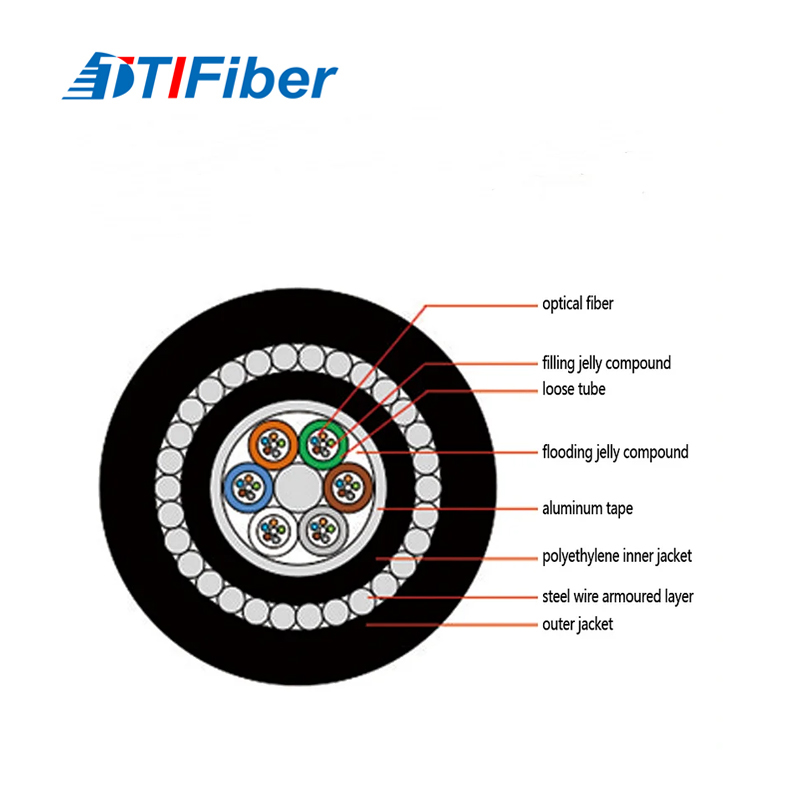
The steel used in SWA cables is not high-carbon tool steel, nor is it brittle cast iron. It is specifically low-carbon (mild) steel wire, typically containing less than 0.25% carbon.
What Kind of Steel Is Used in the SWA Layer

So what exactly does “correct” installation entail? Where do standards draw the line between best practice and code compliance? And why is grounding not just an electrical formality—but a foundational requirement for safety, reliability, and longevity?
What Do Electrical Codes Specifically Require for SWA Grounding
In a market where “SWA” can be loosely applied to substandard products, how do you ensure the cable you’re purchasing will truly perform as expected over its 25+ year design life? Verification isn’t optional—it’s essential. And it must happen before the cable leaves the factory, not after it fails in the field.
How Do You Verify the Quality of SWA Fiber Optic Cable
