



What’s the Deal with the 24 Fiber MPO/MTP Connector?
author: TTI Fiber
2024-12-23
If you’ve ever worked with fiber optic networks, you know how crucial connectors are. But not all connectors are created equal—especially when you’re dealing with high-speed data that needs to flow smoothly. Enter the 24 fiber MPO/MTP connector. It might sound a bit technical, but trust me, it’s a total game changer for high-capacity, high-speed connections. So, let’s break it down in simple terms. What is this connector, how does it work, and why should you care?
So, What Exactly is a 24 Fiber MPO/MTP Connector?
The 24 fiber MPO/MTP connector is a special kind of connector that lets you bundle 24 optical fibers into one neat, compact plug. That’s 24 fibers in one connector! Pretty cool, right?
MPO stands for Multi-fiber Push On, and MTP is basically a higher-performing version of the same technology. This connector is used to connect multiple fiber optic cables at once, making it perfect for high-density environments like data centers, telecom networks, and any other place where speed and efficiency matter.

How Does a 24 Fiber MPO/MTP Connector Actually Work?
Here’s where it gets interesting. Picture this: instead of dealing with 24 separate cables for each fiber, you can bundle all 24 fibers together and plug them into one MPO/MTP connector. Think of it like a multi-lane highway—more lanes mean more cars (or in this case, data) can travel faster and smoother.
When the MPO/MTP connector is plugged into a compatible port, all 24 fibers inside align perfectly, allowing data to flow quickly and reliably without any hiccups. It’s kind of like a well-organized traffic system, but for data.
What’s Inside an MPO/MTP Connector? (The Components and Materials)
Now, let’s talk about what goes on inside these connectors. Even though they’re small, they’re packed with high-tech components that make everything work seamlessly.
- Connector Housing: The outer part of the connector is usually made from durable plastic, like PBT (Polybutylene Terephthalate) or LCP (Liquid Crystal Polymer). These materials are tough and heat-resistant, protecting the connector from wear and tear.
- Ceramic Ferrules: Inside the connector, you’ll find zirconia ceramic ferrules. These little guys hold the fibers in place and make sure everything stays properly aligned. If the fibers aren’t lined up just right, data could get lost, or worse, your connection could fail.
- Alignment Pins: These tiny pins, made from stainless steel, guide the fibers into position when you plug in the connector. It’s like the connector has a “memory,” ensuring the fibers go in the right direction every time.
- Cable Sheath: The cables that connect to the MPO/MTP connector are usually wrapped in a sheath made of materials like PVC (Polyvinyl Chloride) or LSZH (Low Smoke Zero Halogen). This keeps them safe, flexible, and resistant to environmental hazards like moisture or heat.

Why Does the Material Matter?
You might be wondering, “Why all these fancy materials?” Well, the right materials ensure the connector works perfectly under pressure. Here’s why:
- Signal Quality: The ceramic ferrules help keep the fibers aligned, making sure the data travels smoothly. Misalignment can cause signal loss, which means slower speeds and less reliable connections.
- Durability: The stainless steel alignment pins and tough plastic housing help the connector stand up to wear and tear, so it lasts longer and keeps performing at its best.
- Resistance to the Elements: Depending on where the connector will be used, it might need to withstand extreme temperatures or moisture. Using materials like LSZH ensures it holds up, even in tougher environments.
What Makes the 24 Fiber MPO/MTP Connector Stand Out?
There are a few things that make this connector special:
1. High Density: Instead of using several individual connectors for each fiber, you get 24 fibers all in one go. This makes it a super space-saver, which is essential in crowded places like data centers or telecom hubs.
2. Speed: The 24 fiber MPO/MTP connector can support high-speed data transfers—think 40G, 100G, or even faster speeds. That’s a huge benefit in today’s fast-paced tech world.
3. Efficient Setup: You can hook up all 24 fibers at once, which makes installation quicker and less prone to mistakes. Fewer individual connections mean less chance of something going wrong.
4. Compact: Despite all its power, the 24 fiber MPO/MTP connector is compact. It helps keep your network organized without taking up too much space.
What Are the Benefits of Using a 24 Fiber MPO/MTP Connector?
Now, let’s talk about why you might choose this connector over others. Here are some of the key benefits:
1. Space Savings: Instead of dealing with a tangle of individual connectors and cables, you get 24 fibers in a single connector. This is especially helpful in high-density environments where every inch of space counts.
2. High-Speed Data: If you need to move a lot of data quickly—whether it’s for cloud services, streaming, or data analysis—the MPO/MTP connector is built for speed. It can handle up to 100G or more.
3. Future-Proofing: With the rise of 5G and more data-heavy applications, having connectors that support high-speed, high-capacity networks is crucial. The MPO/MTP connector helps make sure your network is ready for whatever comes next.
4. Cost-Effective: Sure, the upfront cost might be a little higher than standard connectors, but in the long run, it saves you time, space, and money. Fewer cables, less maintenance, and easier installation all add up.

Any Drawbacks to the 24 Fiber MPO/MTP Connector?
Of course, like anything, there are a few downsides to consider:
1. Polarity Issues: One of the trickiest parts of using MPO/MTP connectors is getting the polarity right. If the fibers are aligned incorrectly, you could experience connection issues. It’s important to double-check the polarity when installing.
2. Learning Curve: If you’ve never worked with fiber optics before, setting up MPO/MTP connectors might seem a bit complicated at first. But with the right guidance, it’s pretty straightforward.
3. Size: While the 24 fiber connector is compact compared to using 24 separate cables, it’s still bulkier than single-fiber connectors. If you’re working in an ultra-tight space, it might not be the best fit.
Where Do You Use These Connectors?
The 24 fiber MPO/MTP connector is perfect for a variety of applications:
- Data Centers: These connectors are ideal for environments where speed and space efficiency are critical. Data centers often need to move large amounts of data quickly, and the MPO/MTP connector helps make that possible.
- Telecommunications: Whether it’s for 5G infrastructure or fiber-to-the-home (FTTH) installations, the MPO/MTP connector is a staple in the telecom world, allowing fast and reliable fiber connections.
- Enterprise Networks: Large businesses with multiple locations or buildings can use these connectors to create scalable, high-performance networks that meet growing data demands.

How Do You Choose the Right 24 Fiber MPO/MTP Connector?
Choosing the right connector might seem daunting, but it’s not too tricky if you keep a few things in mind:
1. Fiber Type: Make sure the connector works with the type of fiber you’re using—single-mode or multi-mode.
2. Polarity: Check the polarity type (A, B, or C) to ensure it matches your network setup. This is crucial for making sure everything connects correctly.
3. Environmental Considerations: Think about where the connector will be used. If it’s going into a harsh environment, look for one with a durable outer casing and environmental resistance.
4. Performance Needs: Make sure the connector supports the data speeds and bandwidth your network requires.
TTI Fiber Communication Tech. Co., Ltd., is a professional manufacturer specialized in Fiber optic products for 13 years. Our factory located in Shenzhen, China, covers an area of 12,000 square meters and has obtained ISO9001, ISO14001, REACH, RoHS, CE and CPR certificates and so on. We have a wide range of fiber optic products, including Fiber Optic Cable, Fiber Optic Patch Cord, Fiber Optic Splitter, Fiber Optic Patch Panel, FTTx products, etc. We also provide professional Fiber Cabling Solutions and one-stop OEM & ODM service.
Fiber Optic Products by TTI Fiber: Cables, Patch Cords, Connectors, and Adapters in Modern Network Solutions
TTI Fiber Takes You Understanding MPO Fibre Cable - Benefits and Applications
Related Article
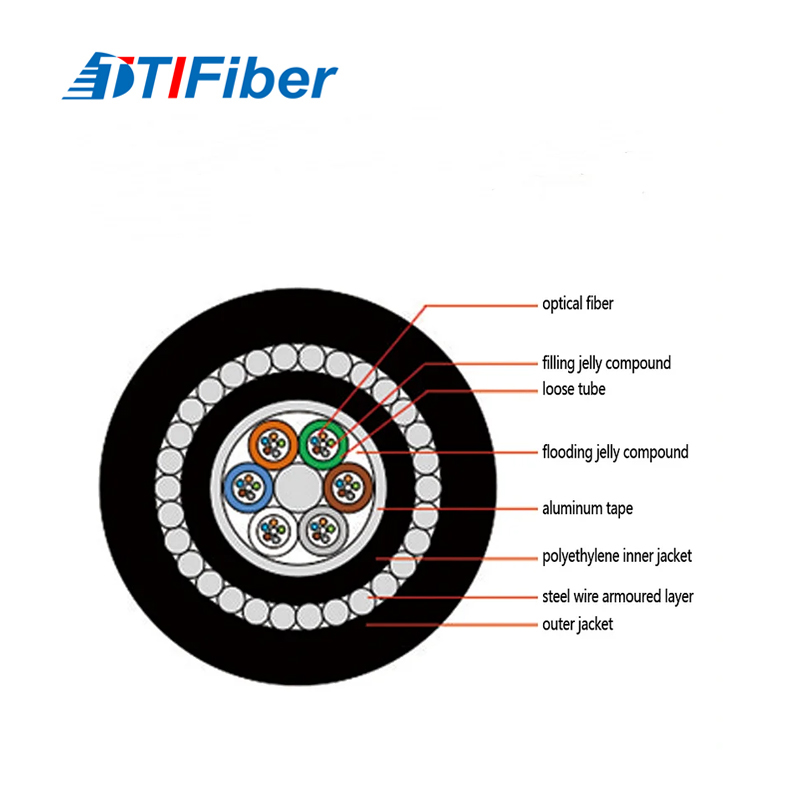
The steel used in SWA cables is not high-carbon tool steel, nor is it brittle cast iron. It is specifically low-carbon (mild) steel wire, typically containing less than 0.25% carbon.
What Kind of Steel Is Used in the SWA Layer

So what exactly does “correct” installation entail? Where do standards draw the line between best practice and code compliance? And why is grounding not just an electrical formality—but a foundational requirement for safety, reliability, and longevity?
What Do Electrical Codes Specifically Require for SWA Grounding
In a market where “SWA” can be loosely applied to substandard products, how do you ensure the cable you’re purchasing will truly perform as expected over its 25+ year design life? Verification isn’t optional—it’s essential. And it must happen before the cable leaves the factory, not after it fails in the field.
How Do You Verify the Quality of SWA Fiber Optic Cable
