



Does 5G Require Fiber Optic Cable?
author: TTI Fiber
2024-09-23
The rollout of 5G technology marks a significant leap in the evolution of mobile networks, promising faster speeds, lower latency, and the ability to connect billions of devices. But as 5G becomes more prevalent, an important question arises: Does 5G require fiber optic cable? In this article, TTI Fiber’ll explore the relationship between 5G and fiber optics, breaking down why fiber is often considered essential to fully realizing the potential of 5G networks.
The Evolution of Mobile Networks
To understand why fiber optics might be necessary for 5G, it’s helpful to look back at the evolution of mobile networks. From the early days of 1G, which introduced basic analog voice communication, to 4G LTE, which brought broadband-level speeds and enabled mobile streaming, each generation has built on the last, pushing the boundaries of what’s possible. Now, 5G aims to revolutionize connectivity by offering ultra-fast speeds, incredibly low latency, and the capacity to support a massive number of devices simultaneously.
An Overview of 5G Architecture
At the heart of 5G’s capabilities is its advanced architecture, which is designed to handle the enormous data demands of modern applications. The 5G network is divided into three main parts:
- Core Network: The backbone of the 5G network, where data is processed and managed.
- Radio Access Network (RAN): This includes small cells, base stations, and antennas that connect users’ devices to the network.
- Transport Network: This is where fiber optic cables come into play, providing the necessary links between the RAN and the core network.
About Fiber Optic Technology
Fiber optic cables are the gold standard for data transmission. They use light to transmit data, which allows them to carry vast amounts of information quickly and over long distances without degradation. Unlike traditional copper cables, fiber optics are immune to electromagnetic interference, making them highly reliable and efficient.
The Role of Fiber Optics in 5G Backhaul
The term “backhaul” refers to the connections that link the various parts of a mobile network, including the base stations and the core network. In a 5G network, backhaul is crucial because it ensures that data from users’ devices can be transmitted quickly and reliably to the core network. Fiber optic cables are ideally suited for this role due to their high bandwidth and low latency, which are essential for meeting the performance standards expected of 5G.
Fiber’s Role in Each Fronthaul, Midhaul, and Backhaul
In a 5G network, data travels through several stages before reaching its destination:
- Fronthaul: This connects remote radio units (RRUs) to centralized baseband units (BBUs). In dense urban areas, fiber is often used in fronthaul to handle the high data traffic.
- Midhaul: This links the BBUs to aggregation points within the network. Fiber’s speed and capacity make it ideal for this role.
- Backhaul: Finally, the backhaul connects aggregation points to the core network. Here, fiber ensures that the massive amounts of data generated by 5G applications are transmitted without bottlenecks.
Comparing Fiber Optic Cables with Alternative Technologies
While fiber optics are often considered the best option for 5G backhaul, other technologies can be used in certain scenarios:
- Microwave Links: These can be used for backhaul in areas where laying fiber is not practical. However, they are limited by weather conditions and bandwidth capacity compared to fiber.
- Satellite Connections: Satellites can provide connectivity in remote areas where fiber is not available, but they typically have higher latency and lower bandwidth.
- Fixed Wireless Access (FWA): FWA can be a cost-effective alternative for the last mile, especially in rural areas, but it doesn’t match the performance of fiber.

Challenges in Deploying Fiber Optic Cables for 5G
Despite its advantages, deploying fiber optics for 5G is not without challenges:
- Infrastructure Costs: Laying fiber is expensive, particularly in urban areas with dense infrastructure or in remote locations where long distances must be covered.
- Regulatory and Permitting Issues: The process of obtaining permits and complying with local regulations can slow down deployment.
- Physical Barriers: Geographic obstacles like rivers, mountains, or urban environments can make fiber installation difficult and time-consuming.
5G and Fiber Optic Deployments
Several cities and regions around the world have successfully deployed 5G networks with extensive use of fiber optics:
- Urban Deployment: In cities like New York and Tokyo, fiber has been extensively used to support the high density of 5G small cells needed to provide coverage in crowded urban environments. These deployments demonstrate the importance of fiber in handling the data loads typical of urban areas.
- Rural Deployment: In contrast, rural areas have used a combination of fiber, microwave, and satellite technologies to extend 5G coverage. For example, in rural parts of the UK, fiber is used where feasible, with satellite and microwave links filling in the gaps.

5G Fiber Optic Future Trends
As 5G continues to evolve, the relationship between 5G and fiber optics is likely to grow even stronger:
- Convergence of 5G and Fiber: With the anticipated arrival of 6G and beyond, the integration of fiber and wireless technologies will become even more critical. Fiber will continue to be the backbone that supports future advancements in mobile networks.
- Emerging Technologies: As technology advances, new methods of data transmission, such as quantum communication or advanced wireless technologies, may emerge. However, fiber optics will likely remain central to ensuring high-speed, reliable connections.
The Economic and Social Impact of Fiber-Enabled 5G
The deployment of 5G, supported by fiber optics, is expected to have profound economic and social impacts:
- Economic Benefits: 5G can drive economic growth by enabling new business models, improving efficiency, and fostering innovation in industries like healthcare, manufacturing, and transportation.
- Social Impacts: On a social level, 5G can help bridge the digital divide, providing high-speed internet access to underserved communities and enhancing services like telemedicine and remote education.

Conclusion
While 5G networks can technically function with a variety of backhaul solutions, fiber optic cables are essential for realizing the full potential of 5G technology. Fiber’s unparalleled speed, reliability, and capacity make it the backbone of modern telecommunications, ensuring that 5G networks can deliver on their promises of faster, more reliable, and more widespread connectivity. As the world moves toward an increasingly connected future, the role of fiber optics in enabling 5G—and future generations of mobile networks—will only continue to grow in importance.
Types of Fiber Optic Connectors and Their Advantage
ADSS VS OPGW
Related Article
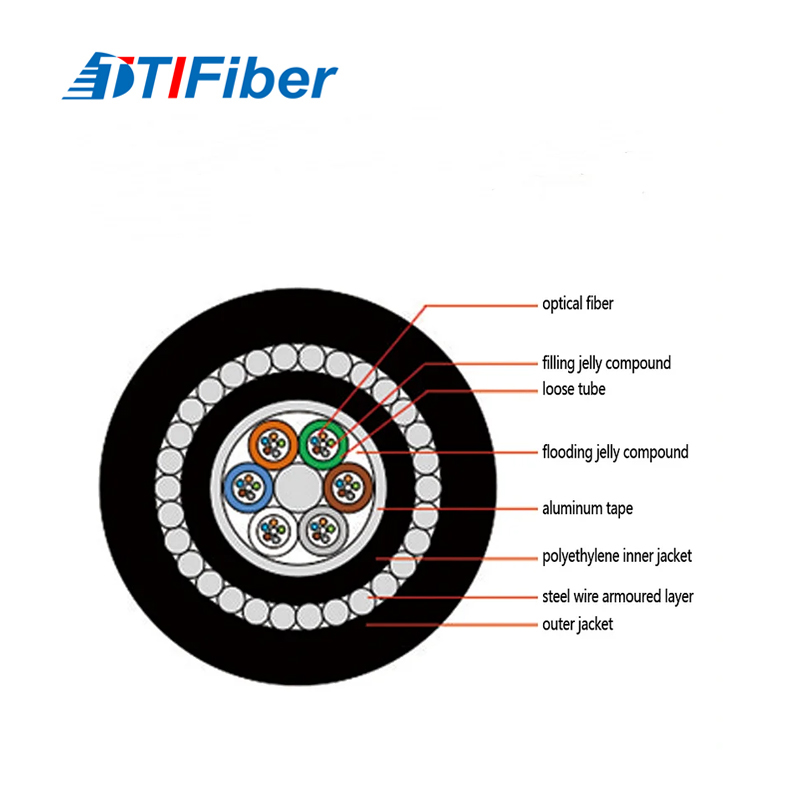
The steel used in SWA cables is not high-carbon tool steel, nor is it brittle cast iron. It is specifically low-carbon (mild) steel wire, typically containing less than 0.25% carbon.
What Kind of Steel Is Used in the SWA Layer

So what exactly does “correct” installation entail? Where do standards draw the line between best practice and code compliance? And why is grounding not just an electrical formality—but a foundational requirement for safety, reliability, and longevity?
What Do Electrical Codes Specifically Require for SWA Grounding
In a market where “SWA” can be loosely applied to substandard products, how do you ensure the cable you’re purchasing will truly perform as expected over its 25+ year design life? Verification isn’t optional—it’s essential. And it must happen before the cable leaves the factory, not after it fails in the field.
How Do You Verify the Quality of SWA Fiber Optic Cable
