



Fiber Optic Common Issues & How to Fix
author: TTI Fiber
2025-04-14

Troubleshooting Fiber Optic Problems Diagnosing and Fixing Common Issues
Fiber optic networks are generally reliable, but like any technology, they can experience problems that affect performance. Proper troubleshooting can help quickly identify and resolve issues to minimize downtime. Below are some common fiber optic issues and how to diagnose and fix them.
1. Signal Degradation (Loss of Light)
When the signal quality degrades, it could be a sign of attenuation or excessive loss in the system. The signal might become weaker, resulting in slower speeds or dropped connections.
Diagnosis:
- Use an Optical Time Domain Reflectometer (OTDR) to identify where the signal loss occurs.
- Check for visible bends or damage in the fiber, as this can cause light to leak out.
- Use an Optical Time Domain Reflectometer (OTDR) to identify where the signal loss occurs.
- Check for visible bends or damage in the fiber, as this can cause light to leak out.
Solution:
- Inspect the fiber for bends or kinks, especially near connectors and splices.
- If the fiber is excessively damaged, replacing the affected section may be necessary.
- Check connectors and cleaning them with appropriate fiber cleaning tools can restore signal strength.
- Inspect the fiber for bends or kinks, especially near connectors and splices.
- If the fiber is excessively damaged, replacing the affected section may be necessary.
- Check connectors and cleaning them with appropriate fiber cleaning tools can restore signal strength.
2. Connector Issues
Dirty, poorly aligned, or damaged connectors are a common cause of problems in fiber optic systems. These issues can lead to high insertion loss or a complete loss of the signal.
Diagnosis:
- Visually inspect the connectors for any signs of dirt or damage.
- Use a fiber microscope to inspect the end-face for dirt or scratches.
- Visually inspect the connectors for any signs of dirt or damage.
- Use a fiber microscope to inspect the end-face for dirt or scratches.
Solution:
- Clean the connectors using fiber optic cleaning wipes, alcohol, or specialized cleaning tools.
- Ensure connectors are properly aligned and seated in their ports.
- If connectors are damaged, replace them with new, high-quality connectors.
- Clean the connectors using fiber optic cleaning wipes, alcohol, or specialized cleaning tools.
- Ensure connectors are properly aligned and seated in their ports.
- If connectors are damaged, replace them with new, high-quality connectors.
3. Physical Damage (Broken or Cut Fiber)
Accidental cuts, bends, or stress on the fiber can cause permanent damage, leading to a complete loss of signal.
Diagnosis:
- Look for visible signs of physical damage, such as cuts or crushing of the fiber.
- Use OTDR to pinpoint the location of the break.
- Look for visible signs of physical damage, such as cuts or crushing of the fiber.
- Use OTDR to pinpoint the location of the break.
Solution:
- If the fiber is cut or damaged, you will need to replace the affected section.
- In some cases, the fiber may need to be spliced back together if a smaller section is damaged.
- If the fiber is cut or damaged, you will need to replace the affected section.
- In some cases, the fiber may need to be spliced back together if a smaller section is damaged.
4. Fiber Splice Loss
When two fiber ends are joined together by splicing, the connection should be seamless. However, imperfect splices can result in signal loss, especially if the fibers are misaligned.
Diagnosis:
- Use an OTDR to measure splice loss and verify splice quality.
- Use an OTDR to measure splice loss and verify splice quality.
Solution:
- Re-splice the fibers using the proper alignment equipment.
- Use fusion splicing for a stronger and more reliable connection.
- Re-splice the fibers using the proper alignment equipment.
- Use fusion splicing for a stronger and more reliable connection.
5. High Attenuation
High attenuation can be caused by improper cable routing, poor installation practices, or old fibers. It leads to significant signal loss over distance, which can severely impact data transmission.
Diagnosis:
- Use an OTDR to detect sections of high loss.
- Measure the power loss at different points along the fiber.
- Use an OTDR to detect sections of high loss.
- Measure the power loss at different points along the fiber.
Solution:
- Replace the fiber section that shows high attenuation.
- Ensure that fibers are routed properly without excessive bends or tension.
- Replace the fiber section that shows high attenuation.
- Ensure that fibers are routed properly without excessive bends or tension.
6. Reflection or Return Loss
When light reflects back toward the source, it creates return loss, which can degrade signal quality and lead to errors in transmission. This is often due to issues with connectors, splices, or faulty equipment.
Diagnosis:
- Use an OTDR to identify points of high return loss or reflection.
- Use an OTDR to identify points of high return loss or reflection.
Solution:
- Properly clean and inspect connectors and splices.
- Check the fiber’s end-faces for imperfections and polish them if necessary.
- Properly clean and inspect connectors and splices.
- Check the fiber’s end-faces for imperfections and polish them if necessary.
7. Bend Loss
Fibers that are bent too tightly will experience loss due to the light escaping the core. Bends often occur when cables are routed improperly or over tight angles.
Diagnosis:
- Inspect the fiber routing and check for sharp bends or angles.
- Measure the loss over sections with tight bends.
- Inspect the fiber routing and check for sharp bends or angles.
- Measure the loss over sections with tight bends.
Solution:
- Re-route the fiber to ensure smooth, gradual bends.
- Avoid bending fibers below their minimum bend radius (the radius at which the fiber is prone to significant signal loss).
- Re-route the fiber to ensure smooth, gradual bends.
- Avoid bending fibers below their minimum bend radius (the radius at which the fiber is prone to significant signal loss).
Tools and Techniques for Troubleshooting Fiber Optic Networks
1. Optical Time Domain Reflectometer (OTDR)
An OTDR is a critical tool for identifying faults in a fiber optic network. It sends a pulse of light into the fiber and measures the time it takes for the light to return. By analyzing the reflected light, the OTDR can detect faults, splices, and losses over long distances. It’s essential for pinpointing problems and evaluating fiber integrity.
2. Power Meter and Light Source
These tools are used to measure the power levels in the fiber. By comparing the input and output signal levels, technicians can determine the amount of signal loss and whether it’s within acceptable limits.
3. Visual Fault Locator (VFL)
A VFL is a simple tool used to locate breaks, bends, or faults in optical fibers by injecting a visible light source into the fiber. This allows technicians to quickly identify damaged or misaligned sections.
Preventive Measures to Avoid Fiber Optic Problems
To minimize downtime and prevent frequent troubleshooting, it’s important to follow best practices:
- Proper Installation: Ensure that fibers are installed without excessive bends, tension, or stress.
- Regular Inspections: Perform routine checks to look for signs of wear, damage, or contamination.
- Use Quality Components: Always use high-quality connectors, splice materials, and cables to ensure optimal performance.
- Environmental Protection: Install fiber optic cables in protective conduits and ensure they are shielded from extreme weather conditions.
- Regular Inspections: Perform routine checks to look for signs of wear, damage, or contamination.
- Use Quality Components: Always use high-quality connectors, splice materials, and cables to ensure optimal performance.
- Environmental Protection: Install fiber optic cables in protective conduits and ensure they are shielded from extreme weather conditions.
By following the above troubleshooting steps and best practices, you can maintain the reliability and efficiency of your fiber optic network, ensuring consistent, high-performance data transmission for your business.
ABOUT TTI Fiber
TTI Fiber Communication Tech. Co., Ltd., is a professional manufacturer of Fiber optic products with 14 years’ experiences. We has obtained ISO9001, ISO14001, REACH, RoHS, CE and CPR certificates.
TTI Fiber specialized in Fiber Optic Cable, Fiber Optic Patch Cord, Fiber Optic Splitter, FTTx products and provide Fiber Cabling Solutions.
TTI Fiber has cooperated with Global 500 top brand on FTTx products, and more than 30 well-known brand clients for 10 years. Our products are exported to more than 100 countries.

Ready to Buy? Get in Touch with Us Today!
If you’re ready to make a purchase or need a customized solution for your fiber optic network, don’t hesitate to contact our team. We offer high-quality outdoor fiber optic termination boxes and are happy to help you find the right product for your business needs.
What is a Good dB Loss for Fiber Optics?
Why is Fiber Optic Testing Necessary?
Related Article
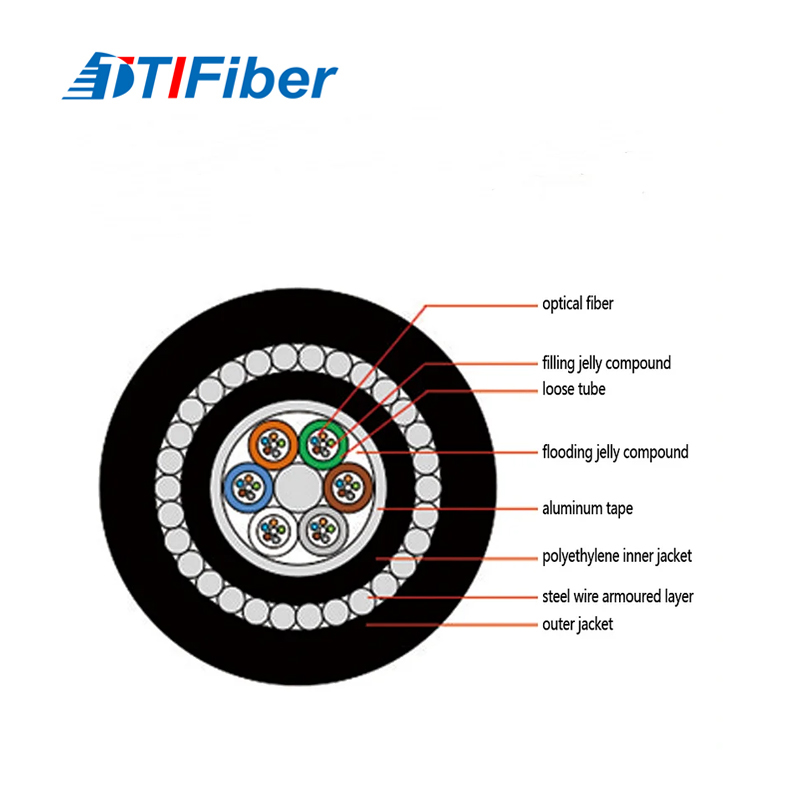
The steel used in SWA cables is not high-carbon tool steel, nor is it brittle cast iron. It is specifically low-carbon (mild) steel wire, typically containing less than 0.25% carbon.
What Kind of Steel Is Used in the SWA Layer

So what exactly does “correct” installation entail? Where do standards draw the line between best practice and code compliance? And why is grounding not just an electrical formality—but a foundational requirement for safety, reliability, and longevity?
What Do Electrical Codes Specifically Require for SWA Grounding
In a market where “SWA” can be loosely applied to substandard products, how do you ensure the cable you’re purchasing will truly perform as expected over its 25+ year design life? Verification isn’t optional—it’s essential. And it must happen before the cable leaves the factory, not after it fails in the field.
How Do You Verify the Quality of SWA Fiber Optic Cable
