



GYFY Fiber Cables Optical Performance Testing
author: TTI Fiber
2024-11-12
Optical performance testing is one of the most crucial stages in the quality control process of GYFY fiber cables. This testing ensures that the cable delivers optimal data transmission with minimal signal loss, meeting the high standards required for telecommunications, internet services, and other data-driven applications. The testing phase focuses on evaluating the fiber's ability to transmit light signals efficiently and without degradation, which directly impacts the cable’s overall performance.
Key Parameters of Optical Performance Testing
1. Attenuation Testing
Attenuation, or optical loss, refers to the reduction of signal strength as light travels through the fiber. Lower attenuation levels indicate a more efficient cable, allowing data to be transmitted over long distances with minimal signal loss.
- Procedure: Attenuation is measured using an Optical Time Domain Reflectometer (OTDR) or power meter and light source. These instruments send light signals through the fiber and measure the amount of signal that exits on the other end.
- Importance: This test ensures that the cable maintains signal integrity over its entire length, a critical factor for high-speed data networks.
- Standard Values: Typically, single-mode fibers have an attenuation value of less than 0.4 dB/km for 1310 nm and 0.3 dB/km for 1550 nm wavelengths.
- Importance: This test ensures that the cable maintains signal integrity over its entire length, a critical factor for high-speed data networks.
- Standard Values: Typically, single-mode fibers have an attenuation value of less than 0.4 dB/km for 1310 nm and 0.3 dB/km for 1550 nm wavelengths.
2. Insertion Loss Testing
Insertion loss measures the total loss of signal at connection points, such as splices, connectors, or mechanical joints. Lower insertion loss values are crucial for maintaining high-quality signal transmission across connected systems.
- Procedure: Light is injected into the fiber through connectors, and the power loss is measured at the output end. Testing is often performed in accordance with international standards like IEC 61300.
- Importance: High insertion loss can degrade the overall network performance, leading to data transmission errors, reduced bandwidth, and increased latency.
- Standard Values: Insertion loss for a typical connector is usually below 0.5 dB, with premium connectors achieving less than 0.2 dB.
- Importance: High insertion loss can degrade the overall network performance, leading to data transmission errors, reduced bandwidth, and increased latency.
- Standard Values: Insertion loss for a typical connector is usually below 0.5 dB, with premium connectors achieving less than 0.2 dB.
3. Return Loss Testing
Return loss measures the amount of light reflected back toward the source due to imperfections or mismatched refractive indices at connectors and splices. High return loss (low reflection) values are desirable as they indicate that minimal light is being reflected, which can cause interference in the system.
- Procedure: A light source and power meter measure the amount of reflected light at each connection point. The greater the return loss, the better the performance of the cable.
- Importance: Excessive reflection can lead to errors in data transmission, increased noise, and signal interference, which are particularly problematic in high-speed networks.
- Standard Values: A return loss greater than 35 dB is considered good for connectors, while splices typically exhibit return loss values greater than 40 dB.
- Importance: Excessive reflection can lead to errors in data transmission, increased noise, and signal interference, which are particularly problematic in high-speed networks.
- Standard Values: A return loss greater than 35 dB is considered good for connectors, while splices typically exhibit return loss values greater than 40 dB.
4. Chromatic Dispersion Testing
Chromatic dispersion occurs when different wavelengths of light travel at different speeds within the fiber, leading to signal distortion. Testing for chromatic dispersion is essential in ensuring the fiber can handle high-speed and high-bandwidth transmissions.
- Procedure: Dispersion is measured by sending a wide spectrum of light through the fiber and analyzing the output signal to detect variations in travel time across different wavelengths.
- Importance: High chromatic dispersion can limit the bandwidth and transmission distance of a fiber optic link, particularly in long-haul and high-data-rate applications like 10G, 40G, and 100G networks.
- Standard Values: Typically, single-mode fibers have chromatic dispersion values between 3.5 and 18 ps/(nm·km), depending on the wavelength.
- Importance: High chromatic dispersion can limit the bandwidth and transmission distance of a fiber optic link, particularly in long-haul and high-data-rate applications like 10G, 40G, and 100G networks.
- Standard Values: Typically, single-mode fibers have chromatic dispersion values between 3.5 and 18 ps/(nm·km), depending on the wavelength.
5. Polarization Mode Dispersion (PMD) Testing
PMD occurs when different polarizations of light travel at different speeds, causing pulse spreading and signal distortion. This effect is particularly critical in high-speed networks.
- Procedure: PMD is measured using specialized instruments that analyze the variation in signal delay between different polarizations of light within the fiber.
- Importance: High PMD values can severely affect the performance of high-bit-rate systems, making accurate PMD testing essential for ensuring the cable’s suitability for advanced applications.
- Standard Values: A PMD value of less than 0.2 ps/√km is typically required for modern.
- Importance: High PMD values can severely affect the performance of high-bit-rate systems, making accurate PMD testing essential for ensuring the cable’s suitability for advanced applications.
- Standard Values: A PMD value of less than 0.2 ps/√km is typically required for modern.
Testing Standards and Compliance
The optical performance tests are conducted following internationally recognized standards such as:
- ISO/IEC 11801: Sets the requirements for generic cabling standards, including optical fiber testing.
- TIA/EIA-568: Specifies the performance standards for telecommunications cabling and components, including optical fiber cables.
- ITU-T G.652: Defines the standard characteristics of single-mode optical fibers for telecommunication.
- TIA/EIA-568: Specifies the performance standards for telecommunications cabling and components, including optical fiber cables.
- ITU-T G.652: Defines the standard characteristics of single-mode optical fibers for telecommunication.
Optical performance testing is essential for ensuring that GYFY fiber cables meet the necessary standards for high-speed data transmission. By rigorously evaluating parameters such as attenuation, insertion loss, return loss, chromatic dispersion, and polarization mode dispersion, manufacturers can ensure that their cables provide reliable, high-quality performance for various demanding applications. This meticulous testing process is key to delivering the superior optical performance that customers expect from GYFY fiber cables.
About TTI Fiber Factory
TTI Fiber Communication Tech. Co., Ltd., is a professional manufacturer specialized in Fiber optic products for 13 years.
Our factory located in Shenzhen, China, covers an area of 12,000 square meters and has obtained ISO9001, ISO14001, REACH, RoHS, CE and CPR certificates and so on.
We have a wide range of fiber optic products, including Fiber Optic Cable, Fiber Optic Patch Cord, Fiber Optic Splitter, Fiber Optic Patch Panel, FTTx products, etc. We also provide professional Fiber Cabling Solutions and one-stop OEM & ODM service.
Our main markets are in North America, South America, Europe, Africa and Asia. Our reliable quality and sincere service are highly recognized by our clients all over the world.
We have cooperated with Global 500 top brands on FTTx products, and more than 30 well-known brand clients in fiber optic industry for 9 years. Our products are exported to over 100 countries.
We are committed to providing our clients with the best support, regardless of their business scale. Our expertise and knowledge of market trends, enables us provide technical support and matched solutions on fiber optic products. We are pround of providing excellent quality, competitive price and timely delivery. Welcome to contact us for more details.
Our factory located in Shenzhen, China, covers an area of 12,000 square meters and has obtained ISO9001, ISO14001, REACH, RoHS, CE and CPR certificates and so on.
We have a wide range of fiber optic products, including Fiber Optic Cable, Fiber Optic Patch Cord, Fiber Optic Splitter, Fiber Optic Patch Panel, FTTx products, etc. We also provide professional Fiber Cabling Solutions and one-stop OEM & ODM service.
Our main markets are in North America, South America, Europe, Africa and Asia. Our reliable quality and sincere service are highly recognized by our clients all over the world.
We have cooperated with Global 500 top brands on FTTx products, and more than 30 well-known brand clients in fiber optic industry for 9 years. Our products are exported to over 100 countries.
We are committed to providing our clients with the best support, regardless of their business scale. Our expertise and knowledge of market trends, enables us provide technical support and matched solutions on fiber optic products. We are pround of providing excellent quality, competitive price and timely delivery. Welcome to contact us for more details.
Is OM2 Obsolete?
OM1 vs. OM2 Fiber Optic Cables
Related Article
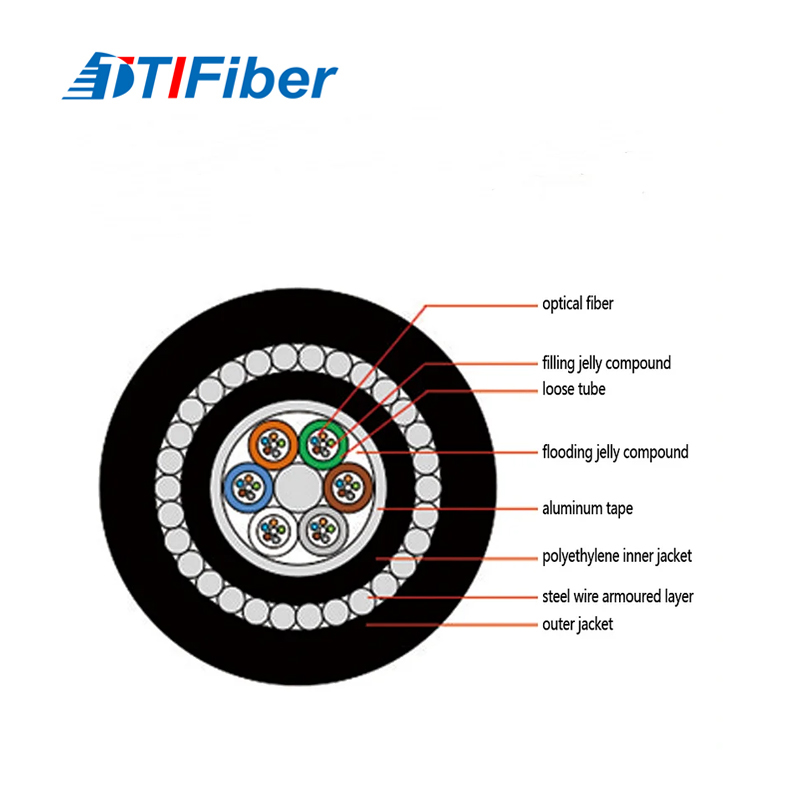
The steel used in SWA cables is not high-carbon tool steel, nor is it brittle cast iron. It is specifically low-carbon (mild) steel wire, typically containing less than 0.25% carbon.
What Kind of Steel Is Used in the SWA Layer

So what exactly does “correct” installation entail? Where do standards draw the line between best practice and code compliance? And why is grounding not just an electrical formality—but a foundational requirement for safety, reliability, and longevity?
What Do Electrical Codes Specifically Require for SWA Grounding
In a market where “SWA” can be loosely applied to substandard products, how do you ensure the cable you’re purchasing will truly perform as expected over its 25+ year design life? Verification isn’t optional—it’s essential. And it must happen before the cable leaves the factory, not after it fails in the field.
How Do You Verify the Quality of SWA Fiber Optic Cable
