
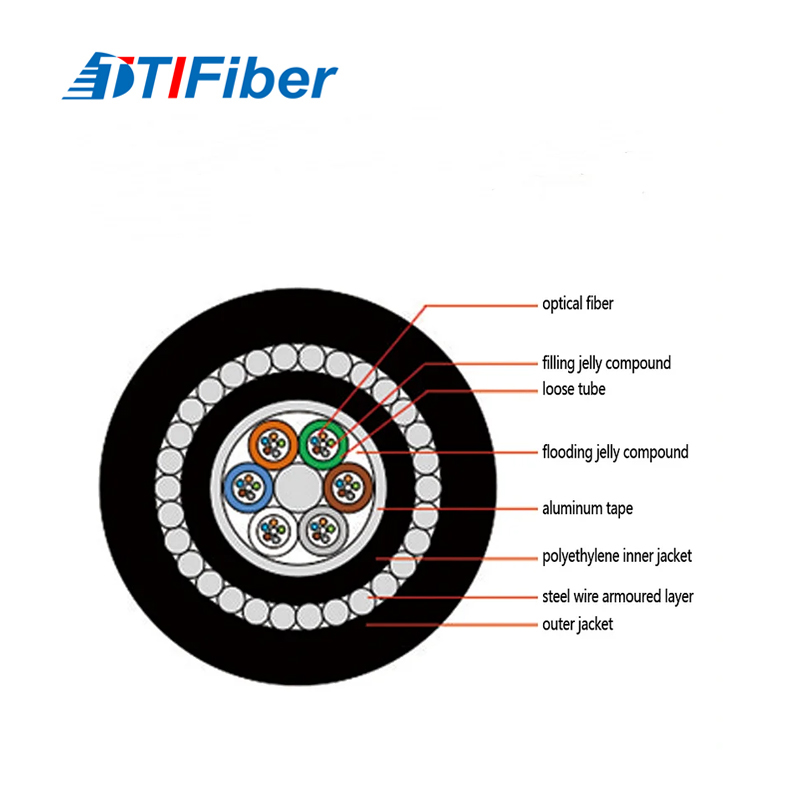
GYFY Fiber Cables Quality Control and Testing
author: TTI Fiber
2024-10-23
Quality control and testing are crucial components in the manufacturing process of GYFY fiber cables, ensuring that each cable adheres to stringent performance, safety, and durability standards. This phase encompasses a series of rigorous tests and inspections designed to identify and rectify any potential defects, guaranteeing that the final product is reliable and fit for its intended use. Below is a comprehensive overview of the quality control and testing procedures for GYFY fiber cables:
1. GYFY Fiber Cables Optical Performance Testing
Optical performance is paramount in fiber optic cables, as it directly impacts data transmission quality. The following key parameters are rigorously tested:
- Attenuation Testing: This process measures the loss of signal strength as light travels through the fiber. It is critical that GYFY cables exhibit low attenuation, which is essential for efficient long-distance data transmission. A well-tested cable can minimize the loss of data over extensive networks, ensuring optimal performance.
- Insertion Loss Testing: This test evaluates the total loss of signal at connectors and splices. By ensuring minimal signal degradation at these connection points, GYFY cables maintain high performance throughout the network, which is vital for applications requiring uninterrupted data flow.
- Return Loss Testing: This assessment measures the amount of light reflected back toward the source. High return loss values are crucial, as reflected light can cause interference and significantly reduce transmission quality. Testing ensures that GYFY cables minimize reflections, thereby enhancing overall network reliability.
2. Tensile Strength Testing of GYFY Fiber Cables
Tensile strength testing is conducted to confirm that GYFY fiber cables can withstand the mechanical stresses encountered during installation and operation. Key tests include:
- Pulling Tension Test: This simulation replicates the forces exerted on the cable during installation, particularly in aerial or duct applications. The cable must endure specified tension levels without incurring damage, ensuring it remains intact during deployment.
- Crush Resistance Test: This evaluation assesses the cable's ability to resist external compressive forces. GYFY cables are designed to maintain structural integrity when subjected to pressure, which is essential for installations in high-traffic areas.
- Bend Radius Test: This test examines the cable’s flexibility by bending it to specific radii. The objective is to ensure that the cable does not crack or damage the fibers inside, allowing for versatile installation options without compromising performance.
3. GYFY Fiber Cables Environmental Testing
Environmental testing guarantees that GYFY fiber cables perform reliably under various weather conditions and environmental stresses. These tests simulate real-world conditions that the cable will encounter throughout its lifespan:
- Temperature Cycling Test: Cables are subjected to extreme temperature variations, typically ranging from -40°C to +70°C. This testing assesses performance stability in both hot and cold conditions, ensuring that GYFY cables can operate effectively across diverse climates.
- UV Resistance Test: The outer sheath of the cable is exposed to intense UV light to evaluate its resistance to sunlight degradation. This is crucial for outdoor installations where prolonged exposure to sunlight can deteriorate the cable material.
- Water Penetration Test: This test checks the effectiveness of water-blocking materials by exposing the cable to water under pressure. The ability to prevent water ingress is vital for protecting the internal fibers from damage, particularly in wet environments.
4. GYFY Fire and Smoke Testing
For applications where fire safety is critical, GYFY fiber cables undergo fire and smoke tests to ensure compliance with safety standards:
- Flame Retardancy Test: This test determines the cable’s resistance to catching fire and its ability to self-extinguish. It is essential for cables used in environments governed by strict fire safety regulations.
- Smoke Density Test: This evaluation measures the amount of smoke produced when the cable is exposed to fire. Low smoke emission is preferred to minimize visibility hazards and toxic exposure during fire incidents, enhancing safety for personnel and property.
5. Impact and Abrasion Testing
Given that GYFY fiber cables are often installed in environments where physical impacts and abrasion are prevalent, testing for these factors is critical:
- Impact Resistance Test: This assessment evaluates the cable’s ability to resist damage from sudden impacts or drops, which is crucial for maintaining integrity during installation and in case of accidental contact.
- Abrasion Resistance Test: This test evaluates the durability of the outer sheath against continuous rubbing or scraping. Ensuring long-term protection of the cable’s internal components is vital for maintaining functionality in challenging environments.
6. Sheath Integrity Testing
The outer sheath provides the first line of defense against environmental and mechanical stress. Testing ensures it is robust enough to protect the internal components of the cable:
- Sheath Tensile Test: This test measures the sheath’s strength and elasticity, ensuring it can stretch without breaking or tearing. A strong outer sheath is essential for maintaining the cable’s structural integrity.
- Chemical Resistance Test: This evaluation tests the sheath’s resistance to chemicals and oils, which is particularly important in industrial or roadside installations where exposure to such substances is likely. The ability to withstand chemical exposure prolongs the lifespan of the cable.
7. Final Inspection and Documentation
After completing all testing phases, a thorough final visual and technical inspection is conducted to ensure the cable meets required specifications:
- Visual Inspection: This process checks for physical defects such as cracks, cuts, or inconsistencies in the sheath, which could compromise performance and safety.
- Data Logging and Certification: All test results are meticulously documented, and the cable is certified for compliance with international standards, including ISO, IEC, and TIA. This documentation provides transparency and assurance of quality to customers and stakeholders.
Quality control and testing are paramount in ensuring that GYFY fiber cables meet the high standards expected for performance and reliability. By subjecting each cable to a comprehensive battery of tests, manufacturers can confidently deliver a product capable of withstanding the rigors of its intended environment. This commitment to quality not only enhances data transmission capabilities but also ensures consistent performance across a wide range of applications, positioning GYFY fiber cables as a reliable choice in the competitive fiber optic market.
How is GYFY Fiber Cable Manufactured?
The Differences Between Cables, Optical Cables, and Optical Fibers
Related Article
The steel used in SWA cables is not high-carbon tool steel, nor is it brittle cast iron. It is specifically low-carbon (mild) steel wire, typically containing less than 0.25% carbon.
What Kind of Steel Is Used in the SWA Layer
So what exactly does “correct” installation entail? Where do standards draw the line between best practice and code compliance? And why is grounding not just an electrical formality—but a foundational requirement for safety, reliability, and longevity?
What Do Electrical Codes Specifically Require for SWA Grounding
In a market where “SWA” can be loosely applied to substandard products, how do you ensure the cable you’re purchasing will truly perform as expected over its 25+ year design life? Verification isn’t optional—it’s essential. And it must happen before the cable leaves the factory, not after it fails in the field.
How Do You Verify the Quality of SWA Fiber Optic Cable