GYTA / GYTS / GYFTA How to Choose the Right One?
Table of Contents
GYTA / GYTS / GYFTA How to Choose the Right Fiber Cable?
In fiber optic network design, selecting the right outdoor cable isn’t about picking the “best” option—it’s about choosing the most appropriate one for your specific environment, risk profile, and operational constraints. GYTA, GYTS, and GYFTA all deliver light reliably under ideal conditions. But the real world is rarely ideal.
So how do you decide? The answer lies in asking the right questions—about electricity, earth, animals, and human practice. Let’s walk through a practical decision framework used by seasoned telecom engineers worldwide.
The Core Design Divergence: Metallic vs. Non-Metallic Philosophy
At the heart of the GYTA/GYTS/GYFTA distinction lies a single, profound question: Should the cable participate in the electrical continuum of the earth—or remain isolated from it?
This is not merely a grounding concern. It is a philosophical divide in infrastructure design:
This is not a minor engineering tweak. It is a system boundary decision that affects everything from splice closure design to regulatory compliance, safety protocols, and even insurance liability.
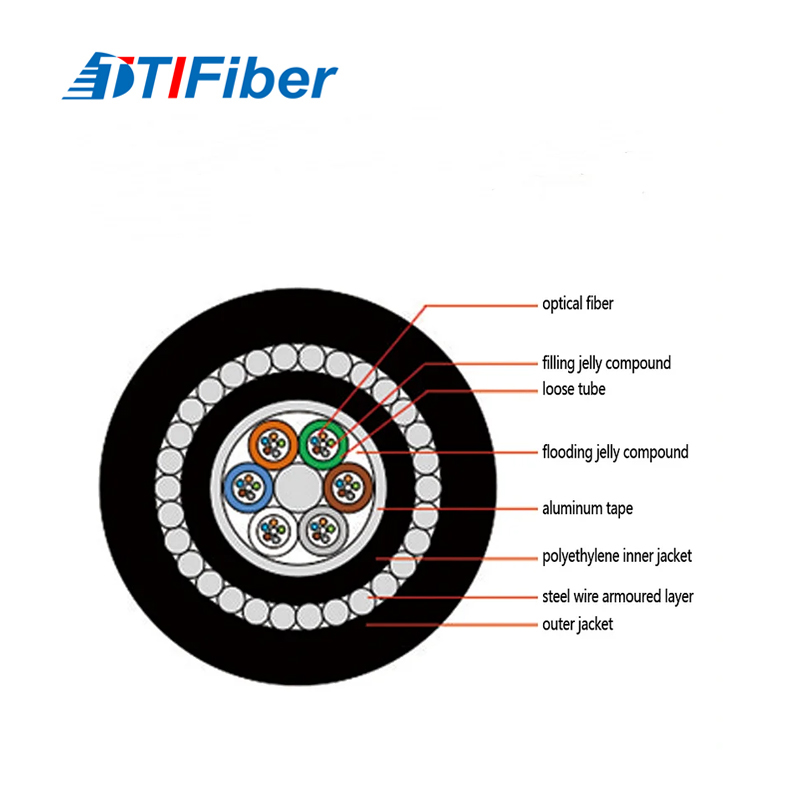
Critical nuance: Many vendors label cables with aluminum moisture barriers as “GYFTA,” creating dangerous confusion. True all-dielectric cables must contain zero conductive elements along their entire length. Always validate with a cross-sectional drawing and material declaration—not marketing nomenclature.
Beyond the Cable—Into the Ecosystem: Environmental Context Mapping
Choosing correctly requires geospatial and climatic intelligence, not just cable specs. Consider these real-world overlays:
This is infrastructure ecology: matching material behavior to environmental stressors over multi-decadal timescales.
The Lifetime Cost Equation: Beyond CAPEX
Consider a 25-year lifecycle in a lightning-prone rural area:
In contrast, in a rodent-infested agricultural zone:
The “right” cable minimizes expected lifetime cost, not initial price.
Step 1: Ask—Is There a Risk of Electrical Interference or Lightning?
This is the first and most critical question—because it determines whether you can use a metallic cable at all.
→ Choose GYFTA (all-dielectric).
Why?
GYFTA contains no continuous metal—no steel, no aluminum. This eliminates the risk of:
⚠️ Caution: Not all cables labeled “GYFTA” are truly all-dielectric. Verify the construction: the central strength member must be FRP (fiberglass), and there should be no aluminum moisture barrier. When in doubt, request a cross-section drawing.
Step 2: Ask—What’s the Physical Threat Level?
Next, evaluate the mechanical and biological hazards your cable will face over its 20–30 year lifespan.
Key insight: Aluminum (in GYTA) offers moderate rodent resistance—enough for urban areas, but insufficient in rural farms or forests. Steel (in GYTS) is far more robust but adds weight and cost.
? Rule of thumb: If you’ve had repeated cable cuts from animals or excavation in the past, default to GYTS or armored cable. The upfront cost is outweighed by reduced outages and repair expenses.
Step 3: Ask—Can You Guarantee Proper Grounding?
This is where many projects fail—not in design, but in execution.
If your team:
→ Avoid metallic cables. Choose GYFTA instead.
? Reality check: A metallic cable without proper grounding isn’t just ineffective—it’s dangerous. During a lightning strike, it can become a conduit for thousands of volts, destroying ONTs, switches, and even endangering personnel.
Step 4: Ask—What’s Your Budget vs. Lifetime Cost?
While GYTA is usually the lowest upfront cost, consider total cost of ownership:
In stable urban ducts, GYTA offers excellent value. But in a lightning-prone rural drop, GYFTA’s higher price prevents far costlier service disruptions.
Quick Decision Flowchart (Text-Based)
Use this mental checklist in the field:
1. Will it be near power lines or in a high-lightning zone?
→ No → Go to 2.
2. Is there significant rodent activity, rocky terrain, or risk of digging?
→ No → Go to 3.
3. Can you ensure reliable grounding at all endpoints and closures?
→ No → GYFTA
Verify, Don’t Assume
Cable naming (GYTA/GYTS/GYFTA) follows Chinese GB/T standards, but manufacturers sometimes use labels loosely. Always:
A mislabeled “GYFTA” with hidden aluminum tape can compromise an entire lightning-safe design.
Closing Thought
Choosing between GYTA, GYTS, and GYFTA isn’t about memorizing acronyms—it’s about reading the landscape. The soil, the sky, the wildlife, and even your team’s skill level all whisper clues about which cable belongs underground or overhead.
Get it right, and your fiber will carry light silently for decades. Get it wrong, and you’ll be dispatching crews after every storm or rodent season.
So choose not for today’s budget—but for the next 25 years of weather, growth, and change. That’s how resilient networks are built.
Could We Redesign the Fiber Structure Entirely
GYFTY Core Count: Operation, Application Effects & Selection Guide
Related Article