



How Does Low Loss Optical Fiber Work?
author: TTI Fiber
2025-04-07
Everything You Need to Know About Low Loss Optical Fiber
In today’s high-speed digital world, data transmission efficiency is everything. Whether it’s a telecom network, a data center, or a large-scale industrial setup, low loss optical fiber plays a critical role in maintaining seamless and reliable communication.
But what exactly makes optical fiber "low loss"?
How does it work?
And how can businesses ensure maximum performance while avoiding common fiber issues?
Let find out everything you need to know—from the core principles to installation, maintenance, and troubleshooting.

1. What Is Low Loss Optical Fiber and Why Does It Matter?
What Does "Low Loss" Mean?
In fiber optics, "loss" refers to attenuation, or the reduction of signal strength as it travels through the fiber. This happens due to absorption, scattering, and bending losses—which all contribute to reduced efficiency.
Low loss optical fiber is specifically engineered to minimize these losses, allowing light signals to travel longer distances without significant degradation.
Why Businesses Are Investing in Low Loss Fiber
- Telecom Industry: Used in long-haul networks to improve signal integrity and reduce the need for repeaters.
- Data Centers: Ensures fast, lossless data transmission across complex infrastructure.
- Enterprise Networks: Helps businesses maintain high-speed internal communication.
- Aerospace & Military: Used in high-precision, mission-critical communication where reliability is non-negotiable.
- Data Centers: Ensures fast, lossless data transmission across complex infrastructure.
- Enterprise Networks: Helps businesses maintain high-speed internal communication.
- Aerospace & Military: Used in high-precision, mission-critical communication where reliability is non-negotiable.
Simply put, low loss fiber = better performance, lower costs, and more reliable connectivity.
2. How Does Low Loss Optical Fiber Work?
Low loss optical fiber operates on the principle of total internal reflection (TIR), which ensures that light signals remain trapped inside the core as they travel.
But not all optical fibers are created equal—the materials, structure, and design all play a huge role in determining signal loss.
What Causes Signal Loss in Standard Optical Fiber?
Here are the three biggest factors affecting optical fiber loss:
1. Material Absorption – Impurities in the fiber core absorb light energy, leading to attenuation.
2. Rayleigh Scattering – Tiny variations in material density cause light to scatter and lose intensity.
3. Bending Loss – When fiber is bent too sharply, some of the light escapes, leading to signal leakage.
2. Rayleigh Scattering – Tiny variations in material density cause light to scatter and lose intensity.
3. Bending Loss – When fiber is bent too sharply, some of the light escapes, leading to signal leakage.
How Low Loss Fiber Minimizes These Issues
- Made with ultra-pure silica to reduce absorption loss.
- Engineered with an optimized refractive index profile to prevent scattering.
- Designed with a higher bending tolerance, reducing performance drops due to fiber bending.
- Engineered with an optimized refractive index profile to prevent scattering.
- Designed with a higher bending tolerance, reducing performance drops due to fiber bending.
This is why low loss optical fiber can transmit signals with much lower attenuation, making it ideal for high-performance applications.
3. What Makes Optical Fiber "Low Loss"?
The secret behind low loss fiber isn't just one factor—it’s a combination of advanced materials, design optimizations, and precision manufacturing techniques.
Key Features That Reduce Optical Loss
- Ultra-High Purity Glass Core: Eliminates impurities that cause absorption loss.
- Optimized Cladding Structure: Maintains total internal reflection, reducing scatter-related loss.
- Low Water Peak Technology: Minimizes signal degradation due to moisture absorption.
- Advanced Coating & Buffering: Protects against environmental factors like humidity, temperature changes, and mechanical stress.
- Optimized Cladding Structure: Maintains total internal reflection, reducing scatter-related loss.
- Low Water Peak Technology: Minimizes signal degradation due to moisture absorption.
- Advanced Coating & Buffering: Protects against environmental factors like humidity, temperature changes, and mechanical stress.
4. Key Components of Low Loss Optical Fiber and Their Functions
A fiber optic cable is more than just a glass strand—it’s a carefully designed system made up of several components, each playing a critical role.
|
Issue |
Possible Causes |
Solution |
|
Excessive Attenuation |
Contaminated connectors, poor splicing |
Clean connectors, inspect splices with an OTDR |
|
High Reflection (Backscatter) |
Bad fusion splicing, air gaps |
Use high-quality splicing tools and ensure proper fiber alignment |
|
Microbends & Macrobends |
Sharp bends in cable routing |
Follow minimum bend radius recommendations |
|
Signal Loss at Connections |
Dust or misalignment in connectors |
Use fiber cleaning kits and inspect with a fiber scope |
5. What Are the Raw Materials Used in Low Loss Optical Fiber?
Core & Cladding Materials
The core and cladding are made of ultra-high-purity silica, with controlled levels of dopants (like germanium dioxide or fluorine) to fine-tune the refractive index.
The core and cladding are made of ultra-high-purity silica, with controlled levels of dopants (like germanium dioxide or fluorine) to fine-tune the refractive index.
Coating & Buffering Materials
The coatings are typically UV-cured acrylates, while the buffer can be PVC, polyethylene, or LSZH (low smoke zero halogen) materials.
The coatings are typically UV-cured acrylates, while the buffer can be PVC, polyethylene, or LSZH (low smoke zero halogen) materials.
Strength Members
To protect the fiber from mechanical damage, strength members are made of Kevlar (aramid fibers) or even steel wire for heavy-duty applications.
To protect the fiber from mechanical damage, strength members are made of Kevlar (aramid fibers) or even steel wire for heavy-duty applications.
6. Common Issues with Low Loss Optical Fiber (And How to Fix Them)
Even the best fiber optics can run into performance problems. Here’s how to diagnose and resolve them:
Issue Possible Causes Solution
Excessive Attenuation Contaminated connectors, poor splicing Clean connectors, inspect splices with an OTDR
High Reflection (Backscatter) Bad fusion splicing, air gaps Use high-quality splicing tools and ensure proper fiber alignment
Microbends & Macrobends Sharp bends in cable routing Follow minimum bend radius recommendations
Signal Loss at Connections Dust or misalignment in connectors Use fiber cleaning kits and inspect with a fiber scope
Excessive Attenuation Contaminated connectors, poor splicing Clean connectors, inspect splices with an OTDR
High Reflection (Backscatter) Bad fusion splicing, air gaps Use high-quality splicing tools and ensure proper fiber alignment
Microbends & Macrobends Sharp bends in cable routing Follow minimum bend radius recommendations
Signal Loss at Connections Dust or misalignment in connectors Use fiber cleaning kits and inspect with a fiber scope
Regular maintenance and testing can prevent most of these issues.
7. Maintenance & Best Practices for Low Loss Optical Fiber
To keep fiber performance at its peak, follow these maintenance tips:
✔ Perform OTDR Testing Regularly – Helps detect signal degradation early.
✔ Keep Connectors Clean – Contaminated connectors account for 85% of fiber-related failures.
✔ Protect Cables from Excessive Bending – Follow bend radius guidelines to prevent microbending loss.
✔ Store Fiber Properly – Use spools or cable management trays to prevent damage.
✔ Keep Connectors Clean – Contaminated connectors account for 85% of fiber-related failures.
✔ Protect Cables from Excessive Bending – Follow bend radius guidelines to prevent microbending loss.
✔ Store Fiber Properly – Use spools or cable management trays to prevent damage.
8. Step-by-Step Installation Guide for Low Loss Optical Fiber
Before You Start:
☑ Inspect All Cables and Connectors
☑ Plan Your Cable Routing to minimize bends
☑ Ensure Proper Cleaning Procedures
☑ Inspect All Cables and Connectors
☑ Plan Your Cable Routing to minimize bends
☑ Ensure Proper Cleaning Procedures
Installation Steps:
1️⃣ Cable Deployment: Carefully unwind fiber and lay it in place.
2️⃣ Connectorization: Clean and terminate connectors properly.
3️⃣ Fusion Splicing: If joining two fibers, use a fusion splicer for optimal results.
4️⃣ Testing & Verification: Use OTDR and insertion loss testing to confirm performance.
2️⃣ Connectorization: Clean and terminate connectors properly.
3️⃣ Fusion Splicing: If joining two fibers, use a fusion splicer for optimal results.
4️⃣ Testing & Verification: Use OTDR and insertion loss testing to confirm performance.
Why Choose Low Loss Optical Fiber?
For businesses that rely on high-speed, reliable data transmission, low loss fiber is a game-changer. It reduces attenuation, improves efficiency, and cuts long-term costs—all while ensuring top-tier performance.
Looking to integrate low loss fiber into your network? Let’s talk! Drop a comment below or reach out for expert guidance.
Common FAQs about Low Loss Optical Fiber
1. What is the typical attenuation of low loss optical fiber?
Low loss optical fiber typically has an attenuation of 0.16–0.2 dB/km at 1,550 nm, making it ideal for long-distance communication.
2. How is low loss optical fiber different from standard optical fiber?
Low loss optical fiber is made using ultra-pure silica and advanced manufacturing techniques, reducing signal loss compared to standard optical fiber, which has higher attenuation.
3. What wavelengths are best for low loss optical fiber?
The lowest loss occurs at 1,310 nm and 1,550 nm, which are commonly used in telecommunications.
4. Can low loss optical fiber be used for 5G networks?
Yes, low loss optical fiber is essential for 5G backhaul and data center interconnects, ensuring high-speed and low-latency data transmission.
5. What are the main factors that cause signal loss in optical fibers?
Signal loss can result from:
- Impurities in the glass
- Bending and microbending
- Connector and splice misalignment
- Scattering and absorption
- Impurities in the glass
- Bending and microbending
- Connector and splice misalignment
- Scattering and absorption
6. How does fiber splicing affect optical loss?
Poor splicing can introduce additional attenuation, typically 0.01–0.05 dB per splice. Fusion splicing is preferred over mechanical splicing for lower loss.
7. What is the maximum distance low loss optical fiber can transmit data?
With Erbium-Doped Fiber Amplifiers (EDFAs), low loss optical fiber can transmit data over thousands of kilometers without regeneration.
8. Is low loss optical fiber suitable for underwater communication cables?
Yes, submarine optical cables use ultra-low loss fibers to minimize attenuation over long distances, such as transatlantic and transpacific networks.
9. How do environmental factors affect optical fiber performance?
Temperature, moisture, and mechanical stress can degrade fiber performance. Using ruggedized or armored fiber cables helps protect against these factors.
10. What are the future trends in low loss optical fiber technology?
Emerging innovations include:
- Hollow-core fibers (even lower loss)
- Multi-core fibers (higher data capacity)
- Quantum communication fibers (ultra-secure data transfer)
- Hollow-core fibers (even lower loss)
- Multi-core fibers (higher data capacity)
- Quantum communication fibers (ultra-secure data transfer)

Why is Fiber Optic Testing Necessary?
How Do Multimode Fiber Pigtails Work in Fiber Optic Networks?
Related Article
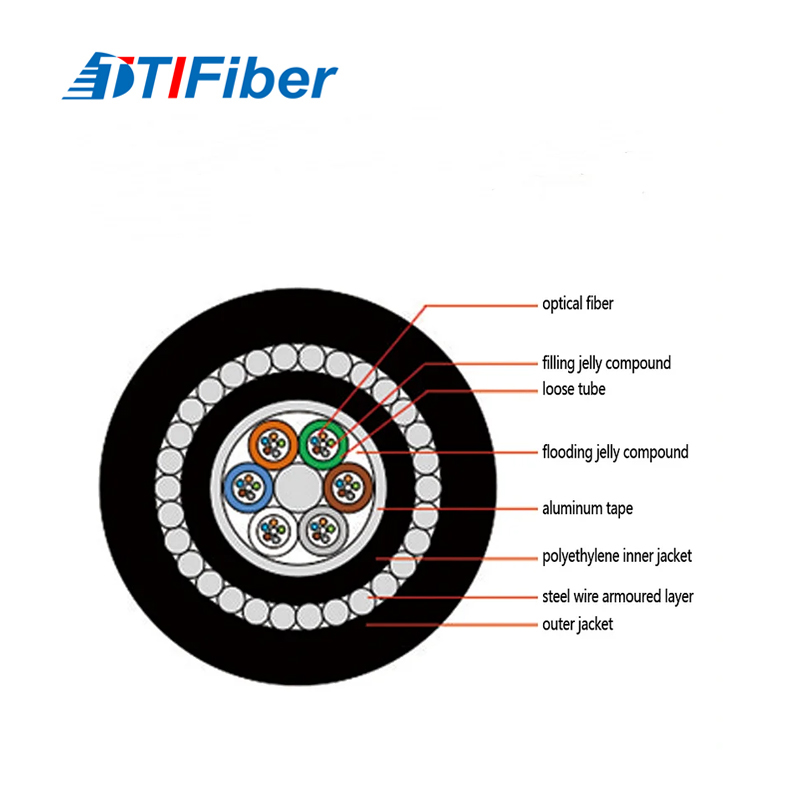
The steel used in SWA cables is not high-carbon tool steel, nor is it brittle cast iron. It is specifically low-carbon (mild) steel wire, typically containing less than 0.25% carbon.
What Kind of Steel Is Used in the SWA Layer

So what exactly does “correct” installation entail? Where do standards draw the line between best practice and code compliance? And why is grounding not just an electrical formality—but a foundational requirement for safety, reliability, and longevity?
What Do Electrical Codes Specifically Require for SWA Grounding
In a market where “SWA” can be loosely applied to substandard products, how do you ensure the cable you’re purchasing will truly perform as expected over its 25+ year design life? Verification isn’t optional—it’s essential. And it must happen before the cable leaves the factory, not after it fails in the field.
How Do You Verify the Quality of SWA Fiber Optic Cable
