



How FTTP, FTTH, and FTTN Are Built?
author: TTI Fiber
2025-01-20
Construction Differences Between FTTP, FTTH, and FTTN
FTTP Construction (Fiber to the Premises):
- Infrastructure Requirements: FTTP requires a full fiber-optic network that runs directly to the premises, whether that’s a home, apartment, or business. The fiber is typically installed underground or in overhead cables.
- Construction Complexity: The process is relatively complex because it involves installing fiber optics over a potentially large geographical area, and in some cases, digging trenches for underground cabling. This makes FTTP infrastructure build-out time-consuming and costly.
- Materials Used: High-quality fiber-optic cables, typically consisting of glass or plastic fibers, are used to provide high-speed data transmission. These cables are often accompanied by specialized hardware, such as Optical Network Terminals (ONTs), that convert signals between the fiber-optic and electronic systems.
- Installation Process: The installation process for FTTP involves significant groundwork for the physical fiber infrastructure. For residential areas, this may require digging up roads or sidewalks to lay down fiber lines. For businesses, the process may include setting up fiber lines in business parks or office complexes.
FTTH Construction (Fiber to the Home):
- Infrastructure Requirements: FTTH is a specific subset of FTTP that focuses exclusively on delivering fiber-optic connections directly to the home. The infrastructure is virtually the same as FTTP, but the endpoint is always an individual home.
- Construction Complexity: While the process is similar to FTTP, the focus on individual homes makes it slightly simpler for suburban and urban areas where homes are clustered together. In rural areas, FTTH may still require significant effort to extend fiber optics to individual properties.
- Materials Used: Similar to FTTP, FTTH relies on fiber-optic cables, but often uses smaller, less complex ONT equipment at the home for the final connection. The fibers in FTTH networks are installed inside residential neighborhoods, with fibers typically terminating in an ONT inside the home.
- Installation Process: FTTH installation involves running fiber-optic lines through neighborhoods and directly into homes. This may involve digging or the use of overhead cables, depending on the area. FTTH infrastructure is generally quicker to build in urban and suburban areas, but still requires a significant amount of labor and resources.
FTTN Construction (Fiber to the Node):
- Infrastructure Requirements: FTTN is a hybrid system that brings fiber to a central node, typically located a few kilometers away from homes or businesses. From this node, existing copper or coaxial cables are used to connect the final mile to the end user. This makes FTTN less expensive to build than FTTP and FTTH, as it reuses existing infrastructure.
- Construction Complexity: FTTN requires less complex construction than FTTP or FTTH because it only requires fiber optics up to a central node. The last mile (from the node to the customer) uses the existing copper or coaxial network, which speeds up the deployment process.
- Materials Used: FTTN utilizes a mix of fiber-optic cables and older copper or coaxial cables, which are used for the final mile connection to the customer. This makes FTTN less expensive in terms of material costs, but it also limits the potential for speeds.
- Installation Process: The installation process for FTTN is faster than FTTP/FTTH because the final leg uses the existing copper or coaxial wiring already in place. The challenge, however, is that the speeds degrade the further the user is from the node, meaning that users located far away may experience slower service.
Lifespan of FTTP, FTTH, and FTTN: Which Technology Lasts the Longest?
The lifespan of each broadband technology can vary based on several factors, including the infrastructure design, materials used, and potential for upgrades or future-proofing. Here's how each technology stacks up in terms of longevity.
FTTP lifespan (Fiber to the Premises):
- Expected Lifespan: The lifespan of FTTP technology is typically around 30-50 years, depending on the quality of the fiber-optic cables and the maintenance of the network. Fiber-optic cables are highly durable and resistant to environmental factors such as weather, making them long-lasting compared to copper wires.
- Why It Lasts: Fiber-optic cables do not degrade over time in the same way that copper cables do. In fact, fiber can carry signals over much longer distances with minimal loss, making FTTP a highly reliable and future-proof investment. Additionally, fiber networks are scalable and can be easily upgraded to handle higher speeds as technology advances.
- Upgrades and Maintenance: Fiber-optic technology is designed for flexibility. While the installation process may be costly and time-consuming, the infrastructure itself is built to accommodate future technological improvements, such as faster speeds and higher bandwidths.
FTTH lifespan (Fiber to the Home):
- Expected Lifespan: FTTH shares many of the same characteristics as FTTP, as it is essentially a more specific version of FTTP. The expected lifespan for FTTH networks is also around 30-50 years.
- Why It Lasts: Like FTTP, FTTH utilizes fiber-optic cables that can withstand a long operational period with minimal degradation. The technology’s longevity is also enhanced by the fact that it offers high-speed internet, which can support future advancements in data transmission.
- Upgrades and Maintenance: FTTH networks are similarly future-proof. They can be upgraded relatively easily, allowing providers to increase speeds without major overhauls to the physical infrastructure. The main maintenance requirements involve keeping the fiber-optic cables in good condition and ensuring the Optical Network Terminals (ONTs) at the home are functioning properly.
FTTN lifespan (Fiber to the Node):
- Expected Lifespan: The lifespan of FTTN infrastructure is generally 15-20 years. While the fiber to the node lasts a long time, the copper or coaxial cables used for the last-mile connection are less durable and prone to signal degradation over time.
- Why It Lasts: The hybrid nature of FTTN (fiber to the node, copper for the last mile) means that while the fiber segment has a long lifespan, the copper or coaxial cables can deteriorate, especially in high-traffic areas or over long distances. Additionally, copper cables do not support the same bandwidth or speed as fiber-optic cables, limiting the system's ability to keep up with future demands.
- Upgrades and Maintenance: To maintain performance, FTTN networks may require upgrades to the copper infrastructure over time. However, upgrading from FTTN to a full FTTP or FTTH system is possible, and many providers are moving in that direction to future-proof their networks.
FTTP and FTTH offer more long-term benefits with greater reliability and speed, while FTTN provides a more budget-friendly option in the short term. Future-proofing is key in today’s rapidly evolving technology landscape, and fiber-optic networks (especially FTTP and FTTH) are the most resilient, offering long-term value and scalability.
FTTP vs. FTTH vs. FTTN Comparsion Table
Let’s put it all together. Here’s a side-by-side comparison of FTTP, FTTH, and FTTN to help you quickly understand the key differences between these three technologies.
| Feature | FTTP (Fiber to the Premises) | FTTH (Fiber to the Home) | FTTN (Fiber to the Node) |
| Connection Type | Fiber optic to premises (home or business) | Fiber optic to individual home | Fiber optic to node, copper last mile |
| Speed | Up to 1 Gbps and beyond | Up to 1 Gbps and beyond | Generally lower (up to 100 Mbps) |
| Latency | Very low | Very low | Moderate to high |
| Installation Cost | Higher | Higher | Lower |
| Coverage | Limited to specific areas | Primarily urban areas | More widespread (including suburban and rural areas) |
| Suitability | Ideal for high-demand business, urban homes | Ideal for households with high data needs | Best for suburban or rural areas with existing infrastructure |
| Reliability | High reliability | High reliability | Lower, dependent on copper quality and distance from node |
TTI Fiber Communication Tech. Co., Ltd., is a professional manufacturer specialized in Fiber optic products for 13 years. Our factory located in Shenzhen, China, covers an area of 12,000 square meters and has obtained ISO9001, ISO14001, REACH, RoHS, CE and CPR certificates and so on. We hav
What Is the Difference Between FTTH And FTTP
FTTP vs. FTTH vs. FTTN: What’s the Difference?
Related Article
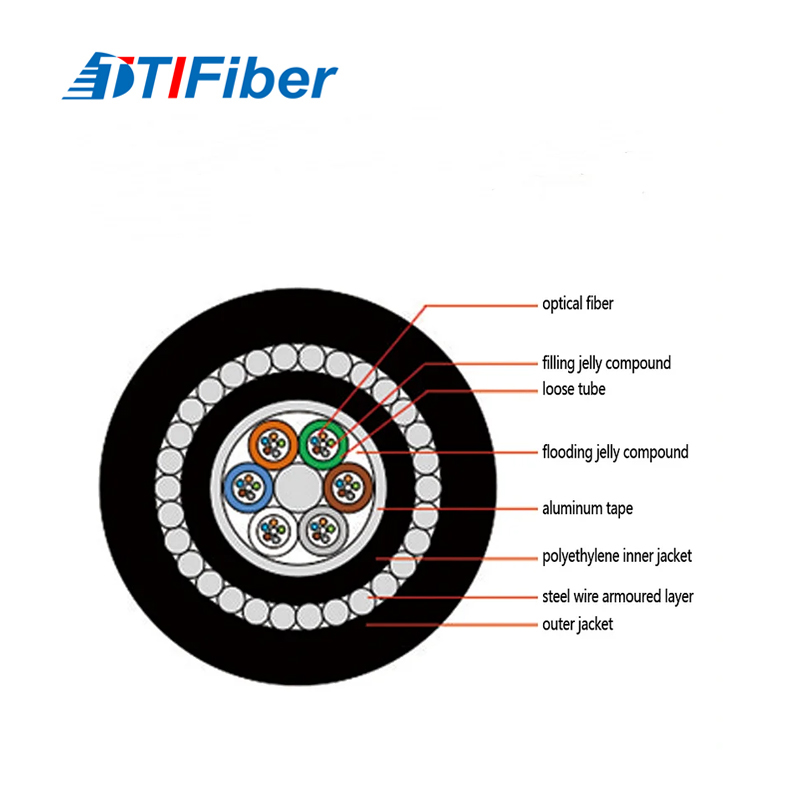
The steel used in SWA cables is not high-carbon tool steel, nor is it brittle cast iron. It is specifically low-carbon (mild) steel wire, typically containing less than 0.25% carbon.
What Kind of Steel Is Used in the SWA Layer

So what exactly does “correct” installation entail? Where do standards draw the line between best practice and code compliance? And why is grounding not just an electrical formality—but a foundational requirement for safety, reliability, and longevity?
What Do Electrical Codes Specifically Require for SWA Grounding
In a market where “SWA” can be loosely applied to substandard products, how do you ensure the cable you’re purchasing will truly perform as expected over its 25+ year design life? Verification isn’t optional—it’s essential. And it must happen before the cable leaves the factory, not after it fails in the field.
How Do You Verify the Quality of SWA Fiber Optic Cable
