



How is GYFY Fiber Cable Manufactured?
author: TTI Fiber
2024-10-29
The manufacturing process of GYFY fiber cables involves precise engineering and advanced materials to ensure high performance, durability, and reliability in various outdoor environments. The process is carefully controlled to meet the stringent standards required for telecommunications and data transmission applications. Below is a step-by-step overview of how GYFY fiber cables are manufactured:
Step 1. Material Selection
Material selection is a crucial first step in the manufacturing of GYFY fiber cables, as the quality of these materials directly impacts the cable’s performance, durability, and suitability for outdoor applications. The selected materials must meet strict industry standards to ensure the cable can withstand environmental stresses, mechanical forces, and provide reliable data transmission. Below are the key components and materials used in GYFY fiber cables:
Optical Fibers
- Types: Single-mode and multi-mode fibers are the core components of GYFY fiber cables. Single-mode fibers are typically used for long-distance, high-bandwidth communication, while multi-mode fibers are suitable for shorter distances with less stringent bandwidth requirements.
- Material: Made from high-purity silica glass, these fibers have a core and cladding layer that guide light signals through the cable with minimal loss.
- Coating: Each fiber is coated with a protective layer of acrylate or similar material to safeguard against mechanical damage and microbending losses during manufacturing and installation.
- Material: Made from high-purity silica glass, these fibers have a core and cladding layer that guide light signals through the cable with minimal loss.
- Coating: Each fiber is coated with a protective layer of acrylate or similar material to safeguard against mechanical damage and microbending losses during manufacturing and installation.
Central Strength Member
- Material: Fiber Reinforced Plastic (FRP) or aramid yarn is commonly used as the central strength member. FRP is a lightweight, non-metallic material that provides excellent tensile strength without adding excessive weight.
- Function: The central strength member serves as the backbone of the cable, providing structural integrity and support. It prevents the cable from bending excessively, which could lead to fiber damage or signal loss.
- Function: The central strength member serves as the backbone of the cable, providing structural integrity and support. It prevents the cable from bending excessively, which could lead to fiber damage or signal loss.
Loose Tubes
- Material: Loose tubes are typically made from high-density polyethylene (HDPE) or PBT (Polybutylene Terephthalate), which offer excellent mechanical protection, flexibility, and resistance to environmental factors.
- Function: These tubes house the optical fibers and provide a protective barrier against external forces. They also contain water-blocking gel, which protects the fibers from moisture and helps maintain stable performance in humid or wet conditions.
- Function: These tubes house the optical fibers and provide a protective barrier against external forces. They also contain water-blocking gel, which protects the fibers from moisture and helps maintain stable performance in humid or wet conditions.
Water-Blocking Gel
- Composition: The water-blocking gel used in loose tubes is a thixotropic compound that prevents water ingress. It has self-healing properties, meaning it can re-form around the fibers if disturbed, maintaining moisture protection.
- Purpose: This gel ensures that the optical fibers remain dry, even in harsh outdoor environments where exposure to moisture is common. It is especially important in areas prone to flooding, heavy rain, or condensation.
- Purpose: This gel ensures that the optical fibers remain dry, even in harsh outdoor environments where exposure to moisture is common. It is especially important in areas prone to flooding, heavy rain, or condensation.
Water-Blocking Elements
- Materials: Water-swellable tapes and yarns are used to provide an additional layer of water protection. These materials expand when exposed to water, sealing gaps within the cable and preventing further ingress.
- Application: These elements are layered around the loose tubes during the stranding process to create a water-tight seal, enhancing the cable’s durability in wet conditions.
- Application: These elements are layered around the loose tubes during the stranding process to create a water-tight seal, enhancing the cable’s durability in wet conditions.
Outer Sheath Material
- Material: The outer sheath is made of UV-resistant polyethylene (PE) or LSZH (Low Smoke Zero Halogen) compounds for environments requiring low toxicity in case of fire. The sheath protects the cable from physical damage, UV radiation, and chemical exposure.
- Function: It acts as the first line of defense against environmental factors, ensuring that the internal components remain intact and function optimally over the cable’s lifespan.
- Function: It acts as the first line of defense against environmental factors, ensuring that the internal components remain intact and function optimally over the cable’s lifespan.
Strengthening Yarn
- Material: Aramid yarn or glass yarn may be added between the loose tubes and the outer sheath to provide extra tensile strength and further resistance to mechanical stresses.
- Purpose: This yarn helps absorb tension during cable installation, preventing strain on the optical fibers and ensuring the cable can withstand pulling forces without damage.
- Purpose: This yarn helps absorb tension during cable installation, preventing strain on the optical fibers and ensuring the cable can withstand pulling forces without damage.
The careful selection of high-quality materials ensures that GYFY fiber cables are robust, reliable, and capable of withstanding the demands of outdoor installations. By combining advanced materials such as FRP, HDPE, and water-blocking gels, manufacturers create cables that excel in performance and durability, meeting the stringent requirements of modern telecommunications infrastructure.
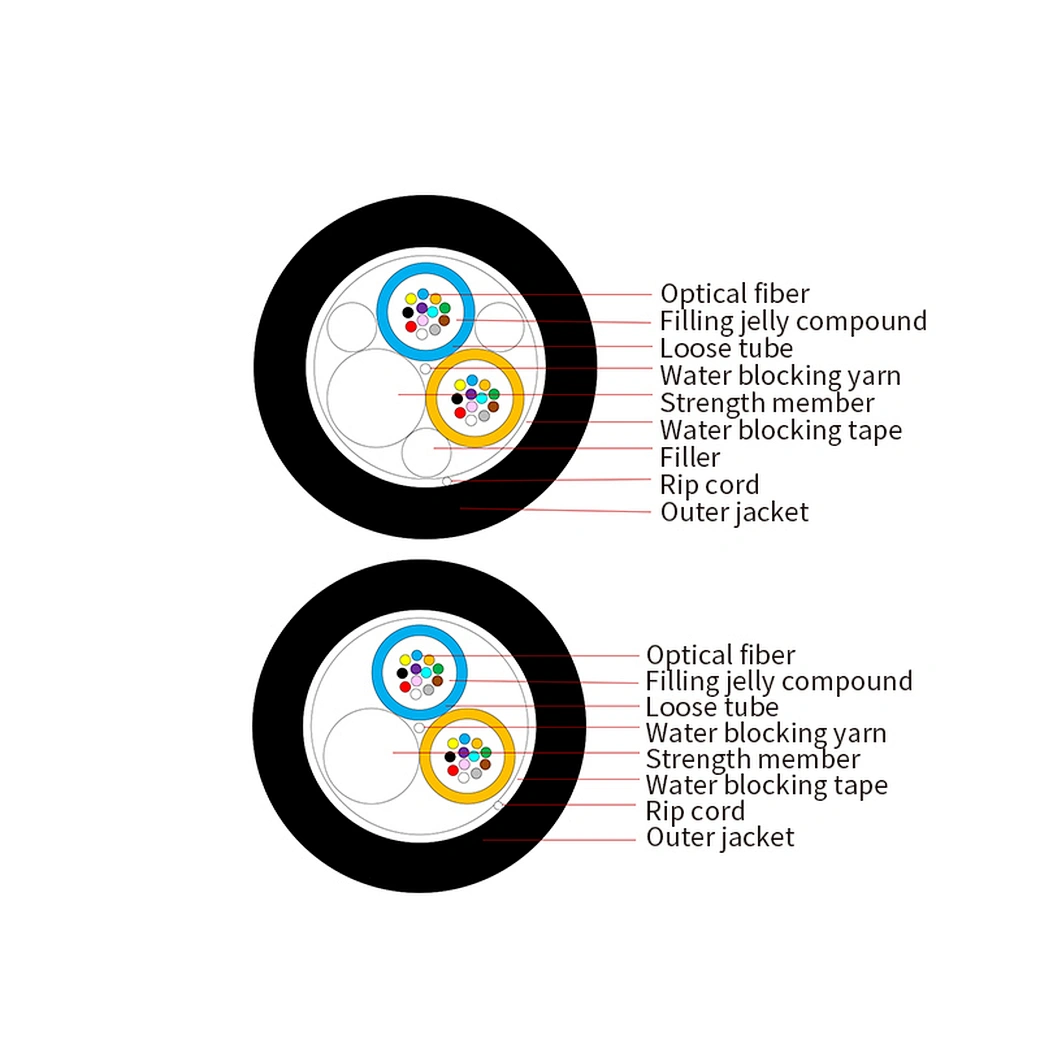
Step 2. Loose Tube Formation
The optical fibers are first placed inside loose tubes, which are then filled with a water-blocking gel. This gel acts as a barrier against moisture, ensuring the fibers remain dry and protected. The loose tubes are then bundled around the central strength member, providing a stable and secure environment for the fibers.
- Fiber Insertion: Fibers are carefully inserted into the tubes to avoid damage.
- Gel Filling: The gel is injected into the tubes during the insertion process to ensure complete moisture protection.
- Gel Filling: The gel is injected into the tubes during the insertion process to ensure complete moisture protection.
Step 3. Stranding and Layering
Once the loose tubes are filled, they are stranded around the central strength member in a helical or SZ pattern. This stranding method provides flexibility and resistance to mechanical stresses, allowing the cable to handle bending and tension during installation and operation.
- Stranding Process: The loose tubes are wound around the strength member using specialized machinery, ensuring a consistent and balanced cable structure.
- Stranding Process: The loose tubes are wound around the strength member using specialized machinery, ensuring a consistent and balanced cable structure.
Step 4. Binding and Water Blocking
The stranded loose tubes are bound together using water-blocking materials, such as water-swellable tape or yarn. This additional layer enhances the cable’s resistance to water ingress, providing an extra level of protection against environmental factors.
- Water Blocking Elements: Water-swellable materials are used to seal gaps between the tubes, further preventing water penetration.
- Water Blocking Elements: Water-swellable materials are used to seal gaps between the tubes, further preventing water penetration.
Step 5. Outer Sheath Application
The final step in the construction is applying the outer sheath. The sheath material, usually UV-resistant polyethylene, is extruded over the stranded loose tubes, providing a protective barrier against UV rays, mechanical damage, and chemical exposure.
- Extrusion Process: The outer sheath is formed using an extrusion machine, which precisely controls the thickness and uniformity of the sheath layer.
- Extrusion Process: The outer sheath is formed using an extrusion machine, which precisely controls the thickness and uniformity of the sheath layer.
Step 6. Quality Control and Testing
Quality control is a critical phase in the manufacturing process. Each cable undergoes rigorous testing to ensure it meets industry standards and customer specifications. Tests include:
- Tensile Strength Testing: Ensures the cable can withstand pulling forces during installation.
- Environmental Testing: Assesses the cable’s resistance to temperature extremes, UV exposure, and water ingress.
- Optical Performance Testing: Checks for signal attenuation and overall fiber performance to guarantee efficient data transmission.
- Tensile Strength Testing: Ensures the cable can withstand pulling forces during installation.
- Environmental Testing: Assesses the cable’s resistance to temperature extremes, UV exposure, and water ingress.
- Optical Performance Testing: Checks for signal attenuation and overall fiber performance to guarantee efficient data transmission.
Step 7. Final Inspection and Packaging
After passing all tests, the cable is thoroughly inspected for any defects or inconsistencies. Once approved, it is cut to the required lengths, coiled, and packaged for shipment. Packaging is designed to protect the cable during transport and storage, ensuring it arrives in perfect condition.
- Packaging Materials: Robust spools or reels are used, often with protective covers to safeguard the cable during handling.
- Packaging Materials: Robust spools or reels are used, often with protective covers to safeguard the cable during handling.
The manufacturing of GYFY fiber cables is a complex process that combines advanced materials, precise engineering, and stringent quality control measures. This meticulous approach ensures that GYFY cables meet the high-performance standards required for outdoor data transmission, making them a trusted choice for telecommunications and other critical applications.
What Is Fiber Optic Cable? How Does It Work?
GYFY Fiber Cables Quality Control and Testing
Related Article
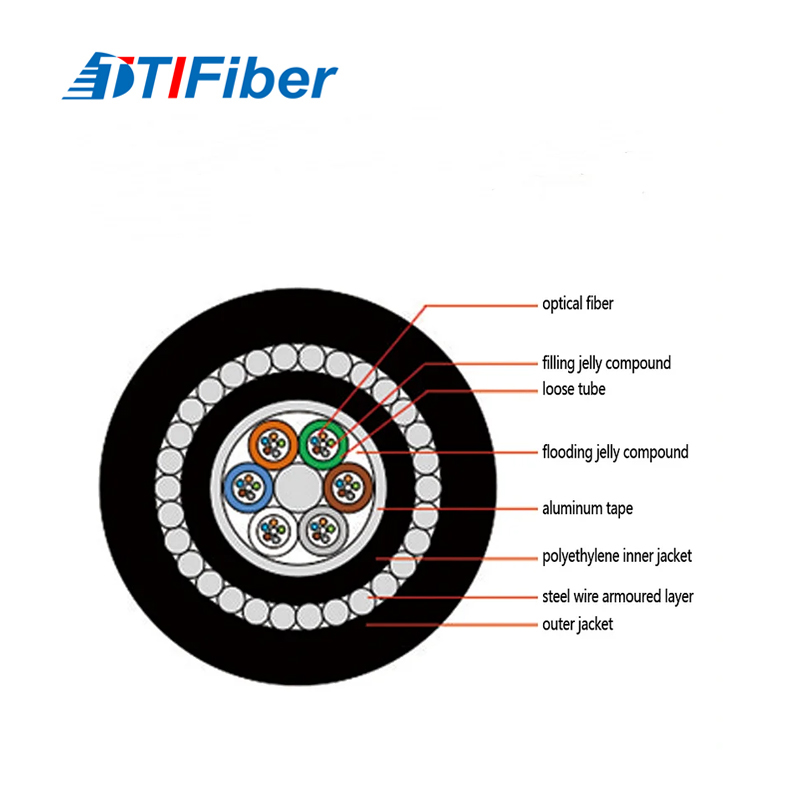
The steel used in SWA cables is not high-carbon tool steel, nor is it brittle cast iron. It is specifically low-carbon (mild) steel wire, typically containing less than 0.25% carbon.
What Kind of Steel Is Used in the SWA Layer

So what exactly does “correct” installation entail? Where do standards draw the line between best practice and code compliance? And why is grounding not just an electrical formality—but a foundational requirement for safety, reliability, and longevity?
What Do Electrical Codes Specifically Require for SWA Grounding
In a market where “SWA” can be loosely applied to substandard products, how do you ensure the cable you’re purchasing will truly perform as expected over its 25+ year design life? Verification isn’t optional—it’s essential. And it must happen before the cable leaves the factory, not after it fails in the field.
How Do You Verify the Quality of SWA Fiber Optic Cable
