



Leading the Future of Communications Technology - The Development and Application of Fiber Optic Cable
author: TTI Fiber
2023-12-07

一 、Introduction
With the continuous development and popularization of Internet technology, people's demand for communication networks is getting higher and higher. To meet this demand, optical fiber and cable technology has emerged and continues to develop.
With the continuous development and popularization of Internet technology, people's demand for communication networks is getting higher and higher. To meet this demand, optical fiber and cable technology has emerged and continues to develop.
As a communication medium with faster transmission speeds, longer transmission distances, and higher transmission capacities, optical fiber and cable has become an important component of modern communication networks.
This article will introduce the definition, classification, characteristics, application, and development trends of optical fiber and cable, as well as its important position
in modern communication networks.
二、Definition and classification of optical fiber and cable
Optical fiber and cable is a transmission medium consisting of optical fibers and protective sleeves, mainly used to transmit optical signals. According to different classification criteria, optical fiber and cable can be divided into multiple types.
By transmission wavelength, it can be divided into short-wave optical fiber and long-wave optical fiber; by transmission mode, it can be divided into single-mode optical fiber and multi-mode optical fiber; by manufacturing material, it can be divided into
glass optical fiber and plastic optical fiber.
三、Characteristics and application of optical fiber and cable
Optical fiber and cable have the advantages of long transmission distance, high transmission speed, large transmission capacity, and strong anti-interference ability, making them suitable for the following scenarios:
Long-distance transmission: the transmission distance of optical fiber and cable can reach several tens of kilometers or even further,
making it suitable for long-distance communication and backbone network construction.
High-speed transmission: the transmission rate of optical fiber and cable can reach dozens of Gbps or even higher, making it suitable for high-speed data transmission and video conferencing applications.
Large-capacity transmission: the transmission capacity of optical fiber and cable can reach dozens of Tbps or even higher,
making it suitable for large-scale data centers and cloud computing centers.
Strong anti-interference ability: optical fiber and cable are not affected by electromagnetic interference, making them suitable for industrial automation and monitoring control systems in industries such as electricity, oil, and chemicals.
四、Development trends and prospects of optical fiber and cable
With the continuous development and popularization of Internet technology, people's demand for networks is getting higher and higher,
which drives the continuous improvement of optical fiber and cable technology. In the future, the development trends of optical fiber and
cable will mainly focus on the following aspects:
Faster transmission rates: with the development of communication technology, the transmission rate of optical fiber and cable will continue
to increase, reaching hundreds of Gbps or even higher.
Longer transmission distances: with the increasing demand for communication networks, the transmission distance of optical fiber and cable
will continue to increase, reaching hundreds of kilometers or even further.
Smaller size: with the continuous improvement of manufacturing technology, the size of optical fiber and cable will continue to decrease,
making it suitable for various application scenarios.
Stronger anti-interference ability: with the continuous development of industrial automation and monitoring control systems, the demand
for the anti-interference ability of optical fiber and cable will continue to increase, so stronger anti-interference ability will appear in the future.
五、Conclusion
As an important communication medium, optical fiber and cable will be more widely used in the future and continue to improve and innovate
to meet people's needs. Let us look forward to the future development and application of optical fiber and cable!
TTI Fiber Communication Tech. Co., Limited : 10th Anniversary Gala
Enjoy the Charm of Optical Fiber Technology: The Future of Unlimited Information Transmission
Related Article
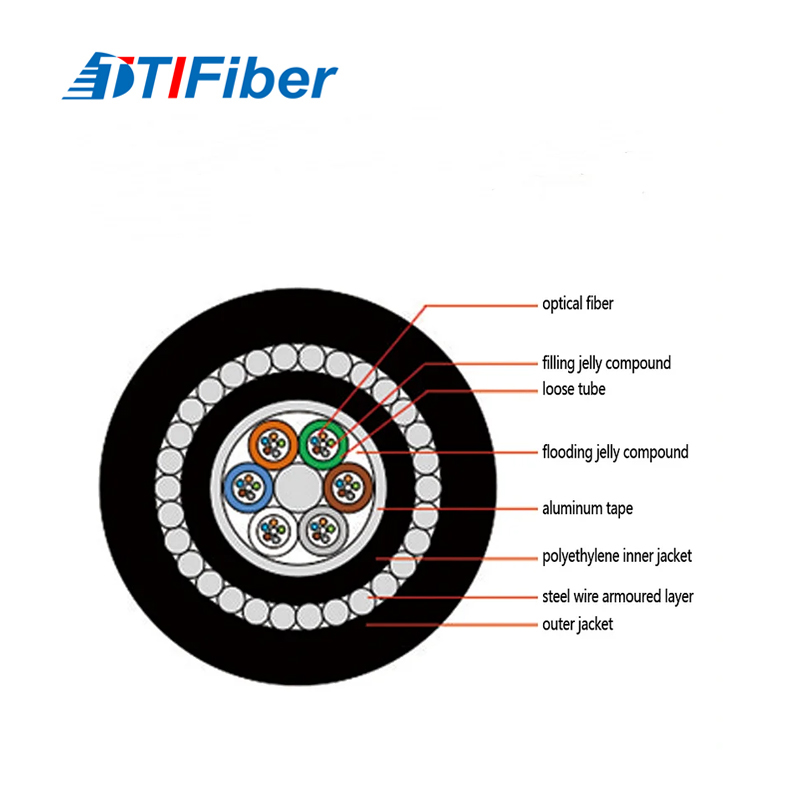
The steel used in SWA cables is not high-carbon tool steel, nor is it brittle cast iron. It is specifically low-carbon (mild) steel wire, typically containing less than 0.25% carbon.
What Kind of Steel Is Used in the SWA Layer

So what exactly does “correct” installation entail? Where do standards draw the line between best practice and code compliance? And why is grounding not just an electrical formality—but a foundational requirement for safety, reliability, and longevity?
What Do Electrical Codes Specifically Require for SWA Grounding
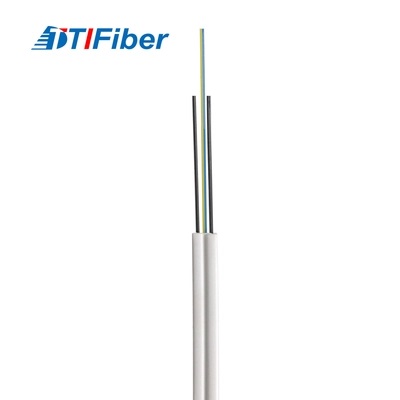
In a market where “SWA” can be loosely applied to substandard products, how do you ensure the cable you’re purchasing will truly perform as expected over its 25+ year design life? Verification isn’t optional—it’s essential. And it must happen before the cable leaves the factory, not after it fails in the field.
How Do You Verify the Quality of SWA Fiber Optic Cable
