



MTP Connector vs. MPO Connector
author: TTI Fiber
2024-12-17
What is an MPO-12 Connector?
To kick things off, let’s talk about MPO (Multi-Fiber Push-On) connectors. MPO connectors are designed for high-density fiber optic applications where multiple fibers need to be connected at once. An MPO connector typically comes with 12 fibers in a single connector (hence the term MPO-12), which makes it a perfect solution for environments like data centers, telecom networks, and 5G infrastructure where both space and speed are crucial.
MPO connectors are standardized, offering versatility for both single-mode and multi-mode fibers. They're incredibly efficient for connecting multiple fiber cables at once and are a favorite when you're working with high-bandwidth systems.
What About the MTP Connector?
Now, let’s introduce the MTP connector. Essentially, an MTP connector is a more advanced version of the MPO connector. While both connectors look similar, the MTP connector is an enhanced version with improvements in performance and design. The term “MTP” stands for Multi-Fiber Termination Push-On, and it’s made by US Conec—the same company that developed the original MPO connector.
The difference is subtle but important: the MTP connector is built to be more durable, with precision-engineered components that offer better alignment, reduced insertion loss, and overall better performance compared to standard MPO connectors.
How Do MPO-12 and MTP Connectors Work?
Whether you’re using an MPO or MTP connector, the concept is the same: both connectors are designed to handle multiple fibers at once. When you plug either the MPO-12 or MTP connector into a compatible receptacle, you're establishing connections for 12 individual fibers in one go, allowing for efficient data transmission across the entire system.
The key difference here is that MTP connectors often offer better reliability and less signal loss thanks to tighter tolerances and more advanced internal components. They are also easier to install, making them a preferred choice for high-performance applications.
Key Components and Materials of MPO and MTP Connectors
Both MPO and MTP connectors share similar components, but the materials used and the level of precision can differ. Here's what you’ll typically find in both connectors:
1. Connector Housing: The outer shell of both connectors is made from durable materials like PBT (Polybutylene Terephthalate) or LCP (Liquid Crystal Polymer). These materials are resistant to heat and environmental conditions, ensuring the connector lasts over time.
2. Ferrules: Inside, both connectors use ceramic ferrules to hold the fibers in place. In the case of MTP connectors, the ferrules are precision-engineered to ensure better fiber alignment and more reliable signal transfer.
3. Pins: The alignment pins in both MPO and MTP connectors are typically made from stainless steel for durability and stability. In MTP connectors, these pins are often more precise, reducing the chances of fiber misalignment.
4. Cable Sheath: The cables are typically protected by an LSZH (Low Smoke Zero Halogen) sheath or PVC depending on the application environment. This ensures the cables remain flexible but also fire-resistant.
Why Material Choice Matters for MPO and MTP Connectors?
The choice of materials in MPO and MTP connectors plays a big role in their performance and longevity. Here's why it matters:
- Precision: In MTP connectors, the materials are more tightly controlled, resulting in a more precise connection and less signal loss. This is crucial when you're running high-bandwidth applications like 100G or 400G data networks.
- Durability: MTP connectors tend to use materials that can withstand harsher environments, providing a longer lifespan. So, if your network is exposed to high temperatures or moisture, MTP connectors might be the better option.
- Durability: MTP connectors tend to use materials that can withstand harsher environments, providing a longer lifespan. So, if your network is exposed to high temperatures or moisture, MTP connectors might be the better option.
- Signal Quality: Materials like zirconia (used for ferrules) help ensure that the fibers stay in alignment, which reduces loss and maximizes the efficiency of your fiber optic network.
Key Features of MPO and MTP Connectors
While both types of connectors share several features, here’s a look at what makes them stand out:
1. High Density: Both MPO and MTP connectors allow you to connect multiple fibers (typically 12) at once, which saves space in high-density environments like data centers and telecom networks.
2. Compatibility: Both are available in single-mode and multi-mode options, making them versatile for different types of fiber optic networks.
3. Push-Pull Mechanism: Both types of connectors use a simple push-on, pull-off mechanism that makes them easy to install and remove, without requiring complicated tools.
4. Scalability: Whether you choose an MPO or MTP connector, both allow for easy network scalability, making them perfect for future-proofing your network as data demands grow.
Advantages of MPO and MTP Connectors
MPO connectors offer a great solution for handling multiple fiber connections in a compact form. However, MTP connectors tend to outperform MPO connectors in several ways. Here's why:
- MTP Connectors have improved design and performance, offering better alignment and reduced signal loss, which is a big plus for high-speed networks.
- Both connectors allow for easy installation and offer a space-saving design that’s perfect for high-density environments.
- Both connectors allow for easy installation and offer a space-saving design that’s perfect for high-density environments.
- MTP connectors tend to last longer thanks to better-quality materials and more precise construction.
- MPO connectors are generally more affordable and still offer excellent performance for many general-purpose applications.
Disadvantages of MPO and MTP Connectors
While both MPO and MTP connectors offer significant benefits, there are a few downsides to keep in mind:
- MPO Connectors are generally less precise than MTP connectors, which could lead to a higher level of signal loss in some cases.
- MTP Connectors, while more reliable, are more expensive than their MPO counterparts, so they may not be necessary for all types of installations.
- MTP Connectors, while more reliable, are more expensive than their MPO counterparts, so they may not be necessary for all types of installations.
- Polarity Configuration: Both MPO and MTP connectors can require careful attention to polarity during installation to avoid connectivity issues.
Where Can You Use MPO and MTP Connectors?
Both MPO and MTP connectors are ideal for high-density fiber optic networks where efficient and fast data transmission is critical. Here are some common applications:
1. Data Centers: Both connectors are widely used in data centers where space is limited but data capacity needs to be maximized.
2. Telecom Networks: For backbone connections in telecom systems, MPO and MTP connectors are essential for handling high-speed data transfers.
2. Telecom Networks: For backbone connections in telecom systems, MPO and MTP connectors are essential for handling high-speed data transfers.
3. 5G Networks: As 5G networks roll out, both connectors are helping meet the demand for high-bandwidth, low-latency connections.
4. Enterprise Networks: In office buildings and corporate campuses, these connectors help manage large-scale fiber installations.
How to Choose Between MPO and MTP Connectors?
When deciding whether to go with MPO or MTP connectors, consider these factors:
1. Performance Needs: If you're looking for the best performance in terms of signal quality, minimal insertion loss, and alignment, MTP connectors may be your best bet.
2. Budget: MPO connectors are generally less expensive, so if cost is a concern and you're working in a less demanding environment, they might be the more suitable option.
3. Installation Environment: For environments where durability and reliability are paramount, like outdoor or high-temperature settings, MTP connectors provide a more robust solution.
4. Network Speed: If your network requires higher speeds, such as 100G or 400G Ethernet, MTP connectors will typically offer better overall performance.
TTI Fiber Communication Tech. Co., Ltd., is a professional manufacturer specialized in Fiber optic products for 13 years. Our factory located in Shenzhen, China, covers an area of 12,000 square meters and has obtained ISO9001, ISO14001, REACH, RoHS, CE and CPR certificates and so on. We have a wide range of fiber optic products, including Fiber Optic Cable, Fiber Optic Patch Cord, Fiber Optic Splitter, Fiber Optic Patch Panel, FTTx products, etc. We also provide professional Fiber Cabling Solutions and one-stop OEM & ODM service.
TTI Fiber Takes You Understanding MPO Fibre Cable - Benefits and Applications
Optical Fiber with MPO Connectors Construction
Related Article
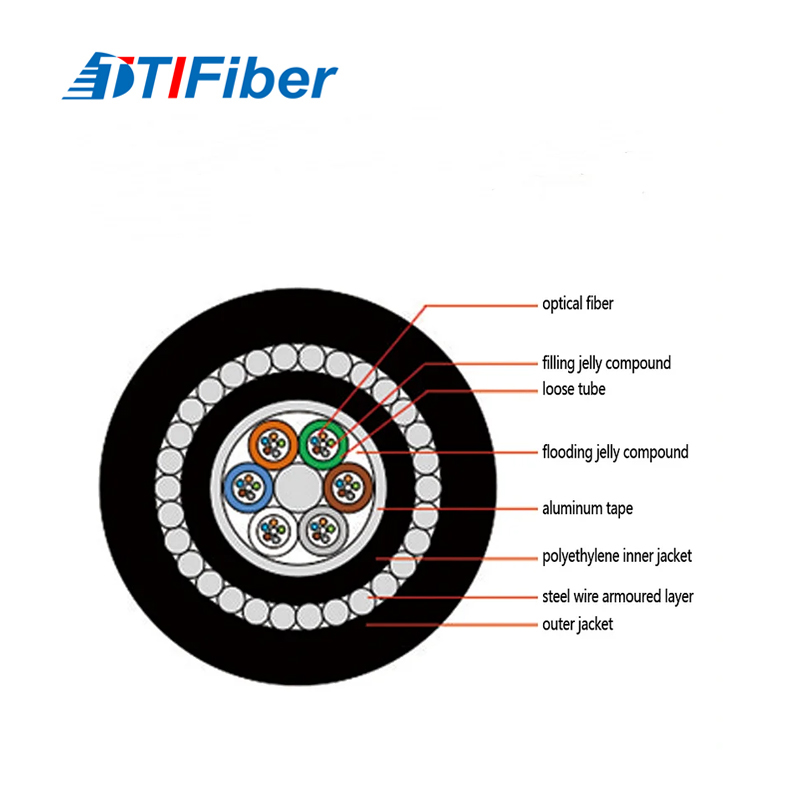
The steel used in SWA cables is not high-carbon tool steel, nor is it brittle cast iron. It is specifically low-carbon (mild) steel wire, typically containing less than 0.25% carbon.
What Kind of Steel Is Used in the SWA Layer

So what exactly does “correct” installation entail? Where do standards draw the line between best practice and code compliance? And why is grounding not just an electrical formality—but a foundational requirement for safety, reliability, and longevity?
What Do Electrical Codes Specifically Require for SWA Grounding
In a market where “SWA” can be loosely applied to substandard products, how do you ensure the cable you’re purchasing will truly perform as expected over its 25+ year design life? Verification isn’t optional—it’s essential. And it must happen before the cable leaves the factory, not after it fails in the field.
How Do You Verify the Quality of SWA Fiber Optic Cable
