



MTP/MPO Connector Advantages Applications Limitations
author: TTI Fiber
2024-07-25
In the fast-paced world of telecommunications and data networking, the demand for efficient and high-performance connectivity solutions continues to escalate. Among the many innovations driving this evolution is the MTP/MPO (Mechanical Transfer Pull-off/Multi-fiber Push-on) connector. Engineered to support high-density, multifiber connections, the MTP/MPO connector has emerged as a cornerstone of modern fiber optic infrastructure. Below TTI Fiber embark on an exploration of the MTP/MPO connector, unraveling its intricate features, advantages, applications, and limitations.
1. Introduction to the MTP/MPO Connector:
The MTP/MPO connector is a multifiber optical connector system designed to revolutionize fiber optic connectivity. Developed by US Conec, this connector is engineered to accommodate multiple fibers within a single connector, enabling high-density, multifiber solutions. Its name reflects its unique functionality: "MTP" stands for Mechanical Transfer Pull-off, referring to its coupling mechanism, while "MPO" stands for Multi-fiber Push-on, highlighting its ability to support multiple fibers.
2. Key Features of the MTP/MPO Connector:
High-Density Design: At the core of the MTP/MPO connector is its high-density design, allowing for the connection of multiple fibers within a single connector. This compact form factor maximizes space efficiency in data centers, telecommunications facilities, and other high-capacity environments where space is at a premium.
Multifiber Configuration: Unlike traditional fiber optic connectors, which typically accommodate one fiber per connector, the MTP/MPO connector can support multiple fibers—ranging from 8 to 72 fibers—in a single connector. This multifiber configuration enables the simultaneous transmission of multiple data streams, increasing the capacity and efficiency of communication networks.
Push-Pull Coupling Mechanism: The MTP/MPO connector utilizes a push-pull coupling mechanism, allowing for quick and effortless connections. This mechanism simplifies installation and maintenance procedures, reducing deployment time and labor costs. It also ensures a secure and stable connection, even in high-vibration environments.
Precision Alignment: Precision alignment is critical in fiber optic connectivity to minimize insertion loss and maximize signal integrity. The MTP/MPO connector incorporates features such as guide pins and keying mechanisms to ensure accurate alignment of the fibers during connection. This precise alignment enhances the reliability and performance of fiber optic networks.
Modular Design: The modular design of the MTP/MPO connector allows for easy scalability, enabling network operators to expand their fiber optic infrastructure as needed. By simply adding additional MTP/MPO connectors or cables, organizations can accommodate growing bandwidth demands without extensive modifications or downtime.
3. Advantages of the MTP/MPO Connector:
High-Density Connectivity: The MTP/MPO connector offers unparalleled high-density connectivity, making it ideal for applications where space is limited. Its ability to accommodate multiple fibers within a single connector maximizes space efficiency and simplifies cable management in data centers, telecommunications facilities, and other high-density environments.
Simplified Installation: The push-pull coupling mechanism of the MTP/MPO connector streamlines installation procedures, reducing deployment time and labor costs. Additionally, the multifiber configuration eliminates the need for multiple individual connectors, further simplifying installation processes and reducing the risk of errors.
Scalability: As communication networks continue to evolve, scalability becomes increasingly important. The modular design of the MTP/MPO connector allows for easy scalability, enabling organizations to expand their fiber optic infrastructure to meet growing bandwidth demands. Whether adding additional fibers or extending existing connections, the MTP/MPO connector provides a flexible and cost-effective solution.
Versatility: The MTP/MPO connector is compatible with a wide range of fiber types, including single-mode and multimode fibers, as well as different cable types and configurations. This versatility makes it suitable for diverse applications and environments, from long-distance telecommunications networks to high-speed data centers and enterprise networks.
4. Applications of the MTP/MPO Connector:
Data Centers: MTP/MPO connectors are widely used in data centers to facilitate high-speed data transmission between servers, storage devices, and networking equipment. Their high-density design and efficient connectivity make them ideal for supporting the ever-increasing bandwidth demands of modern data center environments.
Telecommunications Networks: In telecommunications networks, where long-distance data transmission is paramount, MTP/MPO connectors play a crucial role. Their high-density design and multifiber configuration enable efficient transmission of voice, data, and video signals over vast distances, ensuring reliable communication services for consumers and businesses alike.
High-Performance Computing (HPC) Environments: In HPC environments, such as scientific research facilities and academic institutions, MTP/MPO connectors are instrumental in facilitating high-speed computing and data analysis. Their ability to handle large volumes of data with minimal latency makes them essential for accelerating scientific discoveries and computational simulations.
Enterprise Networks: MTP/MPO connectors are increasingly deployed in enterprise networks to support high-speed Ethernet connections and cloud computing applications. Their high-density design and simplified installation make them suitable for connecting network switches, routers, and other networking equipment in corporate environments, enhancing connectivity and productivity.
5. Limitations of the MTP/MPO Connector:
Cost: The initial cost of MTP/MPO connectors and associated components may be higher compared to traditional single-fiber connectors. However, the long-term benefits in terms of space efficiency, scalability, and performance often outweigh the upfront investment, making MTP/MPO connectors a cost-effective solution in the long run.
Complexity: While the push-pull coupling mechanism simplifies installation procedures, the complex nature of multifiber connectors may require specialized training or expertise for proper handling and maintenance. Organizations may need to invest in training programs or collaborate with experienced professionals to ensure the proper installation and maintenance of MTP/MPO connectors.
Alignment Challenges: Achieving precise alignment of multiple fibers within a single connector can be challenging, especially in high-density installations or when using connectors with a large number of fibers. Proper installation techniques and alignment tools are essential to minimize insertion loss and ensure optimal performance of MTP/MPO connectors.
Compatibility Issues: MTP/MPO connectors may face compatibility issues with legacy fiber optic infrastructure or equipment designed for single-fiber connectors. Adapters or conversion kits may be required to integrate MTP/MPO connectors with existing systems, adding complexity and potential points of failure to the network.
The MTP/MPO connector represents a significant advancement in fiber optic connectivity, offering high-density, multifiber solutions for modern communication networks. Its key features, including high-density design, multifiber configuration, push-pull coupling mechanism, precision alignment, and modular design, provide numerous advantages in terms of space efficiency, scalability, versatility, and reliability. While the MTP/MPO connector has found widespread adoption in data centers, telecommunications networks, HPC environments, and enterprise networks, it is essential to consider its limitations, such as cost, complexity, alignment challenges, and compatibility issues, when deploying and managing fiber optic infrastructure. Overall, the MTP/MPO connector continues to play a pivotal role in driving innovation and connectivity in an ever-evolving digital landscape, empowering organizations to meet the growing demands of modern communication networks.
How Deep Should We Bury Fiber Optic Cable?
LC (Lucent Connector) Connector - A Compact Solution for High-Speed Connectivity
Related Article
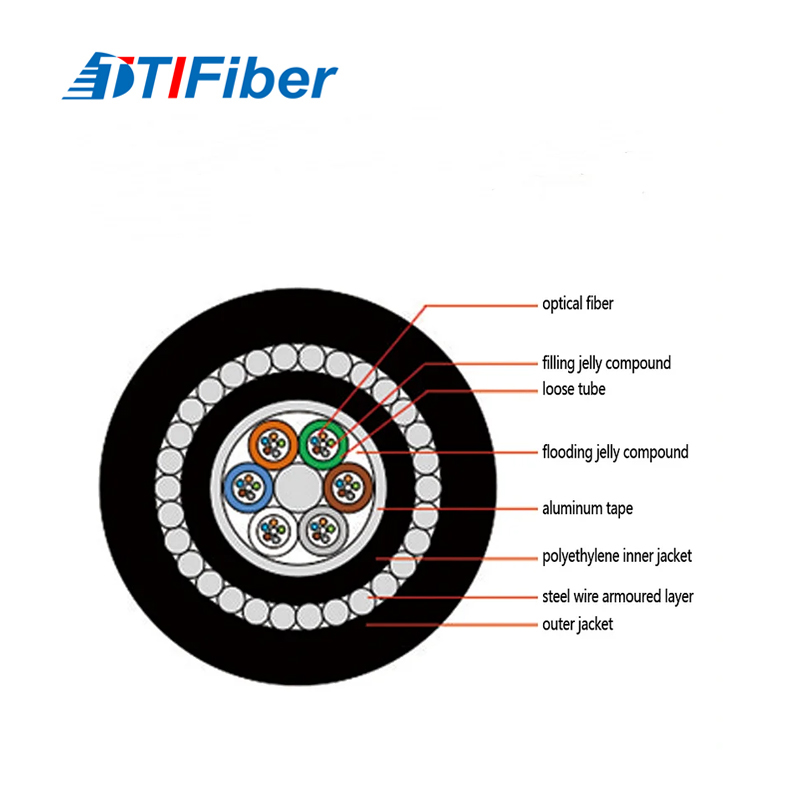
The steel used in SWA cables is not high-carbon tool steel, nor is it brittle cast iron. It is specifically low-carbon (mild) steel wire, typically containing less than 0.25% carbon.
What Kind of Steel Is Used in the SWA Layer

So what exactly does “correct” installation entail? Where do standards draw the line between best practice and code compliance? And why is grounding not just an electrical formality—but a foundational requirement for safety, reliability, and longevity?
What Do Electrical Codes Specifically Require for SWA Grounding
In a market where “SWA” can be loosely applied to substandard products, how do you ensure the cable you’re purchasing will truly perform as expected over its 25+ year design life? Verification isn’t optional—it’s essential. And it must happen before the cable leaves the factory, not after it fails in the field.
How Do You Verify the Quality of SWA Fiber Optic Cable
