



What Is An MPO Fiber Connector?
author: TTI Fiber
2024-11-27
For high-speed fiber optic networks, there are a variety of connectors designed to handle different types of applications. One of the most versatile and widely used connectors in modern networks is the MPO connector. If you're setting up a network or working with fiber optics, understanding what mpo fiber connector are, how they work, and why they’re so important is essential. Now TTI FIBER will take you through everything you need to know about MPO connectors—from their features and benefits to their applications and future in fiber optic technology.
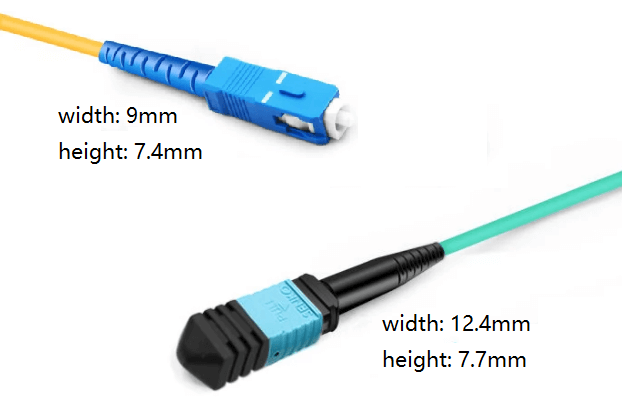
What is an MPO Fiber Connector?
At its core, an MPO connector (short for Multi-fiber Push-On) is a high-density fiber optic connector designed to handle multiple fibers in a single connection. The beauty of MPO connectors lies in their ability to efficiently connect multiple fiber strands—up to 12, 24, or even 48 fibers—using a single connector. This makes them ideal for applications where space, speed, and efficiency are crucial.
You’ll often hear MPO connectors mentioned alongside MTP connectors. While they’re very similar, MTP is essentially an improved version of MPO, offering better performance and higher precision. However, in everyday use, the terms are sometimes used interchangeably, especially in networks that require dense fiber optic connections.
The Construction and Materials of MPO Connectors
You might be wondering what goes into making these connectors so reliable and efficient. The secret lies in the construction and materials used in MPO connectors. Let's break it down:
1. Connector Housing
- Material: The housing of the MPO connector is made from durable plastic materials like polycarbonate (PC) or other UV-resistant thermoplastics. These materials are lightweight but tough enough to withstand mechanical stress and environmental exposure.
- Why It Matters: The housing protects the internal components of the MPO connector, making sure it can handle the physical wear and tear typical in demanding network environments.
- Material: The housing of the MPO connector is made from durable plastic materials like polycarbonate (PC) or other UV-resistant thermoplastics. These materials are lightweight but tough enough to withstand mechanical stress and environmental exposure.
- Why It Matters: The housing protects the internal components of the MPO connector, making sure it can handle the physical wear and tear typical in demanding network environments.
2. Fiber Ferrules
- Material: Ferrules are often made from zirconia ceramic, although metal alloys may also be used for some designs.
- Why It Matters: Ferrules are responsible for holding the optical fibers in place within the connector. Ceramic ferrules are precision-engineered to minimize signal loss, ensuring your fiber connections are as efficient as possible.
- Material: Ferrules are often made from zirconia ceramic, although metal alloys may also be used for some designs.
- Why It Matters: Ferrules are responsible for holding the optical fibers in place within the connector. Ceramic ferrules are precision-engineered to minimize signal loss, ensuring your fiber connections are as efficient as possible.
3. Pins and Alignment Mechanism
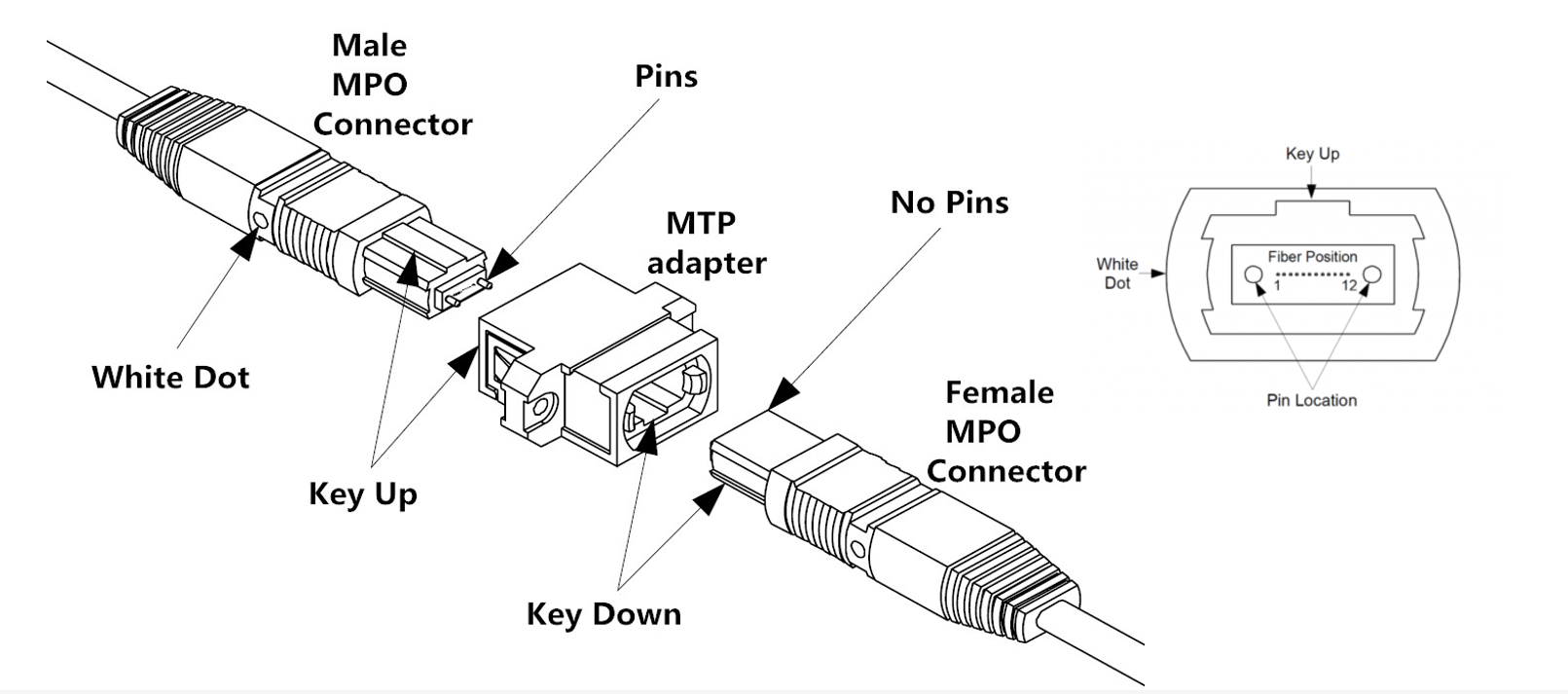
- Material: The pins that help align the fibers inside the MPO connector are usually made of stainless steel or brass.
- Why It Matters: The alignment pins ensure that fibers are properly aligned when the connector is inserted, which is critical for minimizing connection issues and ensuring high-speed data transmission.
- Material: The pins that help align the fibers inside the MPO connector are usually made of stainless steel or brass.
- Why It Matters: The alignment pins ensure that fibers are properly aligned when the connector is inserted, which is critical for minimizing connection issues and ensuring high-speed data transmission.
4. Contact Terminals
- Material: Contact terminals are typically made from phosphor bronze, often plated with gold.
- Why It Matters: Gold-plated terminals ensure excellent conductivity and a corrosion-resistant surface, reducing the risk of oxidation over time, which can degrade performance.
- Material: Contact terminals are typically made from phosphor bronze, often plated with gold.
- Why It Matters: Gold-plated terminals ensure excellent conductivity and a corrosion-resistant surface, reducing the risk of oxidation over time, which can degrade performance.
5. Protective Boot
- Material: The boot that surrounds the connector is usually made of rubber, silicone, or thermoplastic elastomer (TPE).
- Why It Matters: This flexible material protects the connector from external damage and provides strain relief, ensuring the fibers inside the connector aren’t subject to unnecessary bending or stress.
- Material: The boot that surrounds the connector is usually made of rubber, silicone, or thermoplastic elastomer (TPE).
- Why It Matters: This flexible material protects the connector from external damage and provides strain relief, ensuring the fibers inside the connector aren’t subject to unnecessary bending or stress.
Why Does the Construction Matter?
The materials used in MPO connectors aren’t just for looks—they’re carefully selected for performance and durability. Here’s why that’s so important:
Durability: Materials like ceramic, stainless steel, and UV-resistant plastics ensure that MPO connectors can withstand environmental challenges, like temperature fluctuations, moisture, and even physical impacts.
Signal Integrity: Ceramic ferrules and gold-plated contact terminals help reduce signal loss, which is crucial for high-speed, high-bandwidth fiber optic applications.
Precision: The high-precision components like zirconia ceramic ferrules ensure that the fibers inside the connector are perfectly aligned, reducing the chances of data transmission errors.
Signal Integrity: Ceramic ferrules and gold-plated contact terminals help reduce signal loss, which is crucial for high-speed, high-bandwidth fiber optic applications.
Precision: The high-precision components like zirconia ceramic ferrules ensure that the fibers inside the connector are perfectly aligned, reducing the chances of data transmission errors.
Environmental Protection: The rubber and silicone boot protects the connector from dust and contaminants, keeping your fiber optics clean and functioning at their best.
Key Features of MPO Fiber Connectors
MPO connectors stand out because of their unique features, all of which make them perfect for high-performance networks:
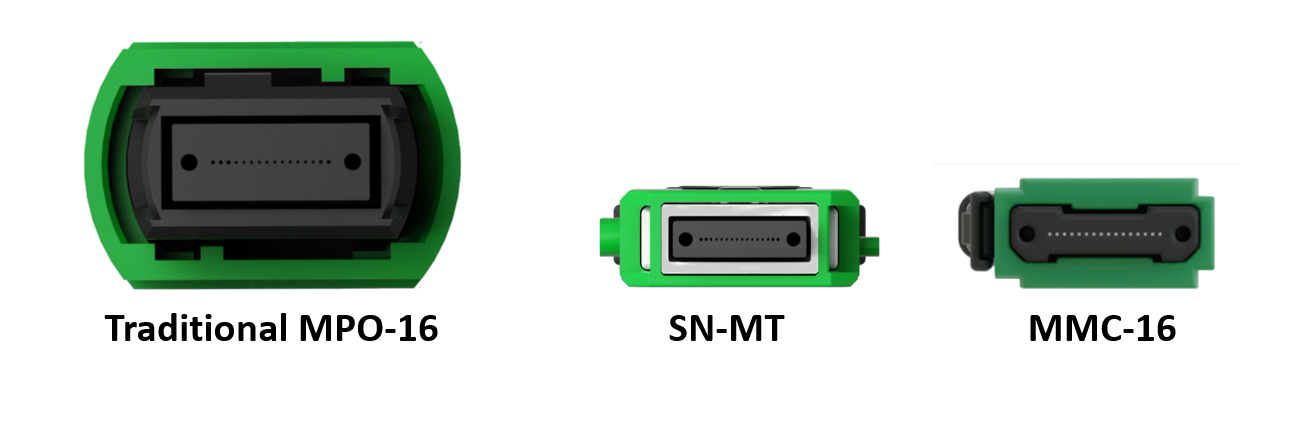
•High-Density Design - The most significant benefit of an MPO connector is its ability to carry multiple fibers in one unit. Depending on the connector, an MPO can support up to 12, 24, or 48 fibers in a single connection, which greatly reduces the space needed for managing fiber cables.
•Push-On, Pull-Off Mechanism - MPO connectors use a simple push-on, pull-off mechanism that makes installation and maintenance quick and easy. This simple design saves a lot of time compared to other more complex connectors that require a lot of manual effort or tools.
•Male and Female Gender Types - Just like many other connectors, MPO connectors come in male and female versions. The male MPO connector has pins that align with the female connector’s holes, ensuring proper connection and alignment.
•Polarity Configuration - Polarity refers to the direction in which the light signal flows through the fibers. MPO connectors are designed with different polarity options (Type A, Type B, Type C) to maintain proper alignment between transmitting and receiving equipment. Understanding polarity is crucial for ensuring correct data transmission in your network.
Why Choose MPO Connectors? The Benefits?
There are many reasons why MPO connectors are becoming the go-to choice for modern fiber optic networks. Here are just a few of the key benefits:
Efficiency and Space Savings - MPO connectors allow you to bundle a lot of fibers into a single unit, which is perfect for reducing clutter in large network setups like data centers. This high-density design makes MPO connectors ideal for environments where you need to maximize space while maintaining performance.
Faster Installation and Maintenance - The push-on, pull-off feature makes MPO connectors incredibly easy to install and remove. This simplifies installation times and makes maintenance less cumbersome, saving both time and labor costs.
Scalability - As network demands grow, you may need to scale up your infrastructure. With MPO connectors, it’s much easier to upgrade or expand a network without needing to rework the entire setup. You can add more fiber strands as needed and keep your system running efficiently.
High-Speed Transmission - MPO connectors are designed for high-speed networks, supporting data rates like 10G, 40G, and 100G Ethernet. This makes them a great choice for applications where large amounts of data need to move quickly, like in cloud computing, big data centers, and high-performance computing (HPC) environments.
Cost-Effectiveness for Large-Scale Networks - Because MPO connectors reduce the need for individual fiber connections and cables, they offer cost savings in the long run. The ability to run multiple fibers through a single connector significantly reduces the overall cost of the network infrastructure.
Applications of MPO Fiber Connectors
MPO connectors are widely used across various industries, particularly in environments where high-speed data transmission and high-density fiber optic connections are essential. Some of the most common applications include:
•Data Centers - One of the biggest applications of MPO connectors is in data centers. With the growing demand for cloud storage, data centers rely on high-speed, high-density fiber optic connections. MPO connectors enable the high-bandwidth, scalable infrastructure needed to meet these demands.
•Telecommunications Networks - In telecom networks, where vast amounts of data are transmitted over long distances, MPO connectors are critical for ensuring fast and reliable connections. They’re often used in the backbone of telecom infrastructure, providing a fast and cost-effective way to manage the growing amount of data traffic.
•High-Performance Computing (HPC) - For supercomputing and research labs, MPO connectors help to handle the enormous data transfer rates required for processing vast amounts of information. These environments demand ultra-high-speed, high-capacity fiber connections, and MPO connectors are built for that.
•Enterprise Networks - Many enterprise networks use MPO connectors for server-to-switch connections, ensuring that large volumes of data are transmitted efficiently and quickly between network devices.
Different Types of MPO Connectors
MPO connectors come in a variety of configurations, depending on the specific needs of the network. Here are the most common types:
Single-Mode vs. Multi-Mode MPO Connectors
- Single-mode MPO connectors are used for long-distance, high-speed communication, allowing light to travel along a single path through the fiber. They’re commonly used in telecommunication and wide-area networks (WAN).
- Multi-mode MPO connectors, on the other hand, are used for shorter distances, typically within buildings or local area networks (LANs), as they allow light to travel in multiple modes, providing faster and more cost-effective connections over shorter distances.
- Single-mode MPO connectors are used for long-distance, high-speed communication, allowing light to travel along a single path through the fiber. They’re commonly used in telecommunication and wide-area networks (WAN).
- Multi-mode MPO connectors, on the other hand, are used for shorter distances, typically within buildings or local area networks (LANs), as they allow light to travel in multiple modes, providing faster and more cost-effective connections over shorter distances.
Pre-Terminated MPO Assemblies
- These are pre-fabricated MPO connectors that come ready to install, which can save a significant amount of time during installation. Pre-terminated assemblies are ideal for projects where minimizing on-site work is critical, such as in large-scale data center builds.
- These are pre-fabricated MPO connectors that come ready to install, which can save a significant amount of time during installation. Pre-terminated assemblies are ideal for projects where minimizing on-site work is critical, such as in large-scale data center builds.


MPO Connector Standards and Specifications
Like all fiber optic components, MPO connectors are built to meet strict industry standards to ensure that they function reliably in high-performance environments. These include:
ITU-T (International Telecommunication Union) Standards: These standards govern the global use of fiber optic components, including MPO connectors, ensuring compatibility and reliability.
IEC (International Electrotechnical Commission) Standards: The IEC outlines standards for fiber optic connectors, including mechanical specifications for MPO connectors and their performance during testing.
IEC (International Electrotechnical Commission) Standards: The IEC outlines standards for fiber optic connectors, including mechanical specifications for MPO connectors and their performance during testing.
Before using MPO connectors, it’s important to ensure that the connectors comply with the required insertion loss, return loss, and attenuation standards.
Choosing the Right MPO Connector for Your Network
When selecting an MPO connector for your network, there are several factors to consider:
Bandwidth and Speed Requirements: Make sure the MPO connector can handle the necessary data rates for your network. For example, if you’re building a network for 40G or 100G applications, ensure your connectors are rated for those speeds.
Fiber Type: Choose between single-mode and multi-mode connectors depending on the distance and type of data transmission required.
Gender and Polarity: Pay attention to the male/female gender and polarity configurations of the MPO connectors to ensure proper alignment and signal flow.
Connector Count: Choose the appropriate fiber count based on your current and future needs (12, 24, or 48 fibers).
Fiber Type: Choose between single-mode and multi-mode connectors depending on the distance and type of data transmission required.
Gender and Polarity: Pay attention to the male/female gender and polarity configurations of the MPO connectors to ensure proper alignment and signal flow.
Connector Count: Choose the appropriate fiber count based on your current and future needs (12, 24, or 48 fibers).

MPO connectors are an essential component in the world of modern fiber optics. They offer unmatched efficiency, scalability, and high-speed performance for large-scale networks. Whether you're building a data center, upgrading your telecommunications infrastructure, or simply looking to streamline your enterprise network, MPO connectors provide the reliability and speed that today’s data-driven world demands.
FAQs MPO connectors
1. Can MPO connectors be used for both single-mode and multi-mode fiber?
Yes, MPO connectors come in both single-mode and multi-mode versions to accommodate various types of fiber networks.
Yes, MPO connectors come in both single-mode and multi-mode versions to accommodate various types of fiber networks.
2. What’s the typical fiber count for an MPO connector?
MPO connectors typically support 12, 24, or 48 fibers, depending on your network's density and bandwidth requirements.
MPO connectors typically support 12, 24, or 48 fibers, depending on your network's density and bandwidth requirements.
3. How do I ensure my MPO connectors are working properly?
Regular testing for insertion loss, return loss, and other performance factors is essential to maintain optimal performance of your MPO connectors.
4. Are MPO connectors cost-effective?
Yes, MPO connectors offer significant cost savings for high-density fiber installations due to their space-saving design and the reduced number of cables required.
Regular testing for insertion loss, return loss, and other performance factors is essential to maintain optimal performance of your MPO connectors.
4. Are MPO connectors cost-effective?
Yes, MPO connectors offer significant cost savings for high-density fiber installations due to their space-saving design and the reduced number of cables required.
OM3 OM4 Differences and Applications
How GYFY Fiber Cable Is Manufactured
Related Article
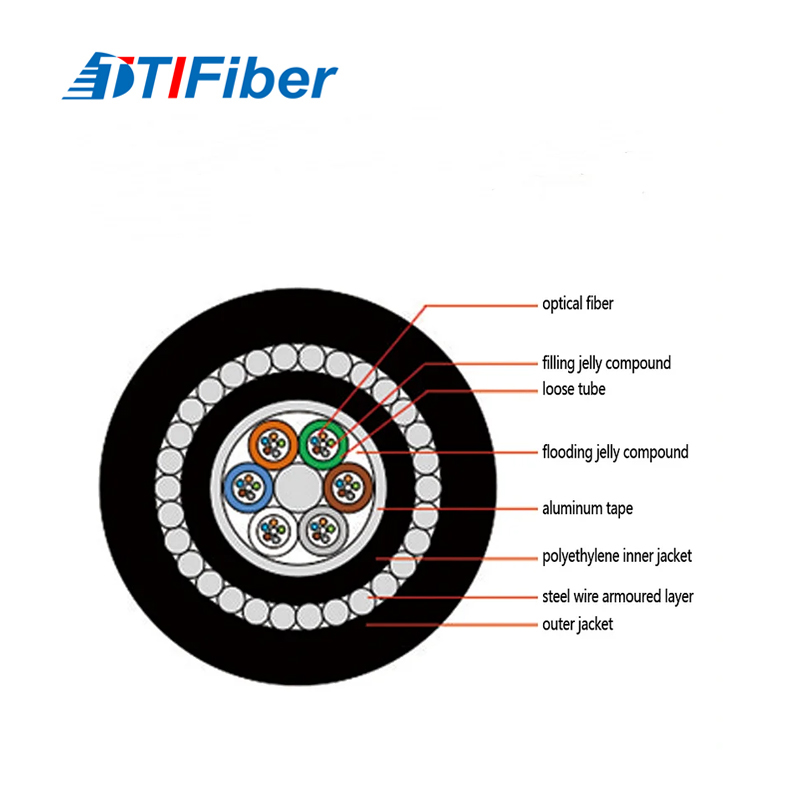
The steel used in SWA cables is not high-carbon tool steel, nor is it brittle cast iron. It is specifically low-carbon (mild) steel wire, typically containing less than 0.25% carbon.
What Kind of Steel Is Used in the SWA Layer

So what exactly does “correct” installation entail? Where do standards draw the line between best practice and code compliance? And why is grounding not just an electrical formality—but a foundational requirement for safety, reliability, and longevity?
What Do Electrical Codes Specifically Require for SWA Grounding
In a market where “SWA” can be loosely applied to substandard products, how do you ensure the cable you’re purchasing will truly perform as expected over its 25+ year design life? Verification isn’t optional—it’s essential. And it must happen before the cable leaves the factory, not after it fails in the field.
How Do You Verify the Quality of SWA Fiber Optic Cable
