



What Is Fiber Optic Cable? How Does It Work?
author: TTI Fiber
2024-11-06
With the growing demand for faster data transmission in today’s digital world, fiber optic cables have emerged as a critical technology in the telecommunications and networking industries. However, while fiber optics have become more prevalent in recent years, many people may still be unfamiliar with their purpose and functioning. Next TTI Fiber will delve into the definition of fiber optic cables, explore how they work, and provide detailed information on the different types of fiber optic cables.
What Is Fiber Optic Cable?
A fiber optic cable is a specialized type of Ethernet cable that consists of one or more strands of glass or plastic fibers, which are used to transmit data as light signals. These cables differ from traditional copper cables that transmit data via electrical signals.
Fiber optic cables are specially designed to transmit data at high speeds and over long distances. The principle behind this technology is based on the transmission of light pulses, which makes fiber optic cables highly efficient for long-distance telecommunications and data transmission.
Unlike copper cables, which suffer from signal degradation over long distances, fiber optic cables maintain their signal integrity, making them the preferred choice for internet backbones, cable television, and modern telephone systems.
Fiber optic cables typically operate at extremely high data rates, such as 10 Gbps, 40 Gbps, or even 100 Gbps, depending on the cable design and application. This makes them suitable for applications that require high bandwidth and low latency, including large-scale data centers, cloud services, and high-definition streaming.
What Are Fiber Optic Cables Made Of?
A fiber optic cable is a highly engineered structure, composed of multiple layers that work together to ensure optimal performance in harsh environments. Let’s break down its components:
•Core: The core is the central part of the fiber optic cable, made of ultra-thin strands of glass (or sometimes plastic), typically with a diameter of just a few microns. The core is the medium through which light signals are transmitted. Single-mode fiber (SMF) has a much smaller core than multi-mode fiber (MMF), which is critical for its long-distance transmission capability.
•Cladding: Surrounding the core is the cladding, a layer of optical material that has a lower refractive index than the core. This layer ensures that light signals remain within the core by reflecting them back inside, a phenomenon known as total internal reflection. The cladding helps maintain the integrity of the light signal as it travels through the fiber, minimizing loss and ensuring that the signal reaches its destination with minimal degradation.
•Coating: The coating is an additional protective layer applied to the outside of the cladding. It is usually made from acrylic or other types of polymer. This coating provides mechanical protection to the delicate core and cladding, safeguarding them from external elements such as moisture, dust, and physical damage.
•Strengthening Elements: Fiber optic cables often include strengthening members such as aramid yarn (similar to Kevlar) or steel strands. These components provide the cable with tensile strength, protecting the optical fibers from excessive tension, crushing, or bending during installation or use. This is particularly important for outdoor and underground cables that may be subject to environmental stress.
•Outer Jacket: The outermost layer of the fiber optic cable is the outer jacket or sheath, typically made from durable materials such as polyethylene or PVC. The outer jacket serves as a shield against environmental hazards, including ultraviolet (UV) light, extreme temperatures, water, chemicals, and abrasion. It is essential for ensuring the cable's long-term durability in both indoor and outdoor settings.
By carefully designing each of these layers, manufacturers can create fiber optic cables that are capable of withstanding harsh environmental conditions while delivering fast and reliable data transmission.

How Does Fiber Optic Cable Work?
Understanding how fiber optic cables work requires a basic knowledge of light and reflection. Unlike traditional copper cables, which transmit data via electrical pulses, fiber optic cables transmit data using light pulses.
The core principle behind fiber optic cable technology is total internal reflection. When light enters the fiber optic core, it is reflected off the walls of the core and cladding at precise angles. As the light bounces along the length of the cable, it is transmitted over great distances with minimal loss of signal. This phenomenon is what allows fiber optic cables to achieve such high data transfer rates and long transmission distances.

Total Internal Reflection in Fiber Optics
Total internal reflection occurs when light traveling through a medium with a higher refractive index (the core) hits the boundary of a medium with a lower refractive index (the cladding) at an angle greater than the critical angle. Instead of refracting out of the core, the light is reflected back into it, ensuring that the signal remains confined to the core as it travels along the cable.
This process is repeated countless times as the light signal propagates through the cable, resulting in fast and reliable data transmission. Fiber optic technology is ideal for high-speed communications over long distances, as the light signals are immune to electromagnetic interference (EMI), which commonly affects traditional copper cables.
How Many Types of Fiber Optic Cables
There are two main types of fiber optic cables: Single-mode Fiber (SMF) and Multi-mode Fiber (MMF).
1. Single-mode Fiber (SMF):
•Core Diameter: SMF has an extremely thin core, typically around 5-10 microns in diameter.
•Wavelength: SMF is designed to operate at longer wavelengths, typically 1310 nm or 1550 nm.
•Transmission Distance: SMF supports long-distance transmission, making it ideal for applications such as telecommunications and internet backbones that require distances of up to 100 km or more without signal loss.
•Use Case: SMF is preferred for long-haul communications, data centers, and networks that require high bandwidth over great distances.
•Core Diameter: SMF has an extremely thin core, typically around 5-10 microns in diameter.
•Wavelength: SMF is designed to operate at longer wavelengths, typically 1310 nm or 1550 nm.
•Transmission Distance: SMF supports long-distance transmission, making it ideal for applications such as telecommunications and internet backbones that require distances of up to 100 km or more without signal loss.
•Use Case: SMF is preferred for long-haul communications, data centers, and networks that require high bandwidth over great distances.
2. Multi-mode Fiber (MMF):
•Core Diameter: MMF has a larger core diameter, generally around 50-62.5 microns, which allows multiple modes of light to be transmitted simultaneously.
•Wavelength: MMF operates at shorter wavelengths, typically 850 nm and 1300 nm.
•Transmission Distance: Due to its larger core, MMF is limited by modal dispersion, which causes signal degradation over longer distances. It is typically used for shorter distances, up to 600 meters in some cases.
•Use Case: MMF is ideal for local area networks (LANs), data center connections, and in-building applications where shorter transmission distances are required.
•Core Diameter: MMF has a larger core diameter, generally around 50-62.5 microns, which allows multiple modes of light to be transmitted simultaneously.
•Wavelength: MMF operates at shorter wavelengths, typically 850 nm and 1300 nm.
•Transmission Distance: Due to its larger core, MMF is limited by modal dispersion, which causes signal degradation over longer distances. It is typically used for shorter distances, up to 600 meters in some cases.
•Use Case: MMF is ideal for local area networks (LANs), data center connections, and in-building applications where shorter transmission distances are required.
SMF is best suited for long-distance, high-capacity communication systems, while MMF is more appropriate for short-range data transmission.

What is the Lifespan of Fiber Optic Cables?
One of the most attractive features of fiber optic cables is their long lifespan. Under normal conditions, fiber optic cables can last for up to 25-30 years, making them a durable and cost-effective investment for infrastructure. However, the actual lifespan depends on various factors, including installation quality, environmental conditions, and maintenance. Regular inspections and proper installation practices can ensure that fiber optic cables remain operational for decades.
How to Maintenance of Single-mode Fiber (SMF) and Multi-mode Fiber (MMF)
Proper maintenance of fiber optic cables is essential to ensure they continue functioning efficiently and maintain a long service life. Here are some maintenance practices for both Single-mode Fiber (SMF) and Multi-mode Fiber (MMF):
•Regular Inspections: Periodic checks of the fiber optic cables help detect any damage or wear. Look for physical damages like cuts, bends, or wear on the outer jacket that may affect performance.
•Cleaning Fiber Connectors: Dirty or contaminated fiber connectors can cause significant signal loss. It's essential to clean connectors regularly with specialized fiber optic cleaning tools to prevent dirt, dust, or oil from affecting the light transmission.
•Monitor Signal Strength: Regularly testing and monitoring signal strength ensures that any degradation in signal quality can be addressed early. For both SMF and MMF, decreasing signal quality could indicate damage or deterioration of the cable.
•Cleaning Fiber Connectors: Dirty or contaminated fiber connectors can cause significant signal loss. It's essential to clean connectors regularly with specialized fiber optic cleaning tools to prevent dirt, dust, or oil from affecting the light transmission.
•Monitor Signal Strength: Regularly testing and monitoring signal strength ensures that any degradation in signal quality can be addressed early. For both SMF and MMF, decreasing signal quality could indicate damage or deterioration of the cable.
•Avoid Excessive Bending: Overbending fiber optic cables, especially in tight spaces, can lead to signal loss or even permanent damage to the core. Always ensure that cables are installed with a suitable bending radius.
•Protection from Environmental Factors: Fiber optic cables are sensitive to extreme temperatures, moisture, and vibrations. When installing SMF or MMF, make sure they are properly insulated and protected from environmental hazards.
By following these maintenance steps, both Single-mode Fiber and Multi-mode Fiber can provide efficient, long-lasting data transmission, ensuring they meet or exceed their expected lifespans.
Fiber optic cables, designed to transmit data via light pulses, offer significantly faster speeds and greater transmission distances than traditional copper cables. Whether it’s Single-mode Fiber for long-distance communication or Multi-mode Fiber for short-range connections, fiber optic cables are the backbone of modern data transmission networks.
OM1 vs. OM2 Fiber Optic Cables
How is GYFY Fiber Cable Manufactured?
Related Article
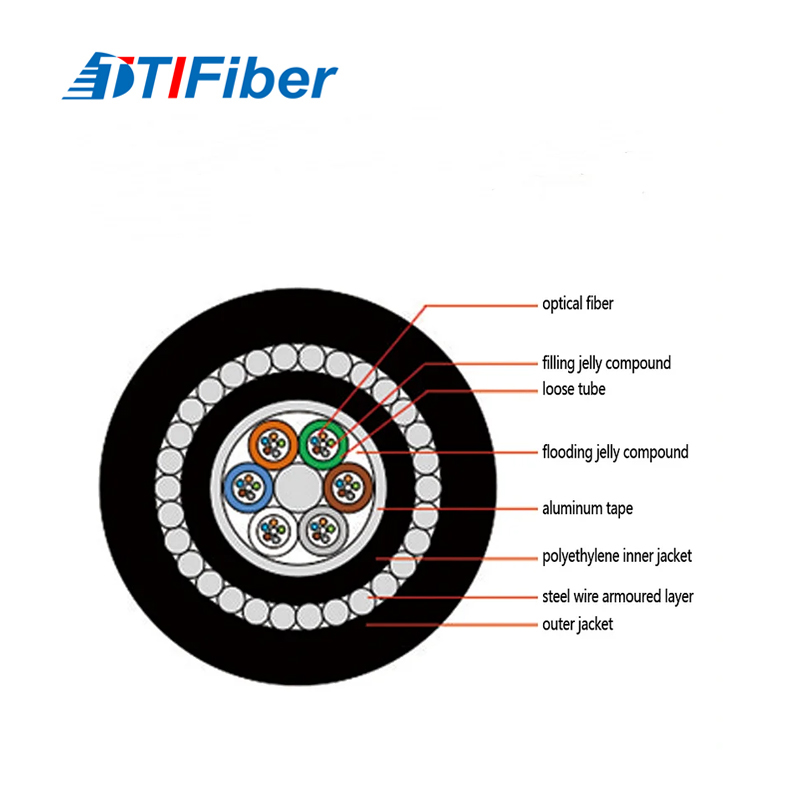
The steel used in SWA cables is not high-carbon tool steel, nor is it brittle cast iron. It is specifically low-carbon (mild) steel wire, typically containing less than 0.25% carbon.
What Kind of Steel Is Used in the SWA Layer

So what exactly does “correct” installation entail? Where do standards draw the line between best practice and code compliance? And why is grounding not just an electrical formality—but a foundational requirement for safety, reliability, and longevity?
What Do Electrical Codes Specifically Require for SWA Grounding
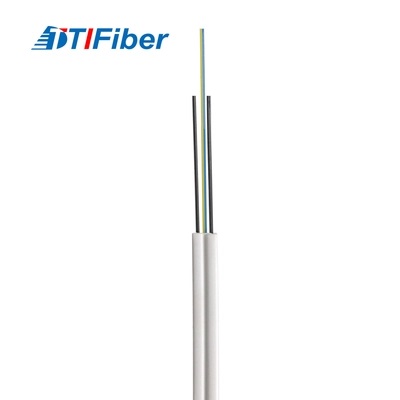
In a market where “SWA” can be loosely applied to substandard products, how do you ensure the cable you’re purchasing will truly perform as expected over its 25+ year design life? Verification isn’t optional—it’s essential. And it must happen before the cable leaves the factory, not after it fails in the field.
How Do You Verify the Quality of SWA Fiber Optic Cable
