What is FTTH Technology?
What Does FTTH Actually Mean?
For the average household, FTTH means smooth streaming, lag-free gaming, and the ability to connect multiple devices without slowing down. For businesses, it ensures reliable video conferencing, fast cloud storage access, and a robust online presence.
To understand FTTH, let’s break it down into simple steps:
FTTH networks use light signals to carry data. These signals travel through fiber optic cables, which can handle much larger volumes of data compared to traditional copper cables.
- Central Office (CO): The provider’s hub where internet data is generated.
- Optical Line Terminal (OLT): A device that sends the light signals from the CO.
- Fiber Optic Cables: These deliver data to your home or office.
- Optical Network Terminal (ONT): Installed in your premises, it converts light signals into data that your devices can use.
|
Component |
Description |
|
Optical Line Terminal (OLT) |
Controls and transmits data from the provider to the network. |
|
Fiber Optic Cables |
Transfers light signals over long distances without degradation. |
|
Optical Splitters |
Distributes a single optical signal to multiple locations. |
|
Optical Network Terminal (ONT) |
Converts light signals for end-user devices. |
FTTH provides a dedicated connection, unlike cable or DSL where bandwidth is shared among users, leading to slower speeds during peak hours.
Why is FTTH Becoming So Popular?
- Ultra-Fast Speeds: Easily supports 4K video streaming and smart home devices.
- Stable Connection: No disruptions, even during bad weather.
- Cost-Effective Over Time: While initial installation may cost more, its low maintenance requirements make it a smart investment.
- High Bandwidth: Handles large-scale data transfers effortlessly.
- Low Latency: Essential for video conferencing and real-time applications.
- Scalability: Grows with your business, accommodating future needs.
Different users require different solutions. FTTH providers offer tailored packages based on varying needs.
- Entertainment-Focused Plans: High-speed internet for streaming and gaming.
- Family Plans: Support for multiple devices with consistent speeds.
- Corporate Packages: Enhanced security and high-speed connectivity for large teams.
- Dedicated Lines: Ensures a private and interference-free connection.
Different Types
|
FTTH Service Type |
Description |
Best For |
|
Active Optical Network (AON) |
Requires electrical power at distribution points; offers high flexibility and scalability. |
Businesses with large data needs. |
|
Passive Optical Network (PON) |
No electrical power required at intermediate points, making it cost-effective and eco-friendly. |
Residential or small offices. |
|
Gigabit Passive Optical Network (GPON) |
Offers extremely high speeds; widely used for both homes and businesses. |
High-speed internet users. |
How FTTH is Changing Different Industries
- Remote learning becomes seamless with uninterrupted video calls and access to online resources.
- Cloud-based systems for teachers and administrators operate without delays.
- Enables real-time telemedicine, allowing doctors to consult patients virtually.
- Fast data sharing for medical imaging and diagnostics.
- E-commerce platforms run smoothly, enhancing customer experience.
- Cloud-based inventory systems and real-time tracking improve operational efficiency.
How to Choose the Right FTTH Provider
1. Speed Options: Ensure the provider offers packages that meet your needs.
2. Service Coverage: Some providers only cover certain areas.
3. Customer Support: Check for 24/7 assistance in case of issues.
4. Costs and Contracts: Look for transparent pricing and flexibility.
- Google Fiber: Known for its lightning-fast speeds in select U.S. cities.
- Verizon Fios: Offers consistent connectivity for homes and businesses.
- BT Openreach (UK): A major provider catering to urban and rural areas alike.
What is FTTH Cable?
How FTTH Cables Work
Data is converted into light signals at the provider's end and sent through the optical fiber. Each fiber strand can carry millions of bits of data per second.
As the data travels through the fiber optic cable, it may be split using optical splitters to serve multiple households or businesses without significant signal loss.
At the user's end, an Optical Network Terminal (ONT) or Optical Network Unit (ONU) converts the light signals back into digital signals that devices can understand and use.
Types of FTTH Cables
Very small core size (around 8-10 microns in diameter). Designed for long-distance communication. SMF is typically used for high-speed internet connections in both urban and rural areas because it can carry signals over great distances without losing quality. Higher bandwidth and lower signal attenuation. Ideal for transmitting signals over large distances.
Larger core size (50-100 microns in diameter). Best suited for shorter distances, like within a building or local network infrastructure. MMF is often used in urban areas for the final connection from the street to the home or business. Lower cost than SMF and sufficient for short-range communication.
Here are the most commonly used types of FTTH cables:
|
Cable Type |
Description |
Best Use Cases |
Advantages |
|
Single-mode Fiber (SMF) |
Single-mode fiber uses a single light pathway, allowing for higher speeds over longer distances. |
Long-distance, high-speed applications; large apartment complexes, rural areas. |
Higher bandwidth, long-distance transmission, minimal signal loss. |
|
Multi-mode Fiber (MMF) |
Multi-mode fiber uses multiple light paths to transmit data. It’s typically cheaper and has higher signal loss over distance compared to SMF. |
Shorter distances within buildings or campuses, data centers. |
Cost-effective, easy to install, good for shorter distances. |
|
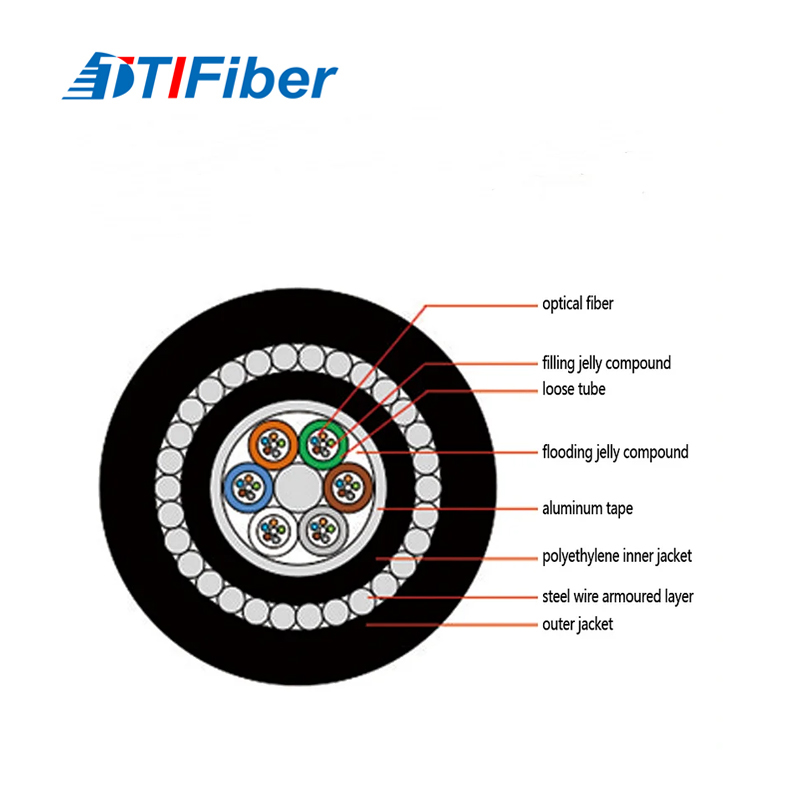
Loose Tube Fiber |
In this type of cable, fibers are stored loosely inside a protective tube, allowing for more flexibility in harsh environments. |
Outdoor installations, long-distance backhaul connections. |
Resistant to temperature changes, moisture, and other environmental factors. |
|
Tight Buffered Fiber |
Tight buffered cables have a thicker coating around the fiber, offering more protection. This design is often used for indoor applications. |
Indoor installations in buildings or homes, especially in areas where cables might be exposed. |
Stronger and more durable, easier to install in tighter spaces. |
|
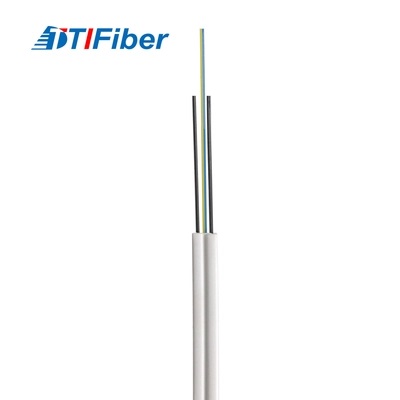
Drop Fiber |
Drop cables are a type of FTTH cable specifically designed for direct connections to homes and individual residences. |
Last-mile connections from distribution points to homes. |
Lightweight, easy to install, flexible design for home use. |
|
Ribbon Fiber |
Ribbon cables contain multiple fibers organized in flat strips, making it easier to install a large number of fibers in a small space. |
High-density fiber optic networks, data centers, and offices requiring multiple fiber connections. |
Efficient use of space, easier mass splicing, ideal for high-density areas. |
FTTH Cable Installation Process
Service providers begin by surveying the area to determine the best route for the fiber optic cables.
Cables can be installed underground or overhead. Underground installations are more common in urban areas, while overhead lines are often used in rural locations.
Once the main fiber optic cable is in place, the service provider connects it to the Optical Network Terminal (ONT) at the customer's premises, allowing high-speed data to be transmitted directly to the user.
After installation, the system is tested to ensure everything is working correctly, and the service is activated for use.
Why is FTTH Cable Better Than Copper Cables?
- Longer Distances: Fiber optic cables can carry signals for much longer distances without losing signal strength, unlike copper cables, which experience significant loss over long distances.
- Higher Bandwidth: FTTH can support much more data transmission, making it ideal for streaming, gaming, and running cloud-based applications.
- Better Reliability: Fiber optic cables are less susceptible to interference from electrical devices, weather conditions, or physical damage, making them more reliable than copper-based cables.
How to Choose the Right FTTH Cable?
Everything About Optical Fiber with MPO Connectors
OM3 OM4 Differences and Applications
Related Article