The Core Structural Layers of an Unarmored Fiber Optic Cable
The Key Structure and Raw Materials of Unarmored Fiber Optic Cable—And How to Choose a High-Quality One
Unarmored fiber optic cable may appear deceptively simple: a slender, flexible tube carrying strands of glass thinner than hair. But beneath its unassuming exterior lies a meticulously engineered architecture of specialized materials, each selected for precise optical, mechanical, and environmental performance. Choosing the right unarmored cable isn’t just about counting fibers—it’s about understanding how raw materials and structural design interact to ensure decades of reliable service.
So what exactly is inside an unarmored fiber cable? Which materials matter most? And how can engineers, contractors, or procurement teams confidently select a high-quality product in a market flooded with look-alike options?
Let’s dissect the anatomy of unarmored fiber cable—not as a catalog exercise, but as a guide to intelligent specification and long-term value.
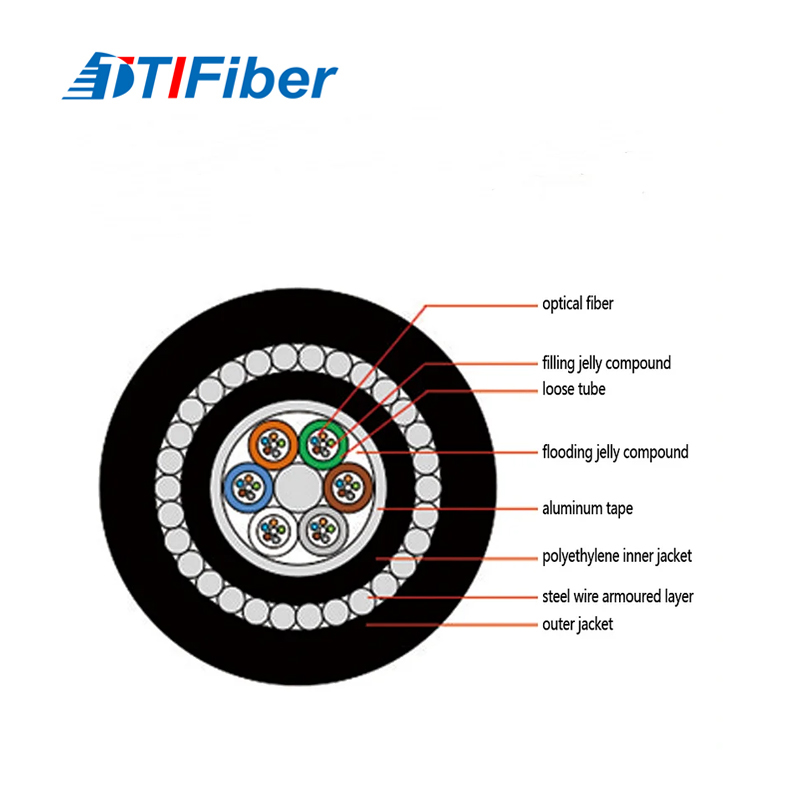
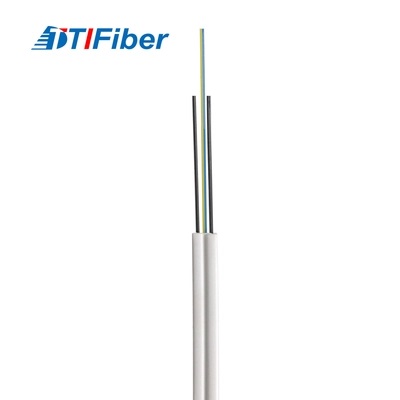
What Are the Core Structural Layers of an Unarmored Fiber Optic Cable?
An unarmored cable is built like an onion—layered, purposeful, and optimized for protection without metal. While designs vary by application (indoor, outdoor, riser, plenum), most share these fundamental components:
- Optical Fiber: The heart of the system—typically ITU-T G.652.D single-mode or OM3/OM4/OM5 multimode fiber, with a 125 µm glass cladding and 245–250 µm acrylate primary coating.
- Buffer or Tube: Fibers are housed in either:
- Loose tubes (for outdoor cables): Gel-filled or dry water-blocking tubes that isolate fibers from strain and moisture.
- Tight buffers (for indoor cables): A 900 µm plastic layer directly over the coated fiber, offering flexibility and ease of termination.
- Strength Members: Non-metallic tensile elements—almost always aramid yarn (e.g., Kevlar®) or fiberglass-reinforced plastic (FRP) rods—that absorb pulling tension during installation so the fragile glass never stretches.
- Water-Blocking Elements: Critical for outdoor use:
- Water-swellable tapes or powders that expand upon contact with moisture.
- Gel filling in loose-tube designs (less common in modern “dry” cables).
- Outer Jacket: The final shield, formulated for the environment:
- Polyethylene (PE): UV-resistant, flexible, used in outdoor cables.
- PVC: Flame-retardant but emits toxic fumes when burned.
- LSZH (Low Smoke Zero Halogen): Safer for indoor/plenum spaces—produces minimal smoke and no corrosive gases during fire.
Crucially, no metallic armor, corrugated steel tape, or aluminum interlock exists between these layers—that’s what defines it as “unarmored.”
What Raw Materials Define Performance—and Where Do Cheap Cables Cut Corners?
High-quality unarmored cable relies on premium raw materials. Substitutions here directly impact longevity, reliability, and safety:
1. Optical Fiber Glass
- Premium: Corning® SMF-28® ULL, OFS AllWave®, or equivalent—low attenuation (<0.19 dB/km @ 1550 nm), tight geometry tolerances, hydrogen-resistant.
- Low-cost risk: Off-brand fibers with higher OH⁻ content (“water peak” near 1383 nm), inconsistent mode field diameter, or poor coating adhesion—leading to microbending loss over time.
2. Primary Coating
- Premium: Dual-layer UV-cured acrylate with high elasticity and thermal stability (−60°C to +85°C).
- Low-cost risk: Brittle or thin coatings that crack under bending or temperature cycling, exposing bare glass to stress.
3. Strength Members
- Premium: Genuine aramid yarn (e.g., DuPont™ Kevlar®) with consistent tensile strength (>2.8 GPa) and moisture resistance.
- Low-cost risk: Recycled or imitation yarns with lower breaking strength, or FRP rods with poor flex fatigue resistance—leading to cable elongation or failure during pull.
4. Water-Blocking System
- Premium: Dry, superabsorbent polymer (SAP) tapes that swell >20x in volume within seconds of moisture contact.
- Low-cost risk: Inadequate swelling capacity or slow response—allowing water to migrate kilometers down the cable before detection.
5. Outer Jacket Compound
- Premium: Carbon-black-stabilized PE for UV resistance; LSZH compounds meeting IEC 60754-2 (acid gas emission) and IEC 61034-2 (smoke density).
- Low-cost risk: Recycled plastics with poor UV stability (outdoor cables become brittle in 2–3 years) or PVC mislabeled as LSZH—posing fire safety hazards.
The truth? You can’t judge a cable by its jacket. Inferior materials hide inside—and their failures emerge only after installation.
How Do You Verify the Quality of Raw Materials Before Purchase?
Since you can’t X-ray every reel, rely on documentation, certification, and traceability:
- Fiber Certificate of Conformance (CoC): Must specify manufacturer (e.g., Corning, Yangtze, Hengtong), ITU-T compliance (G.652.D), and attenuation values at 1310/1550 nm.
- Jacket Material Test Reports: Look for:
- ASTM D2240 (durometer hardness)
- UL 1685 (vertical tray flame test for riser)
- UL 910 (Steiner tunnel test for plenum)
- IEC 60754-2 & 61034-2 (for LSZH claims)
- Tensile Strength Data: Aramid yarn should meet ISO 11827 or equivalent; minimum breaking strength ≥110 N per 1000 dtex.
- Water-Blocking Validation: Request test videos or reports showing <1 m water migration after 24 hours in 1 m of submerged cable (per IEC 60794-1-E1).
Reputable manufacturers provide lot-specific test data—not generic brochures. If they won’t share it, walk away.
What Structural Design Features Signal a High-Quality Unarmored Cable?
Beyond materials, smart engineering choices reveal quality:
- Central vs. Peripheral Strength Members: Central FRP rods offer better crush resistance; peripheral aramid yarn allows tighter bends—choose based on application.
- Dry vs. Gel-Filled: Modern “dry” cables are preferred—they’re cleaner, faster to splice, and eliminate gel cleanup. But verify water-blocking performance rigorously.
- Color-Coded Buffers/Tubes: Enables quick identification during splicing—critical in high-fiber-count cables.
- Ripcord Integration: A nylon cord under the jacket allows clean, tool-free longitudinal slit—reducing fiber nick risk during stripping.
- Consistent Lay Length: Stranding pitch must be uniform to prevent “birdcaging” during termination.
Avoid cables with irregular stranding, loose fillers, or inconsistent diameter—signs of poor manufacturing control.
How Do Industry Standards Help You Filter Quality?
Standards are your first line of defense. Insist on compliance with:
- IEC 60794 Series: Defines mechanical (tensile, crush, impact), environmental (temperature cycling, water penetration), and optical performance.
- Telcordia GR-20 (Issue 5): The gold standard for OSP cable reliability—includes 30-year lifetime modeling for hydrogen aging, static fatigue, and thermal stress.
- NEC / NFPA 70: Mandates fire ratings:
- OFNR: For vertical risers (passes UL 1666).
- OFNP: For plenums (passes UL 910)—must be LSZH.
- RoHS & REACH: Ensures absence of hazardous substances (lead, cadmium, phthalates).
A cable claiming “meets standards” isn’t enough—demand third-party test reports from labs like UL, TÜV, or Intertek.
What Red Flags Should Raise Concern During Inspection or Installation?
Even with paperwork, inspect physically:
- Jacket Surface: Should be smooth, uniform, and free of bubbles, cracks, or discoloration. Outdoor PE should be black (for UV protection); colored PE = likely indoor-grade misused outdoors.
- Bend Test: Coil a 1-meter sample to 10× cable diameter. It should spring back without kinking. Persistent deformation = poor jacket elasticity.
- Strip Test: Use a mid-span stripper. The jacket should peel cleanly; aramid yarn should not fray excessively. Exposed fibers should show no coating damage.
- Weight Check: Compare to spec sheet. Significantly lighter weight often means less aramid yarn or thinner jacket.
During pulling, watch for:
- Excessive “stretch” (indicates weak strength members).
- Jacket splitting at bends (poor material formulation).
- Fiber breakage at low tension (<600 N for typical 12-fiber cable).
How Does Application Context Dictate the “Right” Quality Level?
Not all high-quality cables are equal—match specs to use case:
| Application | Critical Quality Factors |
|---|---|
| Data Center (Indoor) | Tight-buffered, OFNP/OFNR rated, LSZH jacket, color-coded fibers, bend-insensitive fiber (ITU-T G.657.A1/A2). |
| OSP Conduit (Outdoor) | Loose-tube, dry water-blocking, PE jacket, G.652.D fiber, central FRP strength member, −40°C to +70°C rating. |
| Aerial (Self-Supporting) | ADSS design with integrated dielectric messenger, high tensile rating (>6,000 N), UV-stable PE, wind-induced vibration resistance. |
| Industrial Plant | Ruggedized jacket (abrasion-resistant), rodent-deterrent additives, wide temperature range, possibly hybrid power/fiber. |
Over-specifying wastes money; under-specifying risks failure. Precision beats presumption.
Is Quality Just About Avoiding Failure—Or Enabling Confidence?
Choosing a high-quality unarmored fiber cable isn’t merely about preventing outages. It’s about building trust into infrastructure—trust that the network will perform silently for 20+ years, that splicing crews won’t battle brittle jackets at 2 a.m., that fire marshals won’t reject your plenum run.
The best cables disappear into the background, letting light do its work uninterrupted. And that invisibility is earned not by chance, but by deliberate choices in raw materials, structural integrity, and adherence to standards.
In the end, quality unarmored fiber isn’t the cheapest option—it’s the most responsible one.


Verify the Quality of Raw Materials Before Purchasing Armored Fiber Optic Cable
Why Would Anyone Use a Cable Without Armor
Related Article